
Childhood, Youth and Ageing
52 resources created by 30 users
This Childhood, Youth and Ageing page on GoConqr gathers community-made quizzes, mind maps, flashcards, notes and slide sets, from the social construction of childhood and youth subcultures to ageing and the life course. It's built for school students, university students and professional candidates revising key theories, and for teachers after ready-made material. There are over 300 resources here, including more than 10 quizzes and over 200 mind maps, shared by over 190 contributors. Try a quiz to find your gaps, then explore the maps.
Top Childhood, Youth and Ageing resources
-
 Mind map children & young people's cultural worlds
-
 Mind map Youth culture Sociology G672- Youth
-
 Mind map Emergence of youth subcultures - OCR A2 SOCIOLOGY The first section on youth subcultures from the OCR Sociology A2 exams. This covers why Postmodernists, Mar...
-
10 questionsChildhood quiz Who said the most important part of childhood is separateness?
-
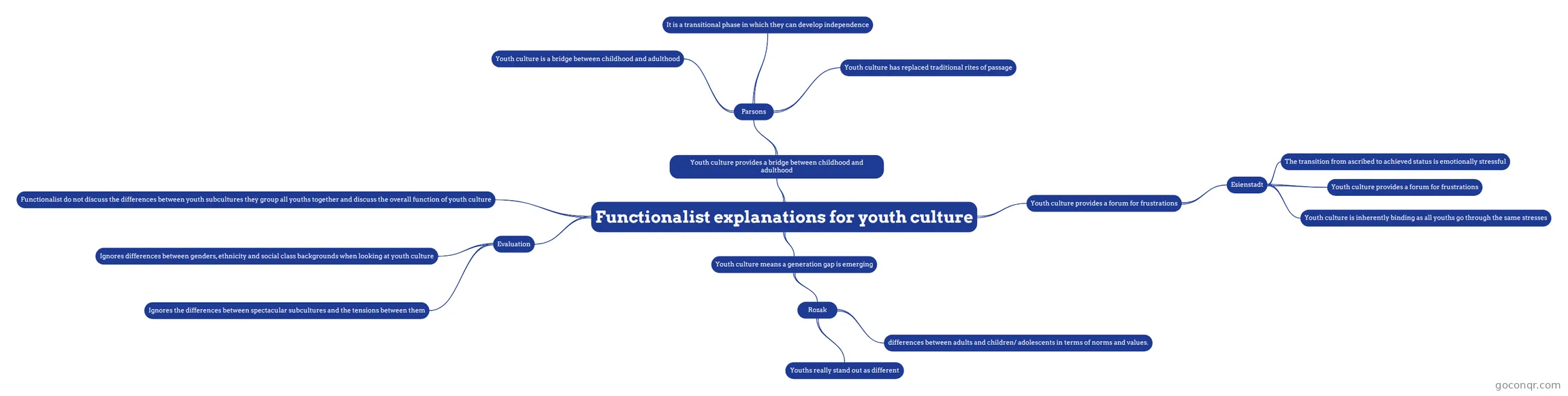 Mind map Functionalist explanations for youth culture
-
 Mind map Marxist explanations of youth subcultures
-
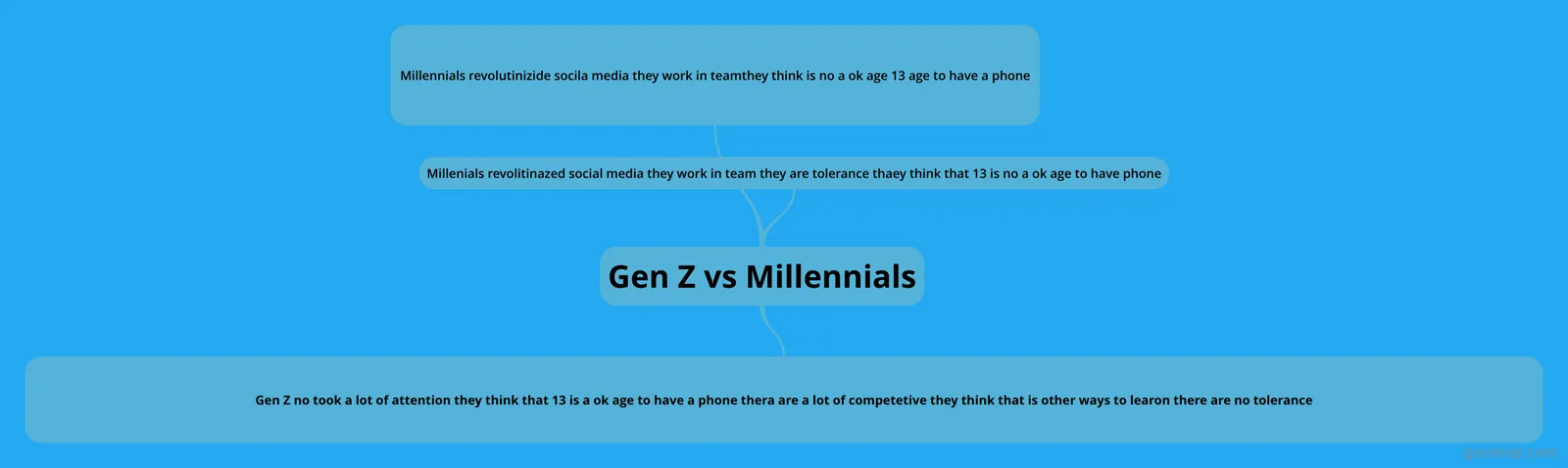 Mind map Gen Z vs Millennials task gen z millennials
-
57 questionsUnit 2: Adolescence and Developmental theories There was no real transition period between childhood and adulthood until industrialization.
Quizzes
-
10 questionsChildhood quiz Who said the most important part of childhood is separateness?
-
57 questionsUnit 2: Adolescence and Developmental theories There was no real transition period between childhood and adulthood until industrialization.
-
19 questionsYEAR 12 UNIT 4.6 Which sociologist suggested that what children experience today as childhood is a recent social construction?
Mind maps
See all 30 mind maps-
children & young people's cultural worlds
-
Youth culture Sociology G672- Youth
-
Emergence of youth subcultures - OCR A2 SOCIOLOGY The first section on youth subcultures from the OCR Sociology A2 exams. This covers why Postmodernists, Mar...
-
Functionalist explanations for youth culture
-
Marxist explanations of youth subcultures
-
Gen Z vs Millennials task gen z millennials
-
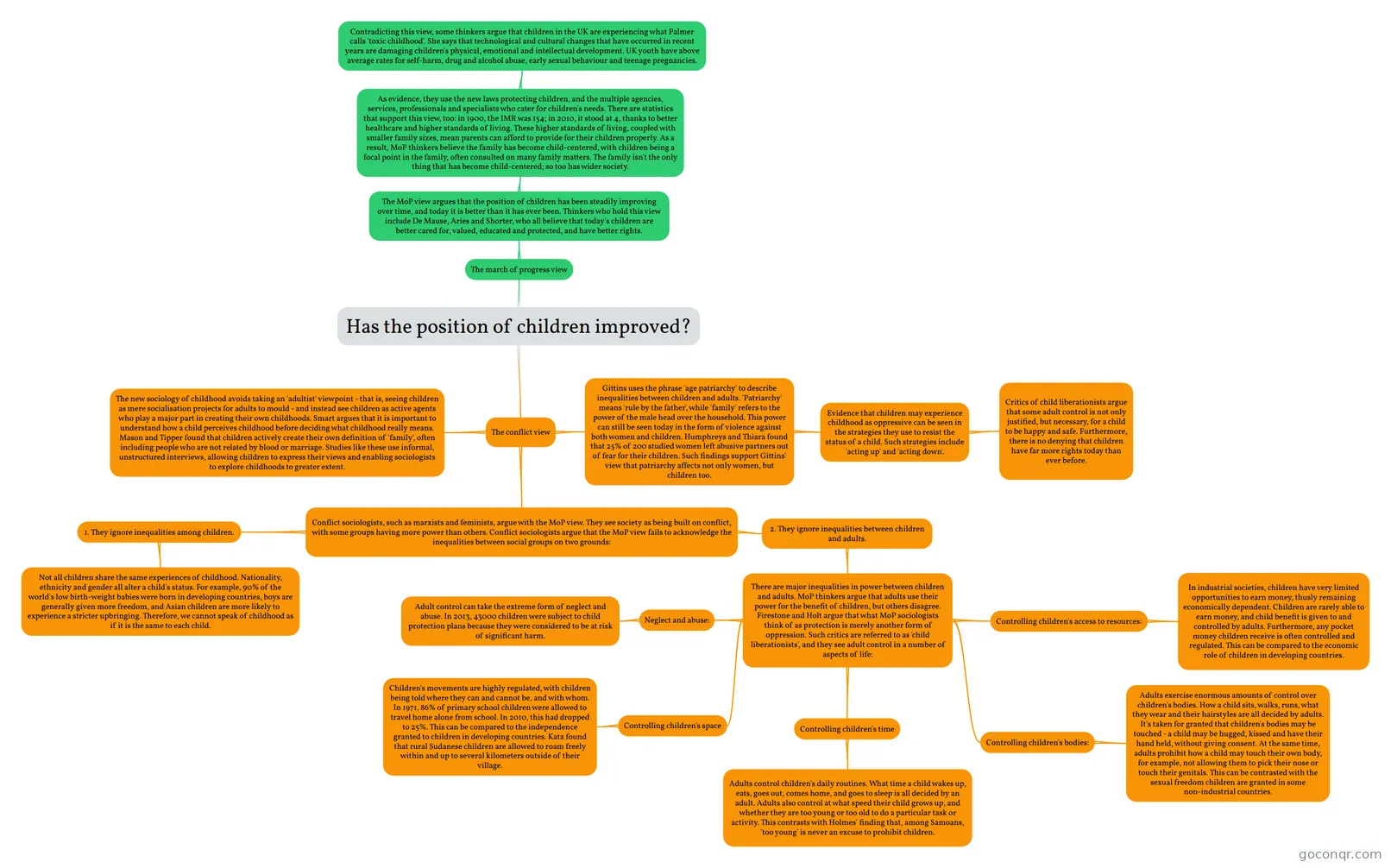 Has the position of children improved?
-
Aries Essay
Flashcards
See all 17 flashcards-
20 cardsChapter 3 - Book 3 children and young people can appear “out of place” in spaces and places predominantly designed and defined...
-
22 cardsBook 2 Chapter 1 Children and childhood is often associated with the notion of innocence. The idea of childhood innocence is...
-
17 cardsChapter 1 - Book 3 Children and young people’s experience of spaces and places will depend on a variety of different factors
-
12 cardsChapter 4 - Book 3 It could be said that the learning environment is just as important as the teaching practices within them.
-
11 cardsChapter 2 - Book 3 Family, means different things to different people it is not always a biological link which establishes whe...
-
14 cardsChapter 2 - Book 1 Historians on Childhood
-
3 cardsE212 cards Philippe Aries influential historian of childhood in post war period~ found concept of childhood did not ex...
-
7 cardsChildhood - Sociologists wip - will add dates later
Notes
Slides
More Sociology topics
About Childhood, Youth and Ageing
GoConqr OriginalWhat this unit covers
The unit sits in the Families and the Life Course strand of Sociology. Most of the material looks at childhood and youth, with a smaller set on ageing. Childhood resources ask whether childhood is a social construct, how it has changed over time and whether it is now in crisis. Youth resources cover youth culture and subcultures. Ageing appears in maps such as Migration and Ageing and Ageism & Ageing.
Where to start
Begin with the slide set Has the Position of Children Improved?. It sets out the March of Progress view, which says the position of children has improved and keeps improving. Then compare it with the maps on the conflict view and the March of Progress view of the position of childhood. Next, read the maps on historical differences in childhood and the criticisms of Aries.
Youth culture and subcultures
Move on to the mind map Youth culture. It sets out functionalist, Marxist, feminist and post-modern ideas. The functionalist maps argue that youth culture binds young people into society and gives them a sense of belonging. The Marxist map treats subcultures as resistance to the crisis of capitalism. Feminist Views of Youth Subculture looks at how girls were overlooked, with McRobbie and Garber.
Using quizzes and maps together
- Read a map on one theory or theme.
- Take the Childhood quiz or another quiz on the same topic.
- Note what you missed, then return to the map.
- Use the flashcard decks on sociologists, key words and youth theories to fix the names and terms.
Some resources mention A-level Sociology and GCSE Sociology, so school students can check them against their own course. Others come from university study, with lecture quizzes and book-based decks.
Make it your own
Choose one theme, such as The future of childhood, and work through its map, notes and flashcards. Then build a short set of your own to see what you remember.
Frequently asked questions
Which resource should I open first?
Start with the slide set Has the Position of Children Improved?, which introduces the March of Progress view. After that, try the Childhood quiz to see what you recall. If you want a quick overview of youth, the Youth culture mind map covers the main theories in one place.
What do the mind maps cover?
The mind maps cover childhood as a social construct, historical differences, the future of childhood and childhood in crisis. They also cover youth culture through functionalist, Marxist and feminist views, plus a few on ageing, ageism and migration.
Are the resources free to use?
Yes. Every resource listed here is free to open, study and take, with no account needed. A free account also saves your quiz scores and lets you make your own quizzes, mind maps, flashcards and notes.
Which levels and exams do these suit?
Most resources suit school students, and some mention A-level Sociology and GCSE Sociology. A good share suits university students, including lecture quizzes and book-based flashcard decks. Teachers can use the ready-made maps, quizzes and slide sets in lessons.
Who made these resources?
They were made by GoConqr users, not by GoConqr itself. Over 190 contributors have added quizzes, maps, flashcards and notes, so styles and depth vary. Check a resource against your own course materials.
What if the topic I need is missing?
Try nearby titles first, since childhood and youth topics overlap. For example, a map on Aries criticisms may help with questions on historical childhood. If the gap remains, you can build your own map or flashcards on that topic.