
Exercise Physiology and the Effects of Exercise
588 resources created by 401 users
This Exercise Physiology and the Effects of Exercise page on GoConqr gathers community-made mind maps, flashcards, quizzes and notes, from energy systems and VO2 max to chronic adaptations, altitude and heat. It's built for school students revising a topic, university students and professional candidates filling gaps, and teachers after ready-made material. There are over 500 resources here, including more than 30 quizzes, over 300 mind maps and over 190 flashcard decks, made by more than 300 contributors. Pick a topic, try a quiz to find your gaps, then make your own set.
Select topic
- Energy Systems and Exercise Metabolism52
- Muscles and the Neuromuscular System23
- Acute Responses to Exercise30
- Cardiovascular and Respiratory Responses to Exercise35
- Aerobic Capacity and Exercise Performance27
- Long-Term Adaptations to Training58
- Fatigue and Recovery24
- Exercise in Heat and at Altitude13
- Body Composition6
Top Exercise Physiology and the Effects of Exercise resources
-
21 cardsWCC VCE PE: Aerobic Chronic Adaptions Pulmonary diffusion RESPIRATORY
-
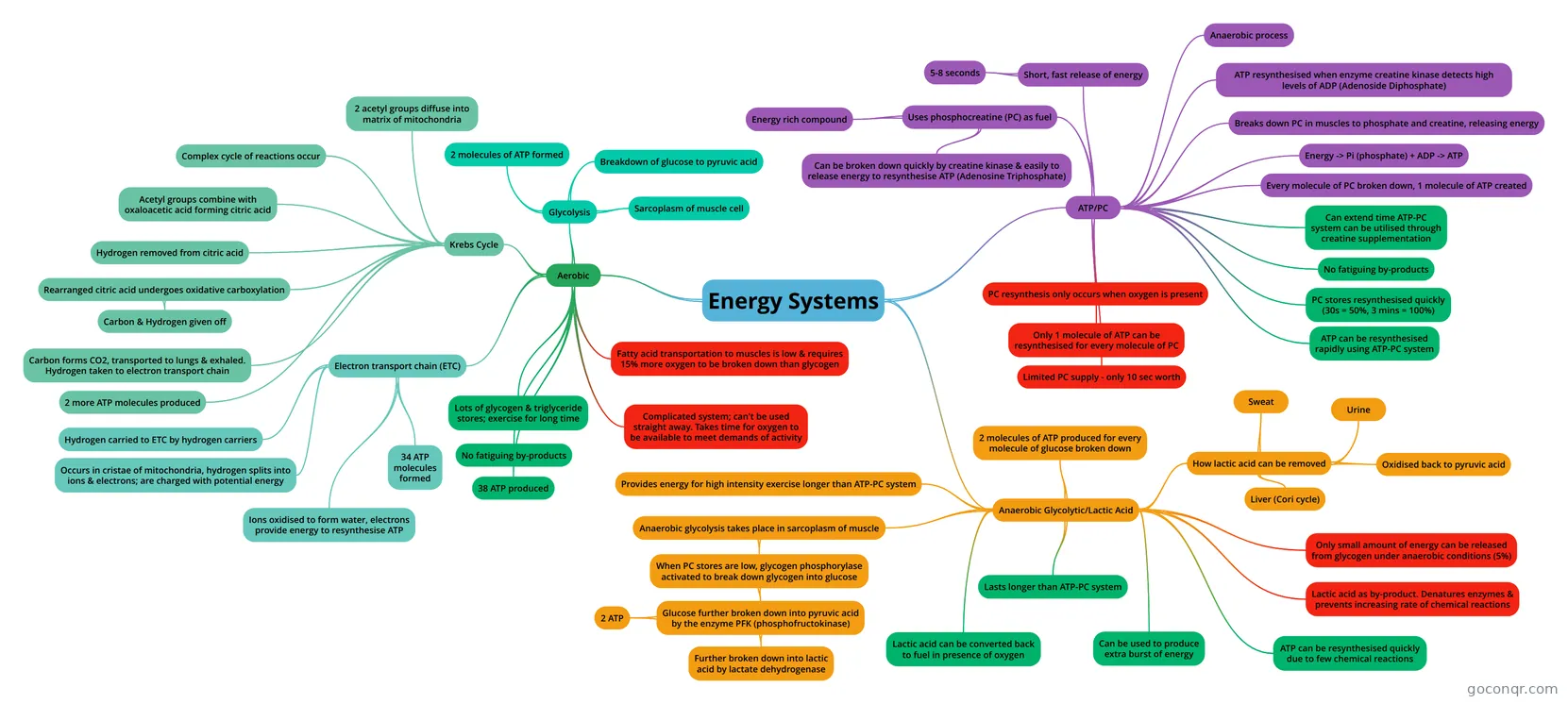 Mind map Energy Systems
-
36 questionsUnit 4: The Respiratory and Circulatory Systems The following components of the respiratory system are located inside the lungs, except?
-
30 questionsExam Prep Exercise Science Practice Exam Which of the following does the cross-bridge attach to during the excitation-contraction coupling phase?
-
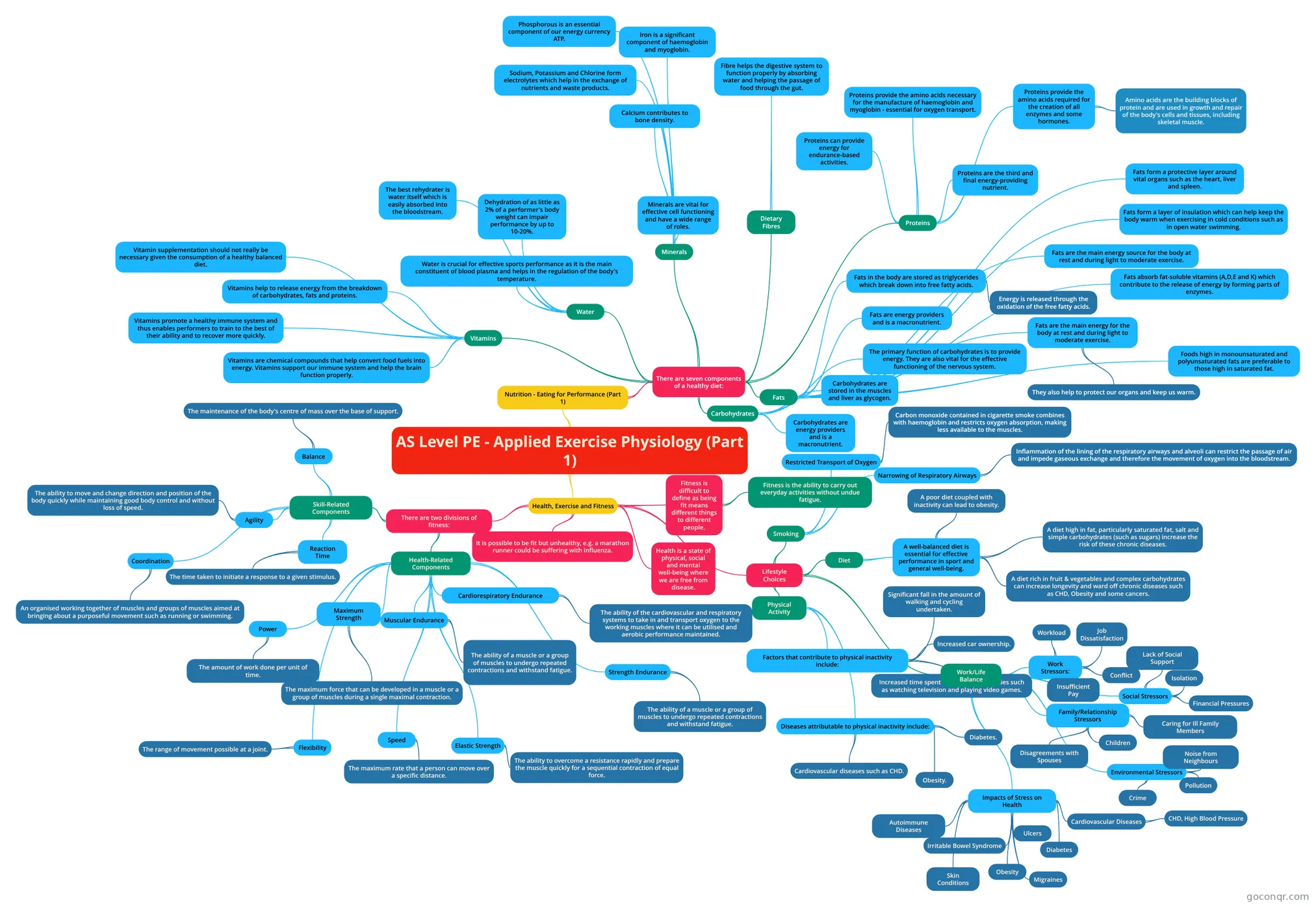 Mind map AS Level PE - Applied Exercise Physiology (Part 1)
-
Mind map Energy Transfer during Long Duration/Low Intensity Exercise
-
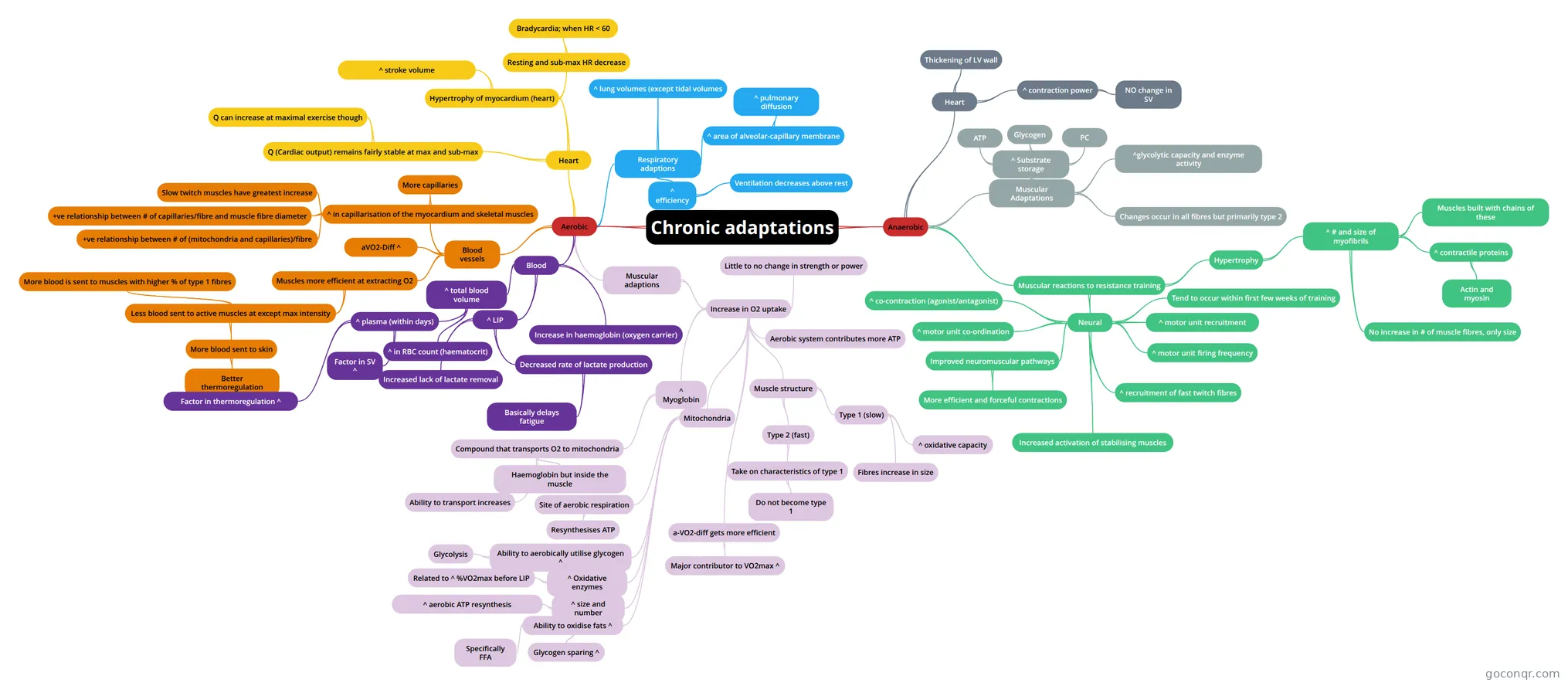 Mind map Chronic adaptations
-
10 cardsWCC VCE PE: Anaerobic Chronic Adaptations to a training program PC stores MUSCULAR
Quizzes
See all 47 quizzes-
36 questionsUnit 4: The Respiratory and Circulatory Systems The following components of the respiratory system are located inside the lungs, except?
-
30 questionsExam Prep Exercise Science Practice Exam Which of the following does the cross-bridge attach to during the excitation-contraction coupling phase?
-
98 questionsPocket Prep Practice Exam During the Excitation-Contraction Coupling Phase of a muscle, calcium ions are released so that they can bi...
-
96 questionsExercise Physiology A single exercise bout
-
71 questionsKINE FINAL PART AVI What are the cluster of conditions associated with Metabolic Syndrome?
-
55 questionsFinal practice exam which of the following substances acts at the NMJ to excite the muscle fibers of the motor unit?
-
45 questionsSQ 2 - Englisch Exam Vorbereitung How is your anaerobic threshold defined?
-
11 questionsAS PE revision Name 4 coronary heart diseases
Mind maps
See all 324 mind maps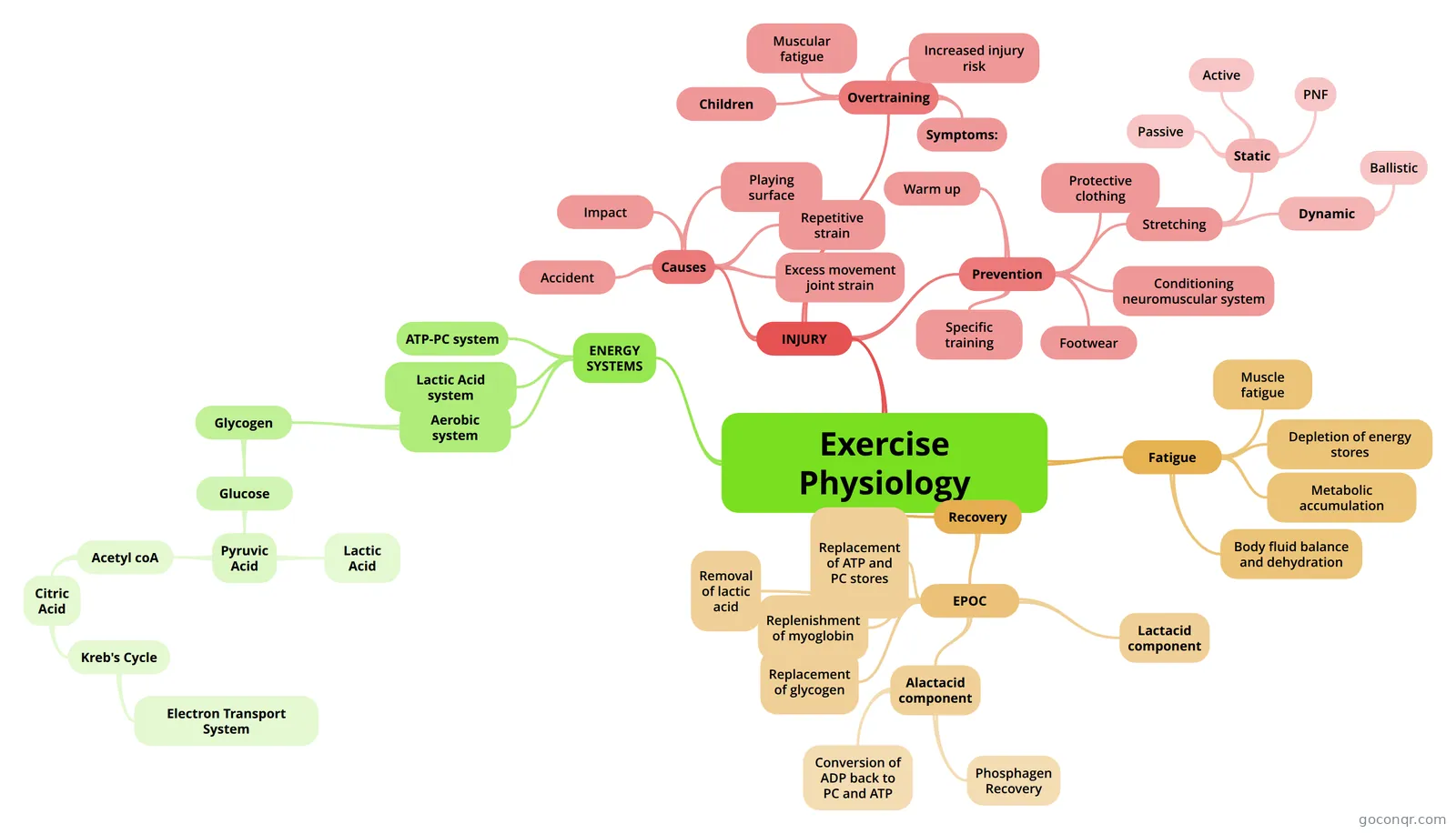

Flashcards
See all 195 flashcards-
21 cardsWCC VCE PE: Aerobic Chronic Adaptions Pulmonary diffusion RESPIRATORY
-
10 cardsWCC VCE PE: Anaerobic Chronic Adaptations to a training program PC stores MUSCULAR
-
5 cardsPe Theory Short term effects of Cardiovascular system
-
44 cardsAcute responses
-
34 cardscardiovascular system
-
20 cardsChronic adaptations to aerobic training Increased pulmonary diffusion RESPIRATORY
-
23 cardsTraining Adaptation What happens to Mitochondrial MPS after Endurance training in Un-trained athletes?
-
45 cardsNASM - CH 2 - Basic Exercise Science The combination and interrelation of the nervous, muscular and skeletal systems.
Slides
Topics in Exercise Physiology and the Effects of Exercise
More Physical education and sport topics
About Exercise Physiology and the Effects of Exercise
GoConqr OriginalWhat the resources cover
The page centres on how the body produces energy and how it responds to training. The mind map Energy Systems walks through the aerobic and anaerobic glycolytic systems, ATP/PC, glycolysis in the sarcoplasm, the Krebs cycle and more. Exercise Physiology links glucose, glycogen, pyruvic acid and lactic acid to the three systems. Measurements of Energy Expenditure covers the respiratory exchange ratio, the VO2 max test, lactate sampling and indirect calorimetry.
Responses and adaptations
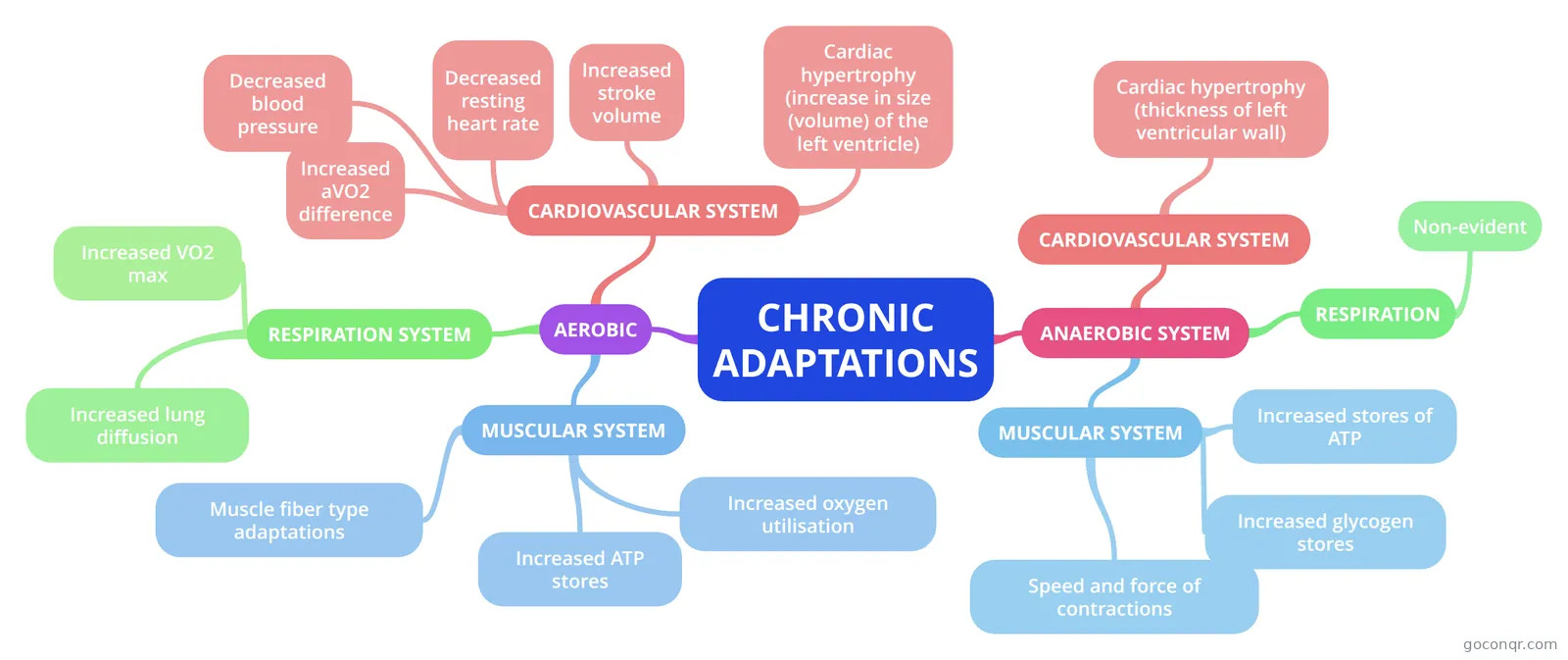
Short-term effects sit alongside long-term change. Chronic adaptations compares aerobic and anaerobic changes, including the heart and muscle. The flashcard decks WCC VCE PE: Aerobic Chronic Adaptions and WCC VCE PE: Anaerobic Chronic Adaptations to a training program sort changes into respiratory, cardiovascular and muscular groups. There are also maps on ventilatory response, stroke volume and cardiac output, and recovery methods.
Where to start
- Open the Energy Systems mind map to get the big picture.
- Move to Measurements of Energy Expenditure for how energy use is tested.
- Work through the chronic adaptations flashcards.
- Finish with a quiz such as Exam Prep Exercise Science Practice Exam.
Using quizzes and maps together
Read a map first, then take a quiz on the same topic. Wherever you lose marks, go back to that branch of the map and reread it. Flashcards then help you fix definitions in your memory. Some resources mention A-level PE, GCSE PE, IB, VCE and NASM, so look for the wording that matches your course.
Where it fits
This unit belongs to the strand Applied Anatomy, Physiology and Biomechanics in Physical education and sport. Choose one topic that feels shaky and start there, then add your own notes as you go.
Frequently asked questions
Which resource should I open first?
Start with the Energy Systems mind map. It lays out the aerobic, anaerobic glycolytic and ATP/PC systems in one place, which makes later topics easier to follow. After that, try the Measurements of Energy Expenditure mind map, then test yourself with a practice exam quiz.
What do the chronic adaptation flashcards cover?
The two WCC VCE PE decks split training effects by system. The aerobic deck covers items such as pulmonary diffusion, tidal volume and stroke volume. The anaerobic deck covers PC stores, glycolytic capacity, ATP stores and enzymes. They suit quick recall practice.
Are the resources free to use?
Yes. Every resource listed here is free to open, study and take, and you don't need an account. They were made by GoConqr users, not by GoConqr itself, so styles and depth vary from one resource to the next.
Which levels and exams do these resources suit?
Most are aimed at school students, with a good share for university students and a few for professional candidates. Resources mention A-level PE, GCSE PE, IB, VCE and NASM. Check each title and preview to see whether it matches your course.
Can I save my quiz scores?
A free account saves your quiz scores. It also lets you make your own quizzes, mind maps, flashcards and notes, which is handy if you want to tailor a topic.
What if the topic I need isn't listed?
Browse the related topics on the page first, such as altitude, heat, hydration, fatigue and recovery. If your topic is still missing, you can build your own mind map or flashcard deck from your class notes.