
Forms of Energy, Stores and Transfers
410 resources created by 354 users
This Forms of Energy, Stores and Transfers page on GoConqr gathers community-made quizzes, mind maps, flashcards and notes, from energy stores and conservation of energy to Sankey diagrams, work done and energy resources. It's built for school students revising a topic and teachers after ready-made material. There are over 3,200 resources here, including more than 150 quizzes, over 2,000 mind maps and more than 800 flashcards, mostly at secondary level with some for younger learners. Pick a resource, try a quiz to find your gaps, then make your own revision sets.
Top Forms of Energy, Stores and Transfers resources
-
114 cardsBook 1: Physics Go
-
Mind map AQA GCSE Physics - Unit 1
-
30 cards8th Grade Physical Science Final Review In making a cake, which process involves a chemical change? a. mixing ingredients for the batter b. slicing...
-
41 cardsPhysics unit 1 What are the three ways that heat is transferred
-
20 questionsEnergy Types and Transformations Choose of the following types of potential energy:
-
23 cardsAQA - Physics 1F There are many different energy resources. Which two energy resources are renewable? Biofuel, Coal, Gas, Ge...
-
12 cardsP3 Quiz What is the difference between primary and secondary sources of energy?
-
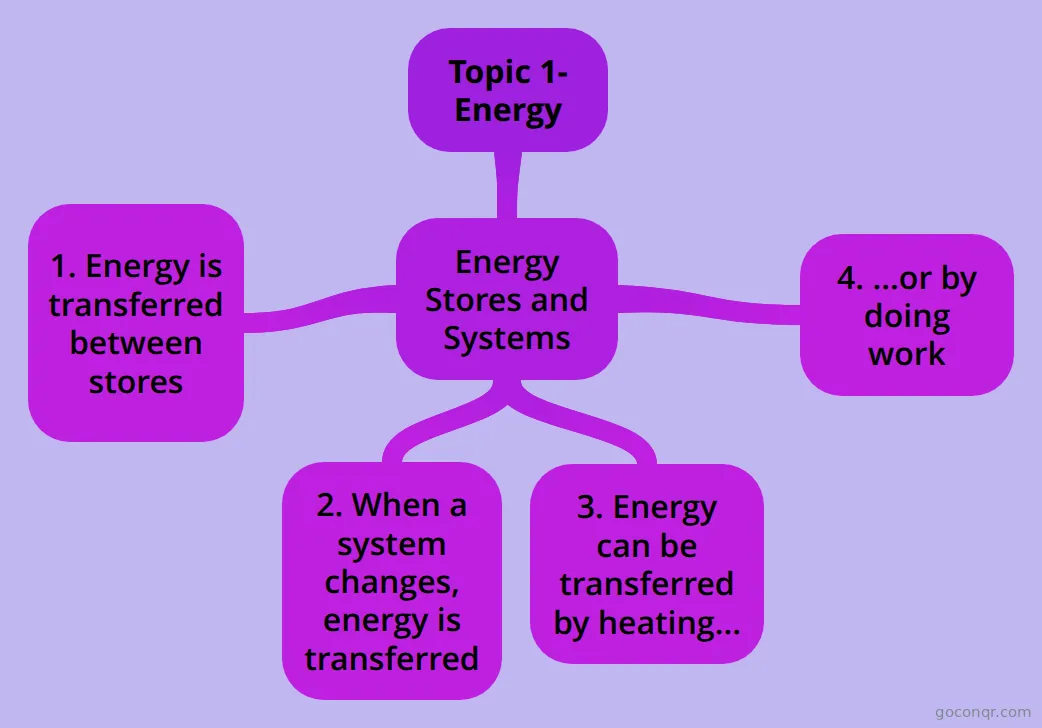 Mind map Topic 1- Energy A mind map detailing the first topic of my GCSE physics coursework- Energy.
Quizzes
See all 45 quizzes-
20 questionsEnergy Types and Transformations Choose of the following types of potential energy:
-
18 questionsYear 7 - Energy Which of the following is not a fossil fuel?
-
14 questionsKinetic & Potential Energy What is the kinetic energy formula?
-
20 questionsQuiz on Chapter 5 "Using Energy" Which of the following is a form of Energy?
-
20 questionsP3 Quiz The energy supplied in household electricity is measured in kilowatt hours (kWh).
-
44 questionsScience Test What is the energy of motion?
-
30 questionsChapter 15 Test Choose ALL that apply to the five forms of energy.
-
24 questionsEnergy, work, power What is internal energy?
Mind maps
See all 161 mind maps-
AQA GCSE Physics - Unit 1
-
Topic 1- Energy A mind map detailing the first topic of my GCSE physics coursework- Energy.
-
Section 4- Energy Resources and Energy Transfer
-
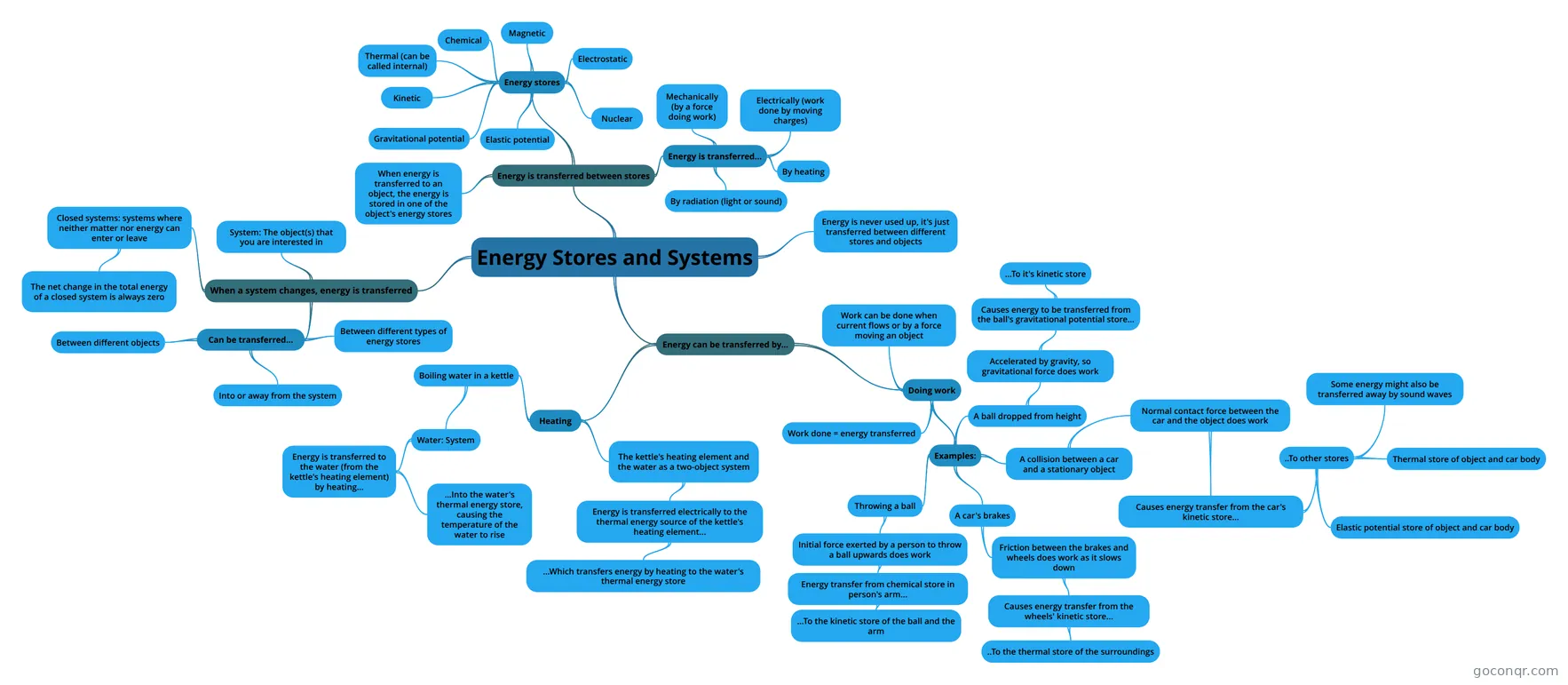 Energy Stores and Systems
-
Physics T1 aqa gcse 9-1 (8463)
-
Energy An overview of everything you need to know for GCSE AQA physics topic 1. Please rate and comment so I know ...
-
GCSE PHYSICS: Energy
-
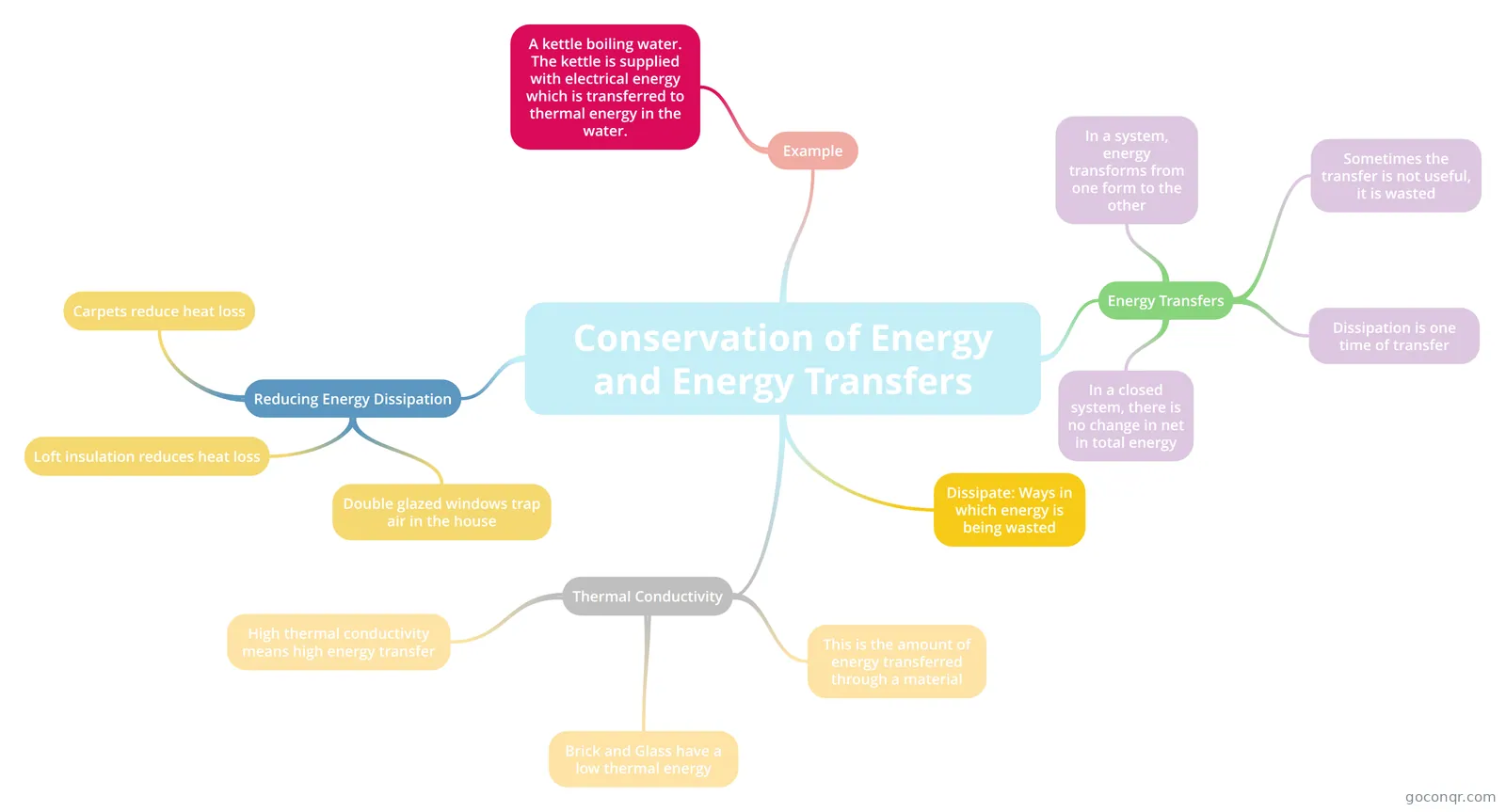 Conservation of Energy and Energy Transfers This is a nice small mindmap focussing on little bits of energy
Flashcards
See all 162 flashcards-
114 cardsBook 1: Physics Go
-
30 cards8th Grade Physical Science Final Review In making a cake, which process involves a chemical change? a. mixing ingredients for the batter b. slicing...
-
41 cardsPhysics unit 1 What are the three ways that heat is transferred
-
23 cardsAQA - Physics 1F There are many different energy resources. Which two energy resources are renewable? Biofuel, Coal, Gas, Ge...
-
12 cardsP3 Quiz What is the difference between primary and secondary sources of energy?
-
14 cardsP1 Conservation and Dissipation of Energy (AQA) What is the principle of Conservation of Energy?
-
10 cardsUNIT 6.3 WORK DONE AND ENERGY TRANSFERS Work done = ?
-
20 cards5.1 Energy around you What are the forms of energy ?
Notes
See all 31 notes-
Physics - Energy and Motion Changes in energy stores Conservation of energy Energy and work Gravitational Potential Energy stores Kinetic energy and elastic energy stores Energy dissipation Vectors and scalars Forces between objects Resultant fo...
-
Work, Energy & Power : Sources of Energy Renewable sources of energy: These sources can be replenished naturally in a short period of time Sunlight (solar) Wind Tidal Hydroelectric Biomass Geothermal heat Non-renewable sources: Energy taken from finite resou...
-
Sankey diagrams The thickness of the arrow represents the amount of energy.Sankey diagrams are just energy transformation diagrams – they make it easy to see at a glance how much of the input energy is being usefully employed compare...
-
science lesson Chemical energy stores include: fuels, food or chemicals found in batteries. The energy is transferred during chemical reactions. Kinetic energy stores describe the energy an object has because it i...
-
Sankey Diagrams Sankey diagrams are diagrams to show how the energy input into something is used. For example, if 100J (100 Joules) of electrical energy is input, and 90J is (wasted) heat energy and the other 10J is light energy, we ...
-
Physics GCSE 2017/2018 P1: conservation and dissipation of energy P1.1: changes in energy stores energy is transferred by heating, by waves, by electrical current, or by a force when it moves against an object. when an object loses energy w...
-
Unit 3 Study Note ⓒ Heat= Mass and speed of particles Thermal Energy= The total kinetic energy of all the particles in a substance/ material Temperature= Depends on the speed of particles in a substance Example: Bucket= more quantity les...
-
Untitled (Kendrick Lamar) <- JK Chemical energy: Energy stored in a fuel for example food released when chemical reactions take placeKinetic energy:Energy of a moving objectGravitational potential energy:Energy due to it's position higher more gpeEl...
Slides
See all 11 slidesMore Physics topics
About Forms of Energy, Stores and Transfers
GoConqr OriginalWhat the resources cover
The page brings together material on how energy is stored, moved and wasted. The mind map Energy Stores and Systems explains that energy is never used up, only transferred between stores and objects. Conservation of Energy and Energy Transfers covers dissipation, meaning the ways energy is wasted, and what happens in a closed system. Other items look at kinetic and potential energy, elastic potential energy, energy efficiency in the home, Sankey diagrams and the way electricity is generated.
Where to start
Begin with a map to get the big picture, then move to detail.
- Open Energy Stores and Systems to see the stores and how energy moves between them.
- Read Conservation of Energy, which shows gravitational potential energy turning into kinetic energy as an object falls.
- Use the notes on Sankey diagrams to see how efficiency is drawn and read.
- Finish with the flashcards on energy stores to fix the key terms.
Using quizzes and maps together
Quizzes show what you do not yet know, and maps help you fill the gap. Try Kinetic & Potential Energy, which asks for the kinetic and potential energy formulas. If you miss a question, go back to the matching map and read that branch again. The quiz Year 7 - Energy is a gentler way in, with questions on fossil fuels and why we need to save energy.
Exam links
Many resources mention GCSE Physics, AQA GCSE Physics, IGCSE Physics and GCSE Core Science, and a few mention A-level Physics. The flashcard deck AQA - Physics 1F asks which energy resources are renewable and which non-renewable ones are more reliable. The equations deck for CCEA GCSE lists efficiency, kinetic energy and gravitational potential energy.
Where it fits
This unit sits in the Energy strand of Physics. Teachers can set a quiz as a starter or a map as a recap. Choose a resource that matches your course, work through it, then write your own cards on the points that stuck badly.
Frequently asked questions
Which resource should I open first?
Start with the mind map Energy Stores and Systems. It sets out the idea that energy is transferred between stores rather than used up. After that, read Conservation of Energy, then test yourself with the quiz Kinetic & Potential Energy to see which formulas you still need to practise.
What do the mind maps on this page cover?
The mind maps cover energy stores and systems, conservation of energy, dissipation, energy transfers, gravitational and elastic potential energy, energy efficiency in the home, and ways of generating electricity. There are over 2,000 of them, so you can compare a few and pick the layout that makes most sense to you.
Are the resources free to use?
Yes. Every resource listed here is free to open, study and take, with no account needed. They were made by GoConqr users, not by GoConqr itself. A free account also saves your quiz scores and lets you make your own quizzes, mind maps, flashcards and notes.
Which exams and levels do these resources suit?
Most are secondary level, with some for younger learners. Resources mention GCSE Physics, AQA GCSE Physics, GCSE Core Science, IGCSE Physics and A-level Physics. Check the title and contents of each one against your own course before relying on it, since content comes from many different contributors.
Is there a gentle quiz for beginners?
Try Year 7 - Energy. Its questions ask which item is not a fossil fuel, how fossil fuels are formed, why electricity is not a fuel and why we need to save energy. It is a friendly check before moving on to the formula-based quiz on kinetic and potential energy.
What if I can't find the topic I need?
Look through the other formats on the page, as a topic missing from a quiz may appear in a flashcard deck, note or mind map. With over 3,200 resources, a different title often covers it. You can also make your own set once you have a free account.