
States of Matter and the Particle Model
112 resources created by 104 users
This States of Matter and the Particle Model page on GoConqr gathers community-made quizzes, mind maps, flashcards, notes and slides, from solids, liquids and gases to density, evaporation, latent heat and gas laws. It's built for school students revising a topic and teachers after ready-made material, with a few resources pitched at primary pupils. There are over 800 resources here, including more than 50 quizzes, over 500 mind maps and over 200 flashcard decks. Pick a quiz to find your gaps, then revisit the maps.
Top States of Matter and the Particle Model resources
-
14 cardsn5 physics gas laws What is the formula used to calculate pressure.
-
6 questionsStates of Matter Quiz Quiz for Stage 7
-
6 questionsDensity Bozeman
-
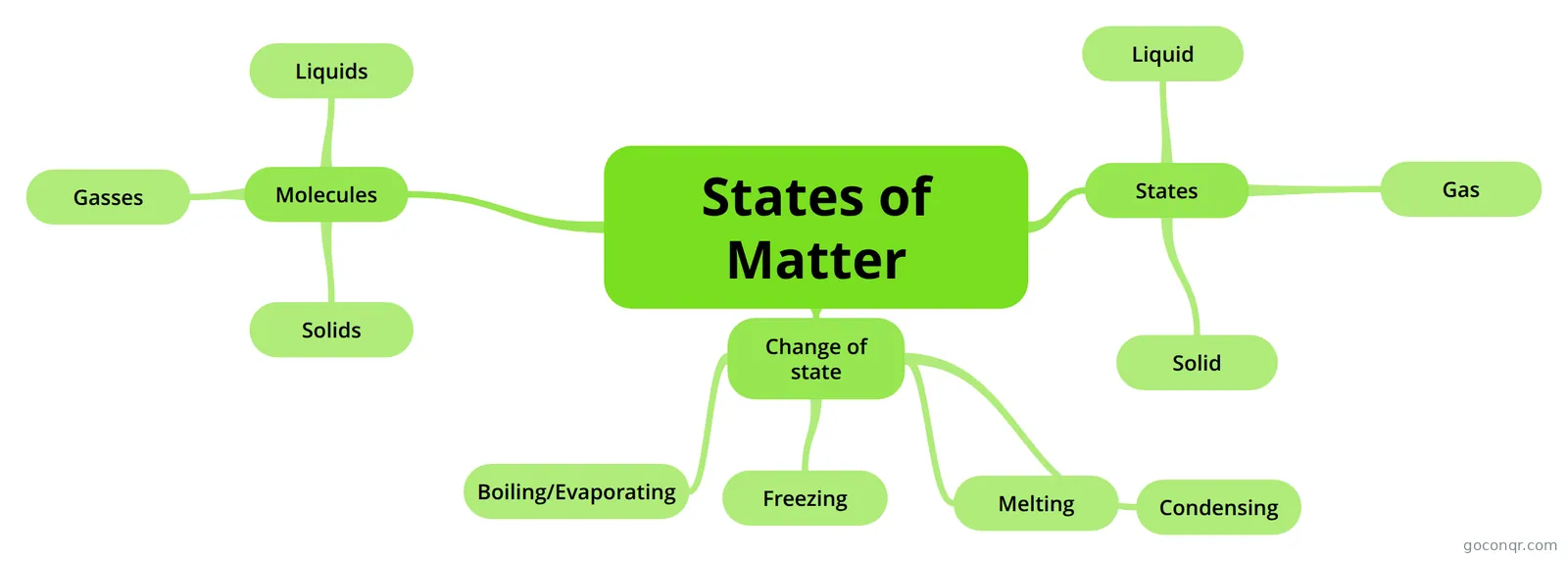 Mind map States of Matter
-
Mind map Particle Model of Matter An overview of what you need to know for GCSE AQA physics topic 3. Please rate and comment so I can improve...
-
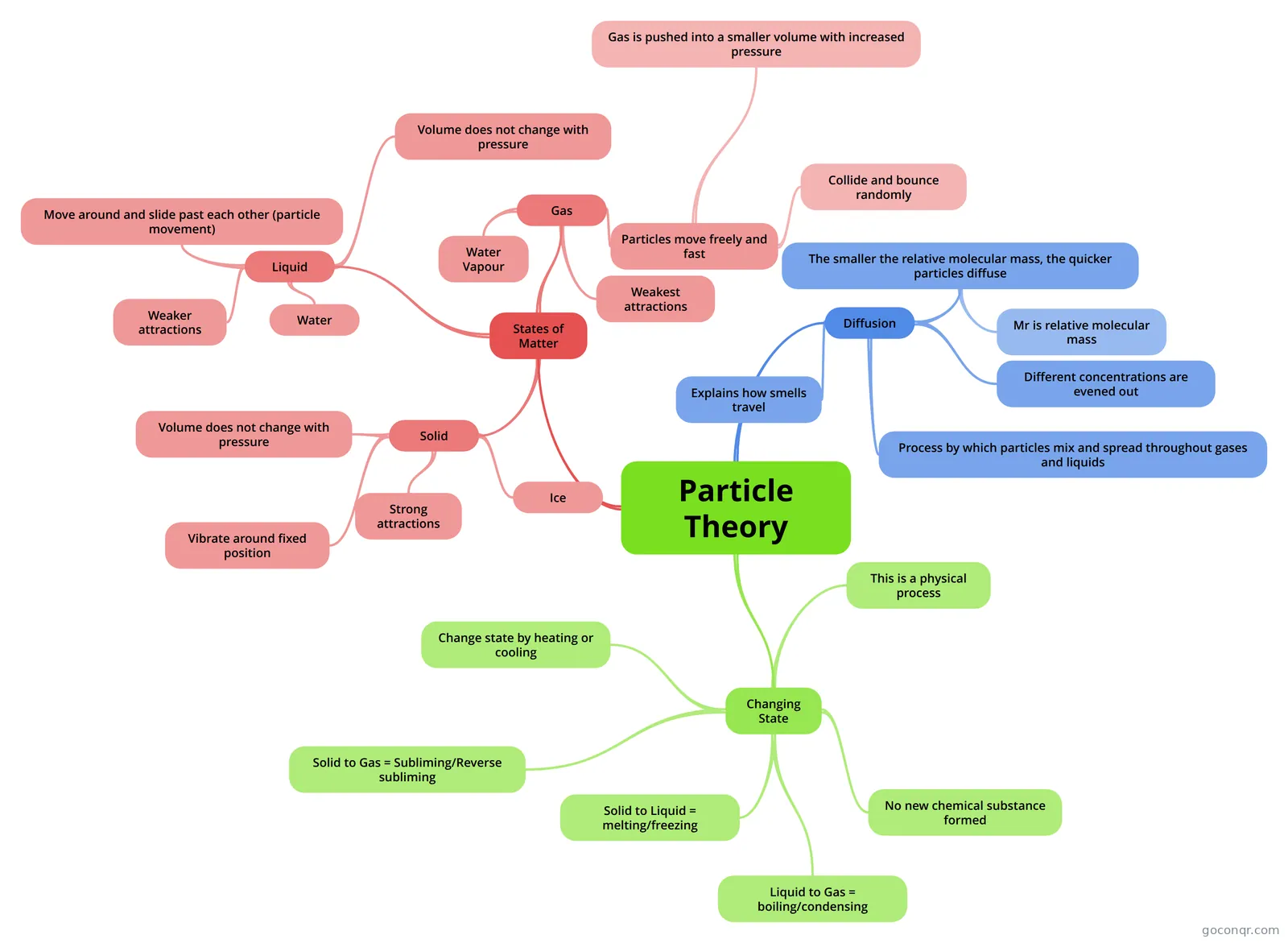 Mind map Particle Theory Learn, read and leave a comment :)
-
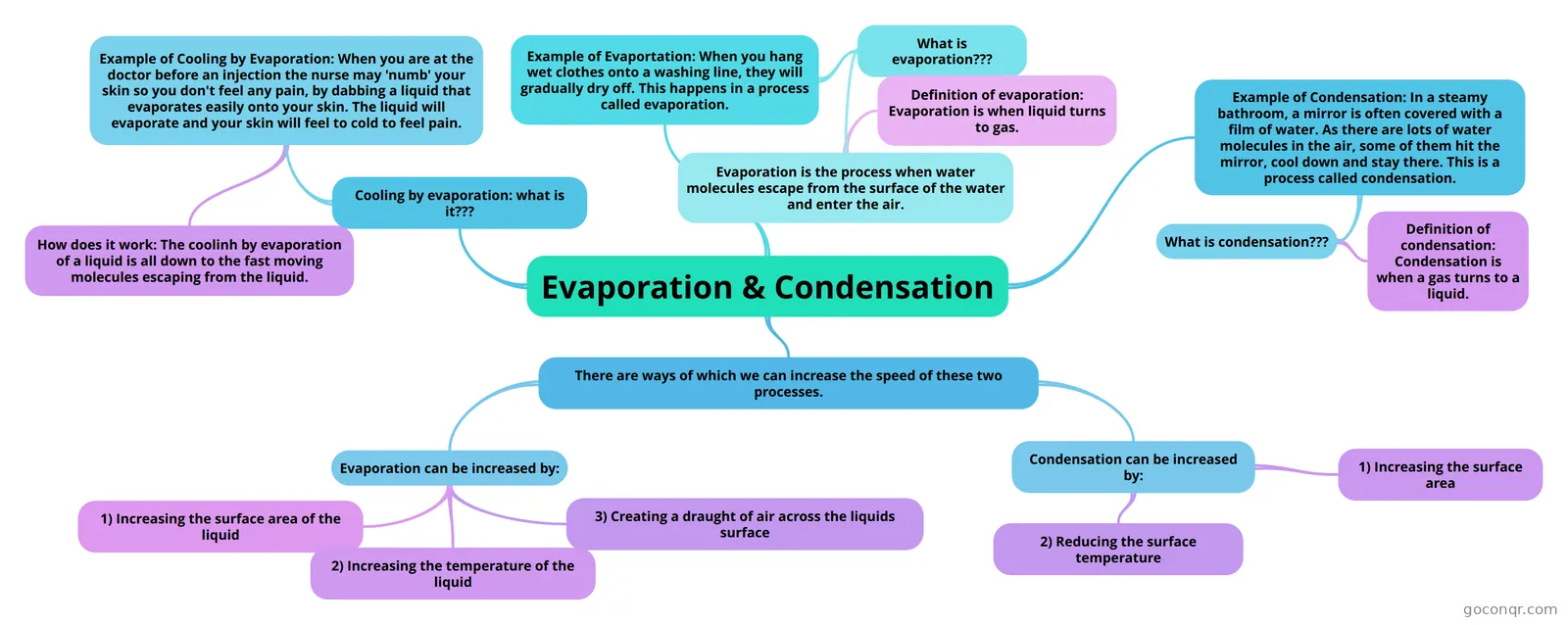 Mind map Evaporation & Condensation
-
Mind map STATES OF MATTER Estudio de los distintos estados de la materia.
Quizzes
See all 19 quizzes-
6 questionsStates of Matter Quiz Quiz for Stage 7
-
6 questionsDensity Bozeman
-
28 questionsPhysics (Unit 1 - Kinetic Theory and Conduction) Kinetic theory describes how atoms move in solids, liquids and gases.
-
21 questionsPHYSICS M2 (1) quiz on Force
-
14 questionsPhysics: particle model of matter Liquids are arranged in a regular pattern
-
10 questionsPhysical Science Ch 9 a and b
-
4 questionsDensity Reading
-
11 questionsMatter, Physical and Chemical Changes Quiz The state of matter which has very low density is:
Mind maps
See all 39 mind maps-
States of Matter
-
Particle Model of Matter An overview of what you need to know for GCSE AQA physics topic 3. Please rate and comment so I can improve...
-
Particle Theory Learn, read and leave a comment :)
-
Evaporation & Condensation
-
STATES OF MATTER Estudio de los distintos estados de la materia.
-
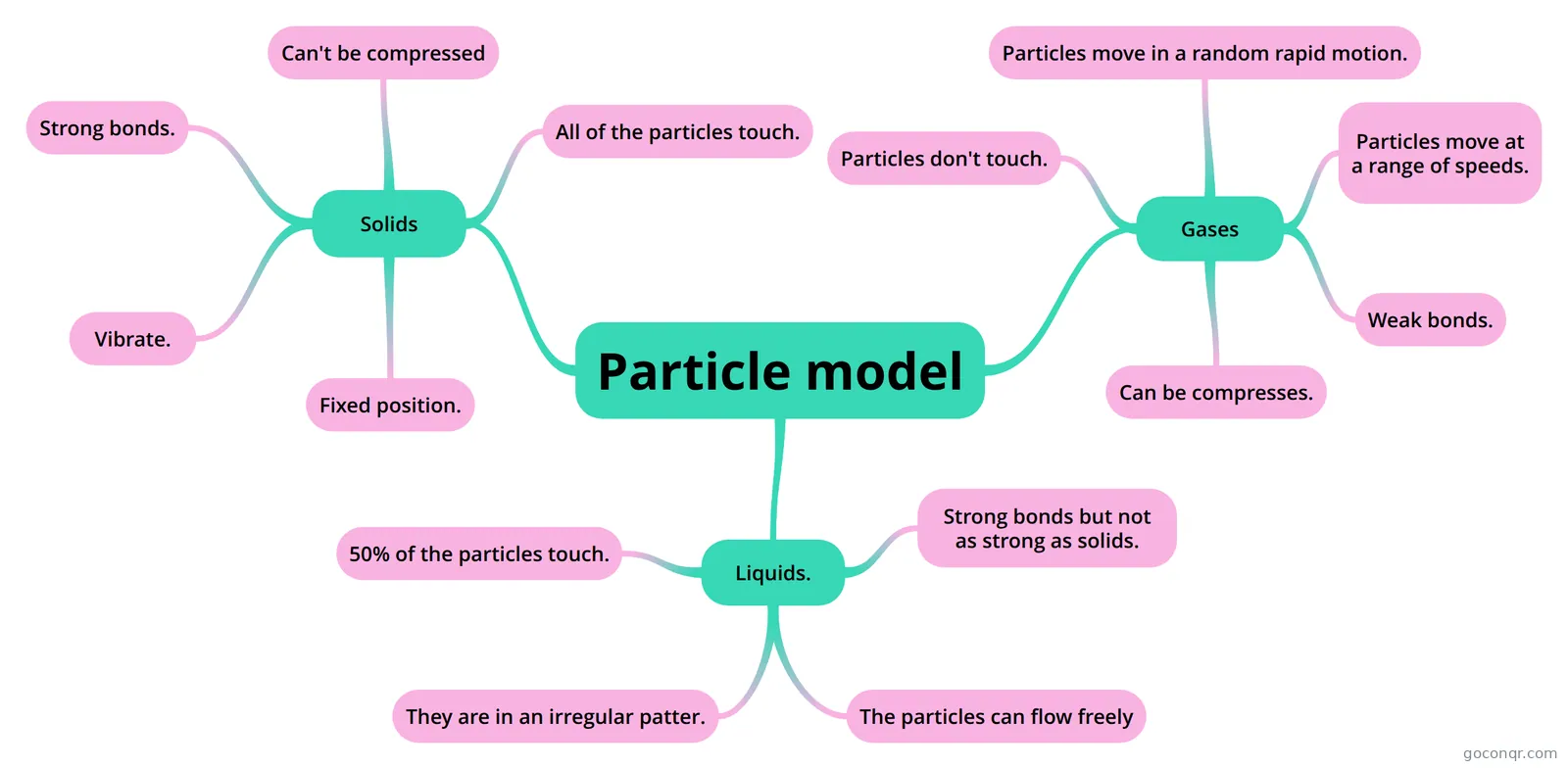 Particle model solids,liquids and gases
-
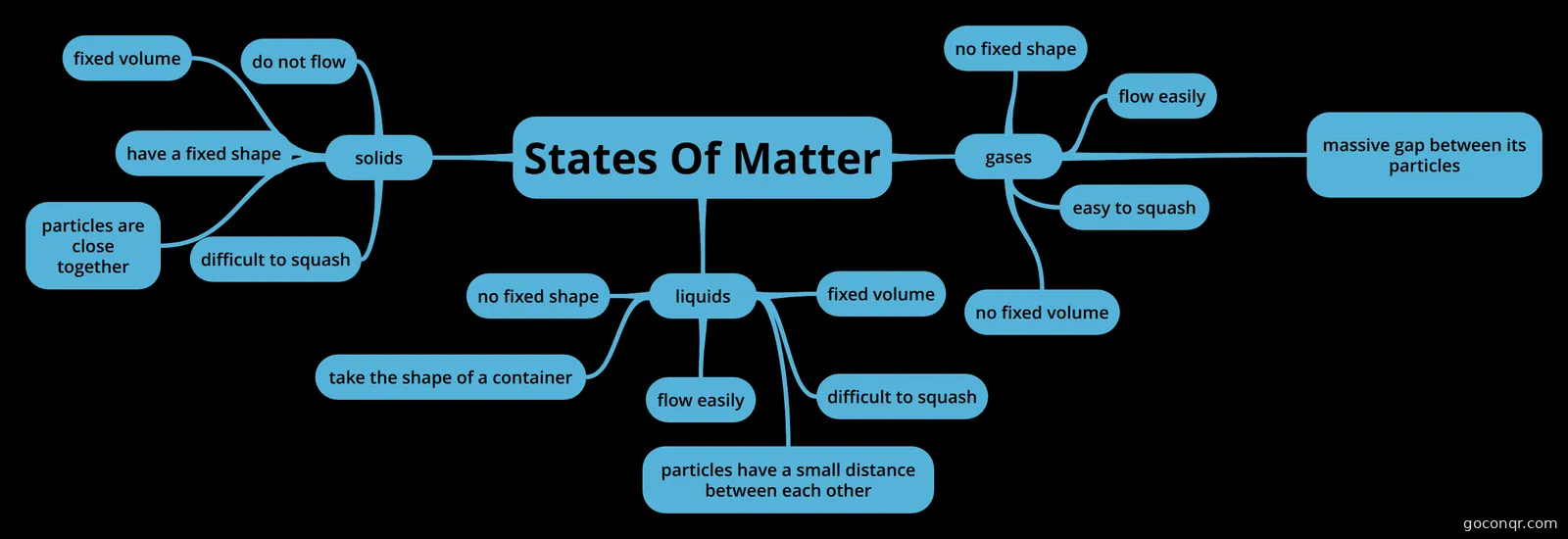 States Of Matter
-
Solids,liquids and gas xfa
Flashcards
See all 41 flashcards-
14 cardsn5 physics gas laws What is the formula used to calculate pressure.
-
8 cardsDensity
-
5 cardsParticle model of matter-specific latent heat Explain the cause of the flat sections on a graph of temperature against time for a substance being heated?
-
45 cardsParticles model of matter what are the three states of matter?
-
45 cardsKinetic theory What is matter?
-
7 cardsPhysics: water properties - cohesion, adhesion, surface tension (Water chase) You will need: watch this videp: https://www.youtube.com/watch?v=65T4ReLkjCg Prep: Small plastic cups (aka ...
-
47 cardsPhysical science Chapter 3
-
15 cardsTopic 3 - Particle model of matter Describe, using the particle model of matter, solids?
Flowcharts
Notes
See all 10 notes-
Heating and cooling curves Changes of states can be explained by using the idea that particles are constantly in motion . This is called the kinetic particle theory we can explain a heating curve using ideas about the energy and motion of ...
-
Particle Model - BBC Bitesize You can use the idea of particles to explain the properties of solids, liquids and gases.The strength of bonds between particles is different in all three states. It explains why solids cannot flow, and why gases can ...
-
Solids, Liquids and Gasses When the material is in solid form it has high densitiy and the particles a very close together. They vibrate but only slightly and, really, hardly at all. They cannot difuse ( be spread out) or be compresse...
-
Physics · To understand that the particle model can be used to explain the different states of matter · To understa...
-
P1 Revision P1 Revision: The History of the Atom and Atomic Structure: J J Thomson discovered that Dalton's theory was not entirely correct and that atoms are not solid spheres. His measurements of mass and charge showed th...
-
6 Molecules and matter 6.1 Density- Mass per unit volume of a material- Density(kg/m3)=mass(kg)/volume(m3)Measuring density of a solid object-Use an electronic balance-solid object(eg. cube or cuboid)- measure its dimension using ruler-Use ...
-
Science Notes MatterWhat is Matter?The amount of matter in an object is the mass of an objectMass is measured in grams of kilogramsThe amount of space matter takes up is called volumeMatter can exist in different states or phrasesM...
-
P4- The particle model of matter Equations= Density= Mass/Volume Change in thermal energy= mass x specific heat capacity x temperature change  ...
Slides
More Physics topics
About States of Matter and the Particle Model
GoConqr OriginalWhat this unit covers
The resources on this page follow the particle model from the basic idea to its uses. Many are written with GCSE Physics, AQA GCSE Physics, IGCSE Physics and GCSE Science in mind, and a few mention GCSE Chemistry.
- States and particles: solids, liquids and gases, and how their particles are arranged and move.
- Changes of state: melting, freezing, boiling, evaporation and condensation.
- Density: mass, compactness and why things float.
- Gases and heat: pressure, temperature, absolute zero and specific latent heat.
Where to start
Begin with the mind map Particle Model of Matter. It sets out the three states, how particles are arranged, and which states are dense. Then open States of Matter and Particle Theory, which add changes of state and diffusion. If you want a wider view, the map STATES OF MATTER also brings in plasma and Bose-Einstein states.
Going deeper
The note Heating and cooling curves uses kinetic particle theory to explain what is happening to the energy of particles during a change of state. Read it after the basic maps. Next, look at the maps on evaporation and condensation, then the flashcards on density and specific latent heat. The deck n5 physics gas laws covers pressure, volume and temperature.
Using quizzes and maps together
Try States of Matter Quiz before you revise, and note the questions you miss. Go back to the matching map and look for the branch that answers them. Then retake the quiz. Density Bozeman is a good short check for density. Teachers can pick a quiz, a map or a slide set such as Kinetic Theory and Diffusion for a lesson.
Where it fits
This unit sits in the Matter and Thermal Physics strand of Physics. Choose one resource today, work through it, and then make a map or flashcard set of your own.
Frequently asked questions
Which resource should I open first?
Start with the Particle Model of Matter mind map. It covers solids, liquids and gases, how their particles are arranged and how dense each state is. After that, take the States of Matter Quiz to see which ideas you need to revisit.
What do the mind maps cover?
They cover the three states of matter, particle arrangement, changes of state, diffusion, evaporation and condensation, and density. Some also go into kinetic theory, gas pressure and the extra states such as plasma. Several follow GCSE Physics topic headings, including AQA ones.
Which exams do these resources suit?
The resources mention GCSE Physics, AQA GCSE Physics, IGCSE Physics, GCSE Science and GCSE Chemistry. Most are aimed at secondary school students, with a small share suited to younger pupils. Check each resource to see whether it matches your course.
Are the resources free to use?
Yes. Every resource listed here is free to open, study and take, with no account needed. They were made by GoConqr users rather than by GoConqr. A free account also saves your quiz scores and lets you make your own quizzes, maps, flashcards and notes.
Is there anything on heating and cooling curves?
Yes. The note Heating and cooling curves explains changes of state using the idea that particles are always moving. It links kinetic particle theory to the energy changes shown on a curve. The latent heat flashcard decks are a useful follow-up.
What if I can't find the topic I need?
Try nearby topics first, such as density, kinetic theory, evaporation or gas laws, as the same ideas appear under different titles. If it is still missing, you can make your own map, flashcards or quiz and keep it for revision.