
Astronomy and Space
90 resources created by 83 users
This Astronomy and Space page on GoConqr gathers community-made mind maps, flashcards, quizzes and notes, from the life cycle of a star and orbits to satellites, red-shift and telescopes. It's built for school students revising a topic and teachers after ready-made material. There are over 500 resources here, including more than 30 quizzes, over 260 mind maps and over 170 flashcards, shared by more than 400 contributors. Pick a topic, try a quiz to find your gaps, then make your own set.
Top Astronomy and Space resources
-
139 cardsOrbital Mechanics Why is orbital mechanics important?
-
21 questionsP1 Quiz
-
Mind map OCR 21st Century P1
-
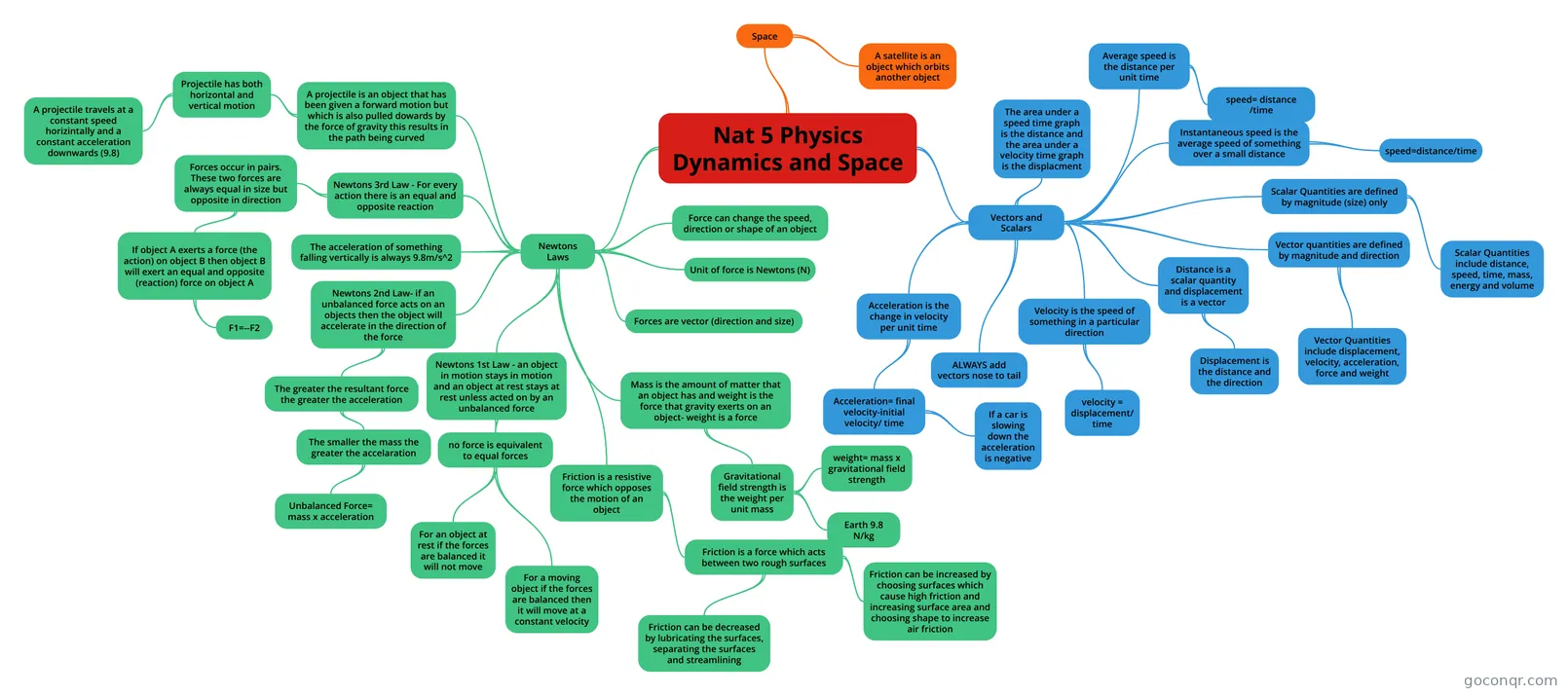 Mind map Nat 5 Physics Dynamics and Space
-
16 questionsAQA A-Level Physics Astrophysics Course What type of lens is used for observing the night sky?
-
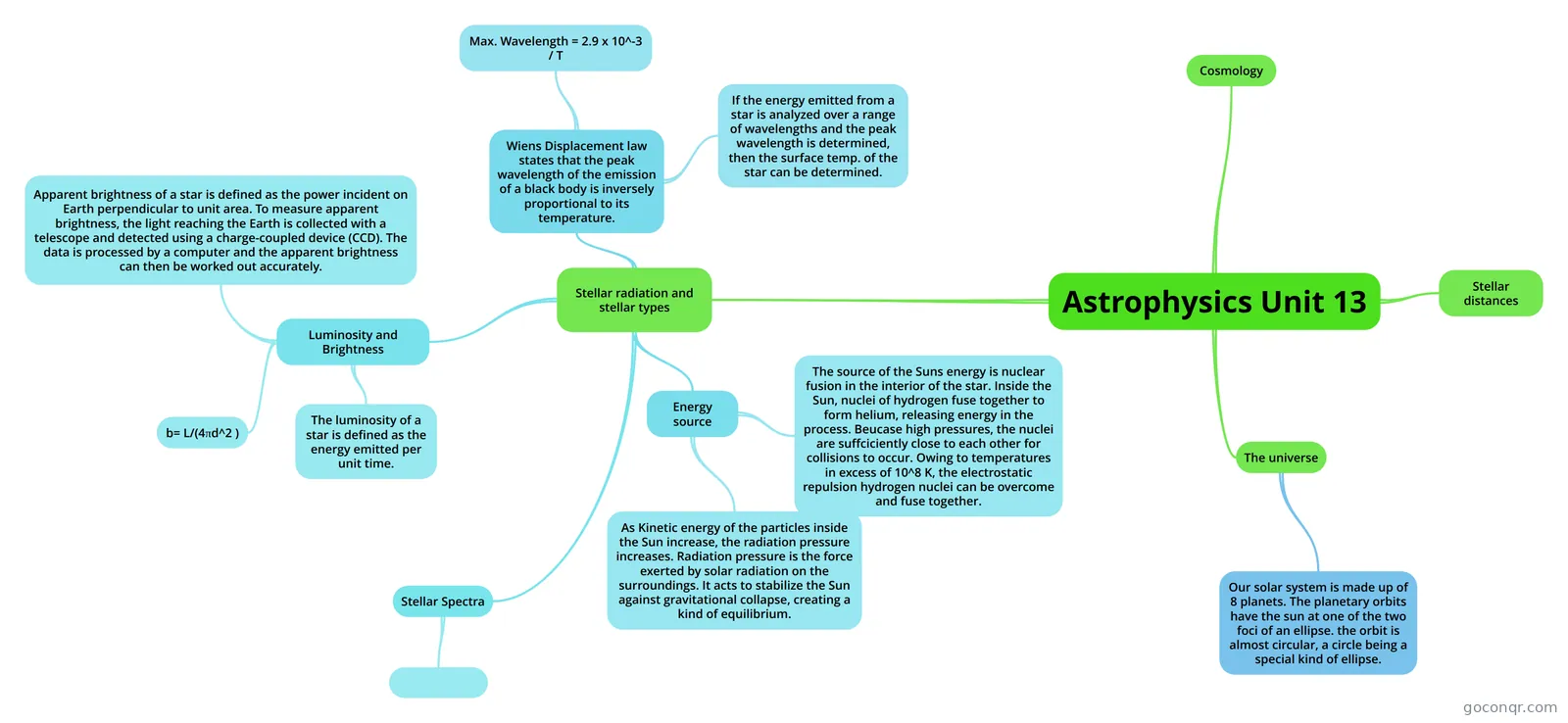 Mind map Astrophysics Unit 13
-
Mind map life cycle of a star
-
10 cardsGravity tides and orbits
Quizzes
See all 13 quizzes-
21 questionsP1 Quiz
-
16 questionsAQA A-Level Physics Astrophysics Course What type of lens is used for observing the night sky?
-
14 questionsP7 Quiz - Stars All hot objects, including stars, emit a continuous range of radiation in the electromagnetic spectrum.
-
28 questionsFull Science Test Practice Quiz 1 Science 9, New Brunswick
-
9 questionsThe Northern Lights What charge are the particles when they leave the sun?
-
6 questionsPhysics: Beyond the Solar System How many times bigger is the Sun in diameter to the Earth?
-
8 questionsP7 Ultimate Test
-
10 questionsCosmology GCSE (AQA specifications) What does CMBR stand for?
Mind maps
See all 32 mind maps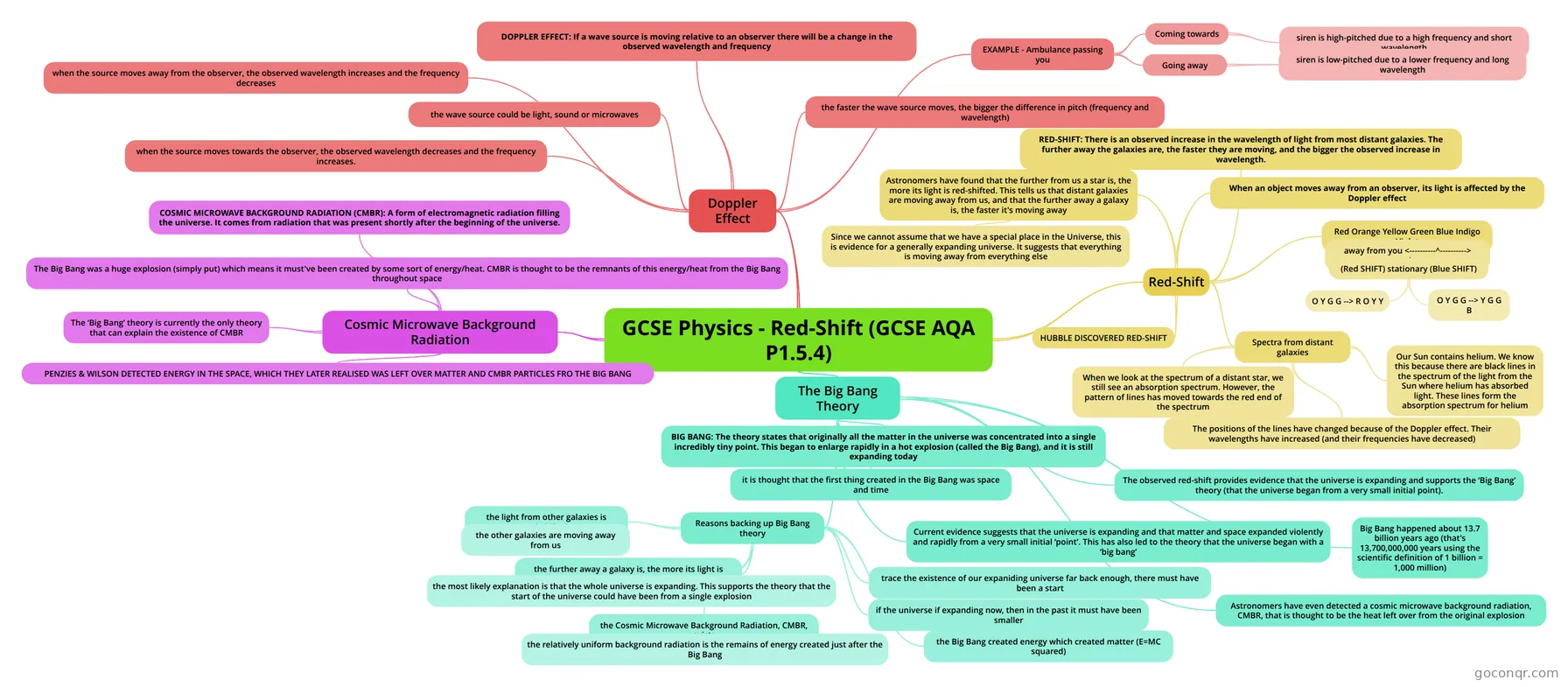
Flashcards
See all 39 flashcards-
139 cardsOrbital Mechanics Why is orbital mechanics important?
-
10 cardsGravity tides and orbits
-
86 cardsP7 What is a sidereal day?
-
37 cardsP7- Section 1 What is a solar day?
-
44 cardsAstrophysics (Assessment statements) General structure of the Universe
-
68 cardsearth and space what is gravity
-
31 cards9.2 Space
-
11 cardsTopic 8 - Space physics What happens for the first three stages of a star's life cycle?
Notes
-
Satellites, gravity and circular motion - created from Mind Map Satellites Geostationary satellites are used for communications and stay in a fixed position above the Earth's surface Low polar orbit satelites are closer to the ground, and are used for weather forcasting and imagin...
-
Graviity, the sun and the stars and day and night( 4 seasons) By CGP Gravity is a force that attracts all masses Anything with mass will attract anything else with mass. In other words, everything in the universe is attracted by the force of gravity to everything else The earth and moo...
-
The Big Bang Theory The Big Bang theory Scientists have gathered a lot of evidence and information about the Universe. They have used their observations to develop a theory called the Big Bang. The theory states that about 13.7 billion y...
-
Astrophysics HL 10.2, 10.5 10.2 Stellar radiation and stellar typesAssesment statements - State that fusion is the main energy soure of stars - Explain that, in a stable star (for example, our Sun), there is an equilibrium  ...
-
Bottle Rocket Research and Planning- Kennedy and Olivia Bottle Rocket Competition Research:Water helps the rocket launch farther up in the air than air does. long stiff poles are good for aerodynamics and directing the rocket. the pole works better with a weight (plastic e...
-
Solar Wind Solar Winds and Aurora BorealisWhen Solar Winds leave the sun they make a journey to the earths atmosphere, they first hit the earths magnetic field or the magnetosphere. This causes distortion on the the magnetospher...
More Physics topics
About Astronomy and Space
GoConqr OriginalWhat the resources cover
The unit follows the sky from the Sun and planets out to stars and the wider universe. The mind map life cycle of a star starts with dust and gas clumping under gravity, then shows how nuclear reactions keep a star hot. Other maps and decks follow stars through protostar, main sequence, red giant, supernova, neutron star, black hole and white dwarf.
Gravity, orbits and satellites
The Orbital Mechanics flashcards ask about Copernicus, Brahe and Kepler, and what peri- and apo- mean. The Gravity tides and orbits deck covers gravitational fields, eclipses and tides. The mind map on satellites, gravity and comets compares geostationary satellites, used for communications, with low polar orbits.
Where to start
- Open The Life Cycle of a star mind map for the big picture.
- Move to OCR 21st Century P1 for the solar system, asteroids and comets.
- Use the flashcards to learn key terms and definitions.
- Finish with a quiz such as P1 Quiz or AQA A-Level Physics Astrophysics Course.
Using quizzes and maps together
Read a map first, then take a quiz and note what you missed. Go back to the matching map branch or flashcard deck and try again. Resources mention GCSE Physics, GCSE Science, A-level Physics, IB Physics, SQA National 5 Physics and SQA Higher Physics, so check which one matches your course. Teachers can use the slide sets, such as Non optical telescopes, as ready-made material.
Where it sits
This unit belongs to the Earth and Space strand of Physics. Choose one topic that you find tricky, work through a map and a quiz on it, and see what you would like to add yourself.
Frequently asked questions
Where should I start with Astronomy and Space?
Start with the life cycle of a star mind map, which gives a clear overview from formation to the end of a star's life. Then try the flashcards on orbits or gravity, and finish with a quiz such as P1 Quiz to see what has stuck.
What do the mind maps cover?
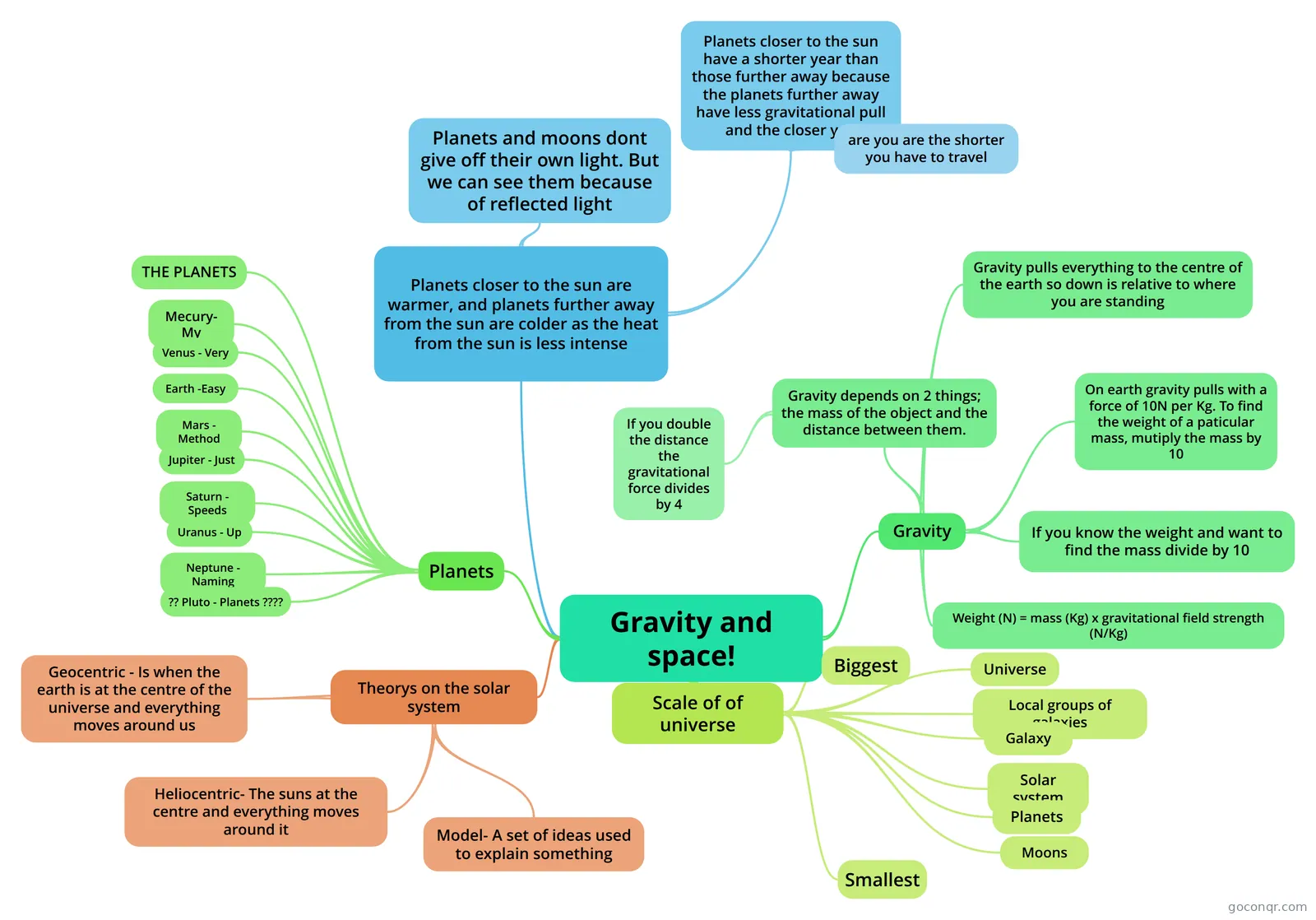
They cover the life cycle of stars, the solar system, satellites and gravity, red-shift, the Big Bang and the expanding universe. Some follow specific courses, such as the Nat 5 Physics Dynamics and Space map or the OCR 21st Century P1 map.
Which exams are the resources linked to?
The listed resources mention GCSE Physics, GCSE Science, A-level Physics, IB, IB Physics, SQA National 5 Physics and SQA Higher Physics. Most are aimed at secondary students, so look at a resource's title and content to check it fits your course.
Are the resources free to use?
Yes. Every resource listed here is free to open, study and take, with no account needed. They were made by GoConqr users rather than by GoConqr itself. A free account also saves your quiz scores and lets you create your own quizzes, maps, flashcards and notes.
Are there quizzes for A-level astrophysics?
Yes. The AQA A-Level Physics Astrophysics Course quiz asks about lenses, converging light and ray diagram components. There are also flashcards and maps on stellar radiation, astrophysics definitions and classification of stars to revise alongside it.
What if I can't find my topic?
Try a nearby title first, since topics such as telescopes, eclipses, seasons and space travel appear in several formats. If your exact topic is missing, you can make your own mind map or flashcards to fill the gap.