
Object-Oriented Programming
602 resources created by 450 users
This Object-Oriented Programming page on GoConqr gathers community-made mind maps, quizzes, flashcards and notes, from classes, objects and constructors to inheritance, polymorphism and interfaces. It's built for university students and professional candidates practising core OOP ideas in Java, C#, C++, JavaScript and Python, and for teachers after ready-made material, with a few resources that school students may also find useful. There are over 580 resources here, including more than 60 quizzes, over 340 mind maps and more than 120 flashcards. Pick a topic, try a quiz, then build your own.
Top Object-Oriented Programming resources
-
Mind map Java
-
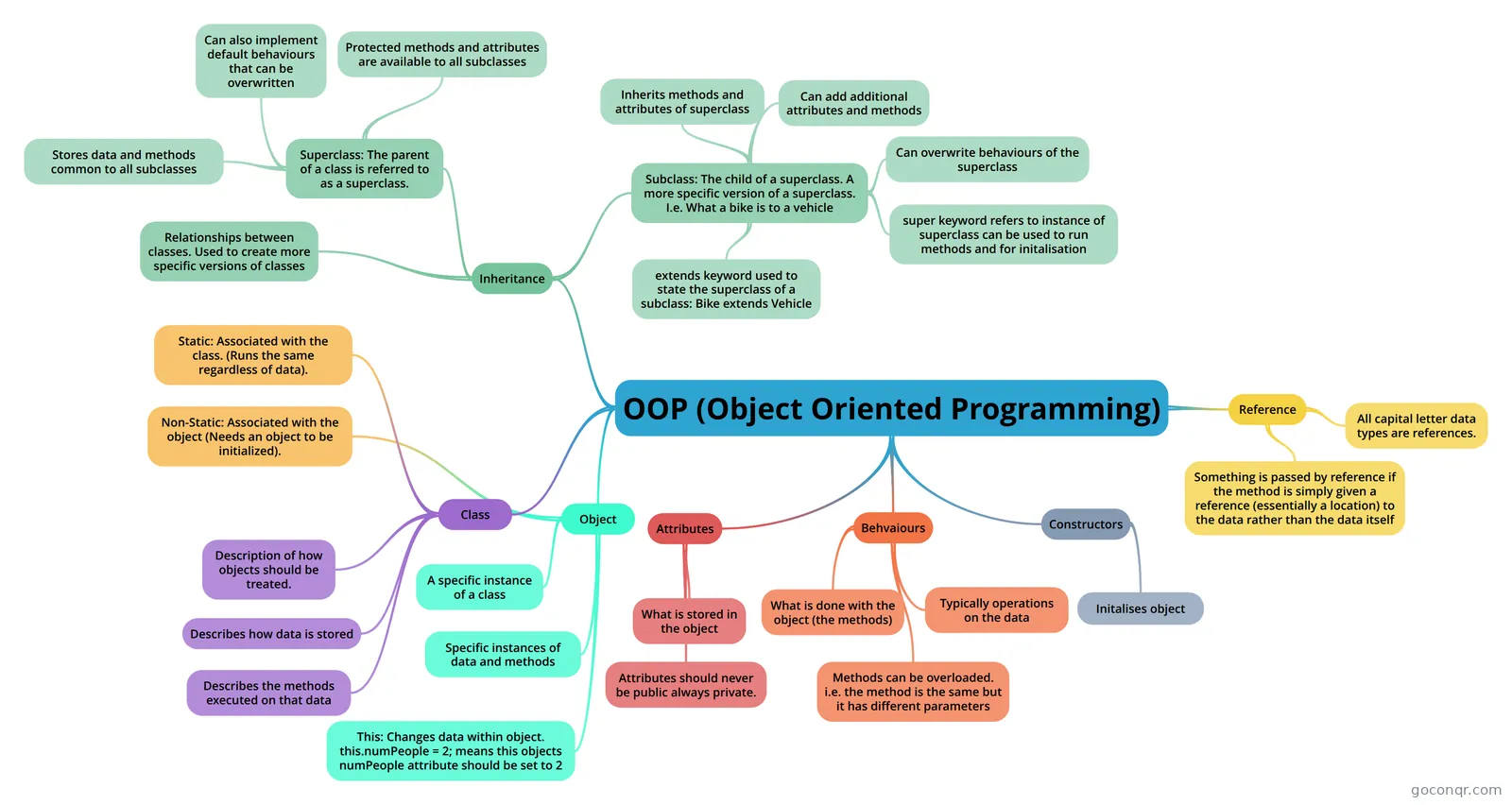 Mind map OOP (Object Oriented Programming) This is specifically designed for and references Java code but is useful for all Object Oriented languages.
-
45 questionsC# Lesson Questions Part 2 All of these questions are from SoloLearn. I am making these for myself to study them easier.
-
20 questionsQuiz 2 [Object-Oriented Programming] What are the three main features of object-oriented programming? (pick 3)
-
10 questionsInheritance
-
21 cardsRep Object Design and Design Patterns What is Object Design specifically regarding its relationship to Requirements Analysis and System Design?
-
15 questionsQuiz - Object Oriented Javascript What are the different ways in which you can create a javascript object? Choose ALL the right options
-
Mind map Inheritance A small mindmap on inheritance.
Quizzes
See all 74 quizzes-
45 questionsC# Lesson Questions Part 2 All of these questions are from SoloLearn. I am making these for myself to study them easier.
-
20 questionsQuiz 2 [Object-Oriented Programming] What are the three main features of object-oriented programming? (pick 3)
-
10 questionsInheritance
-
15 questionsQuiz - Object Oriented Javascript What are the different ways in which you can create a javascript object? Choose ALL the right options
-
167 questionsFinal This is a collection of programming statements that specify the fields and methods that a particular type o...
-
39 questionsEECS 2030 Interfaces and Inheritance- What is an interface?
-
43 questionsJava + OOP Fundamentals [Java] What is an Array List?
-
39 questionsAll Mix EECS 2030
Mind maps
See all 354 mind maps-
Java
-
OOP (Object Oriented Programming) This is specifically designed for and references Java code but is useful for all Object Oriented languages.
-
Inheritance A small mindmap on inheritance.
-
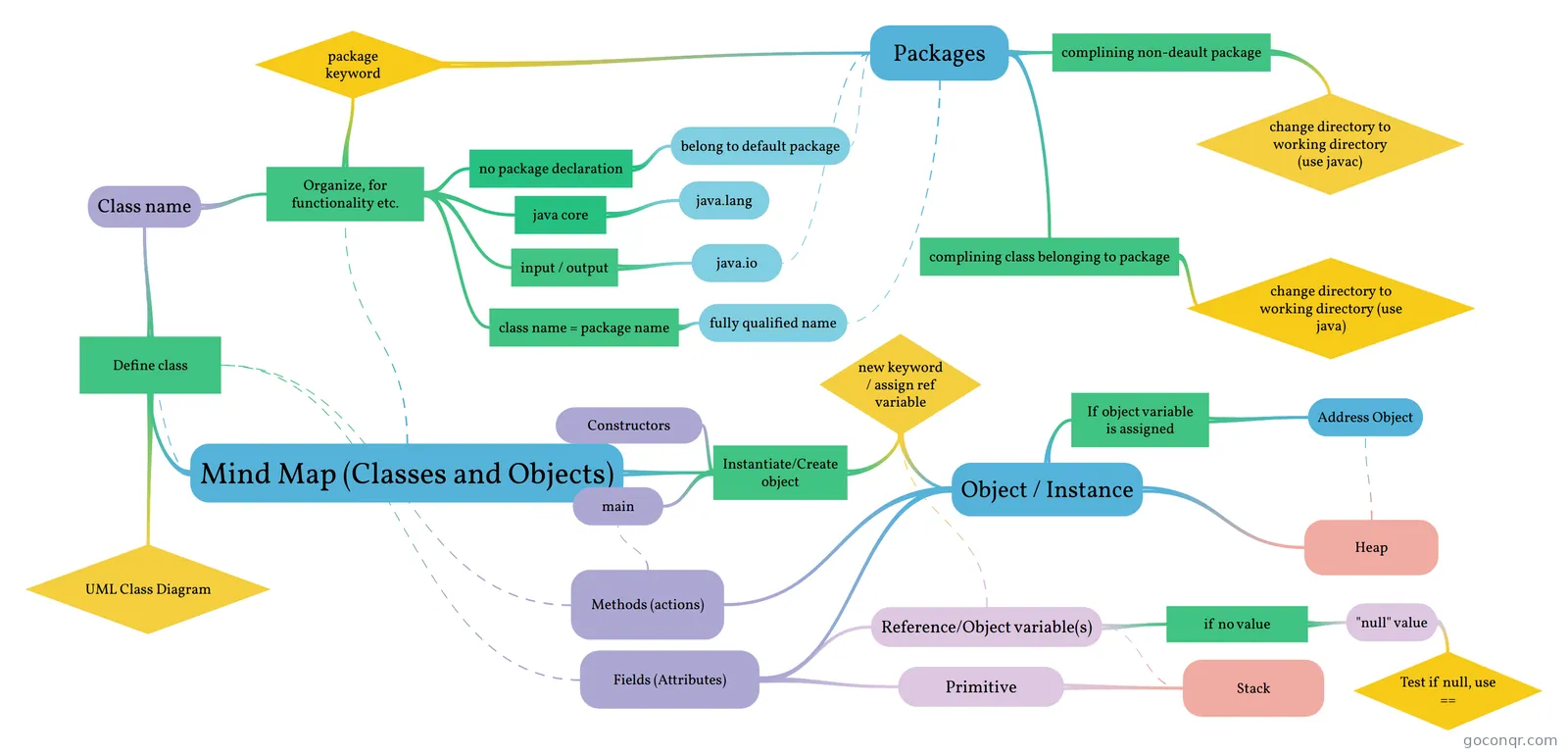 Mind Map (Classes and Objects) Blueprint or template to create objects of identical type
-
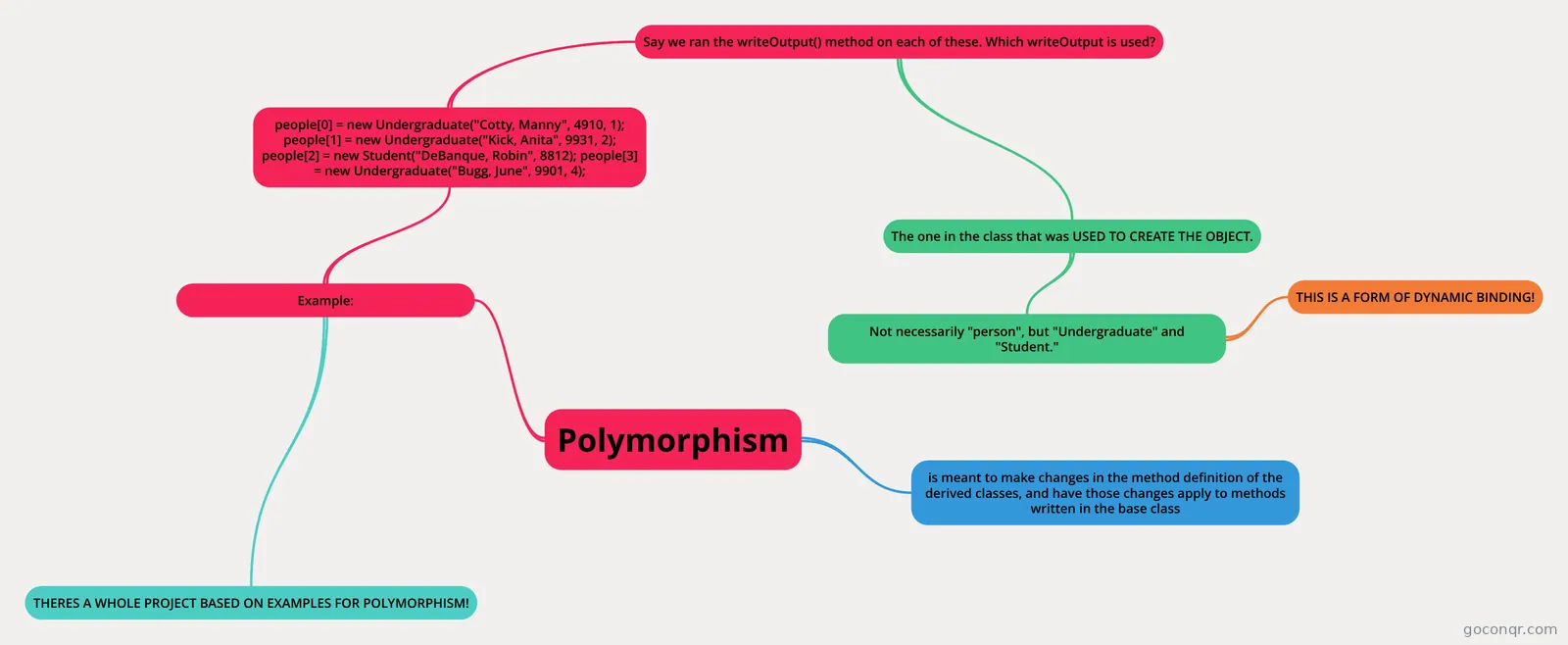 Polymorphism Small mindmap on polymorphism.
-
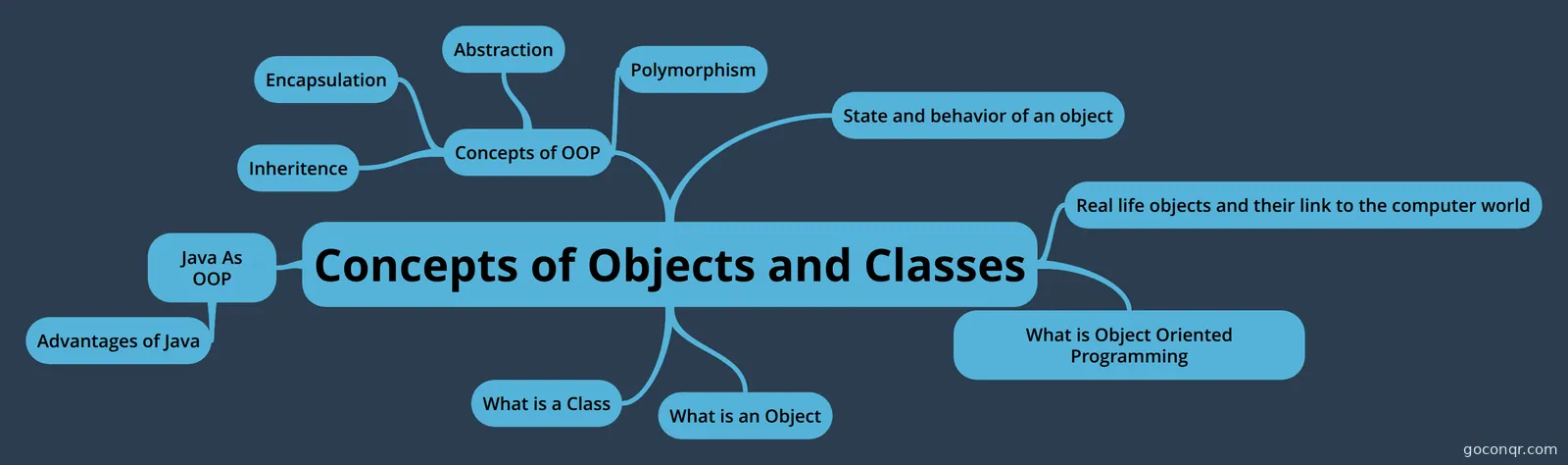 Concepts of Objects and Classes A summary of the Concepts of Objects and Classes
-
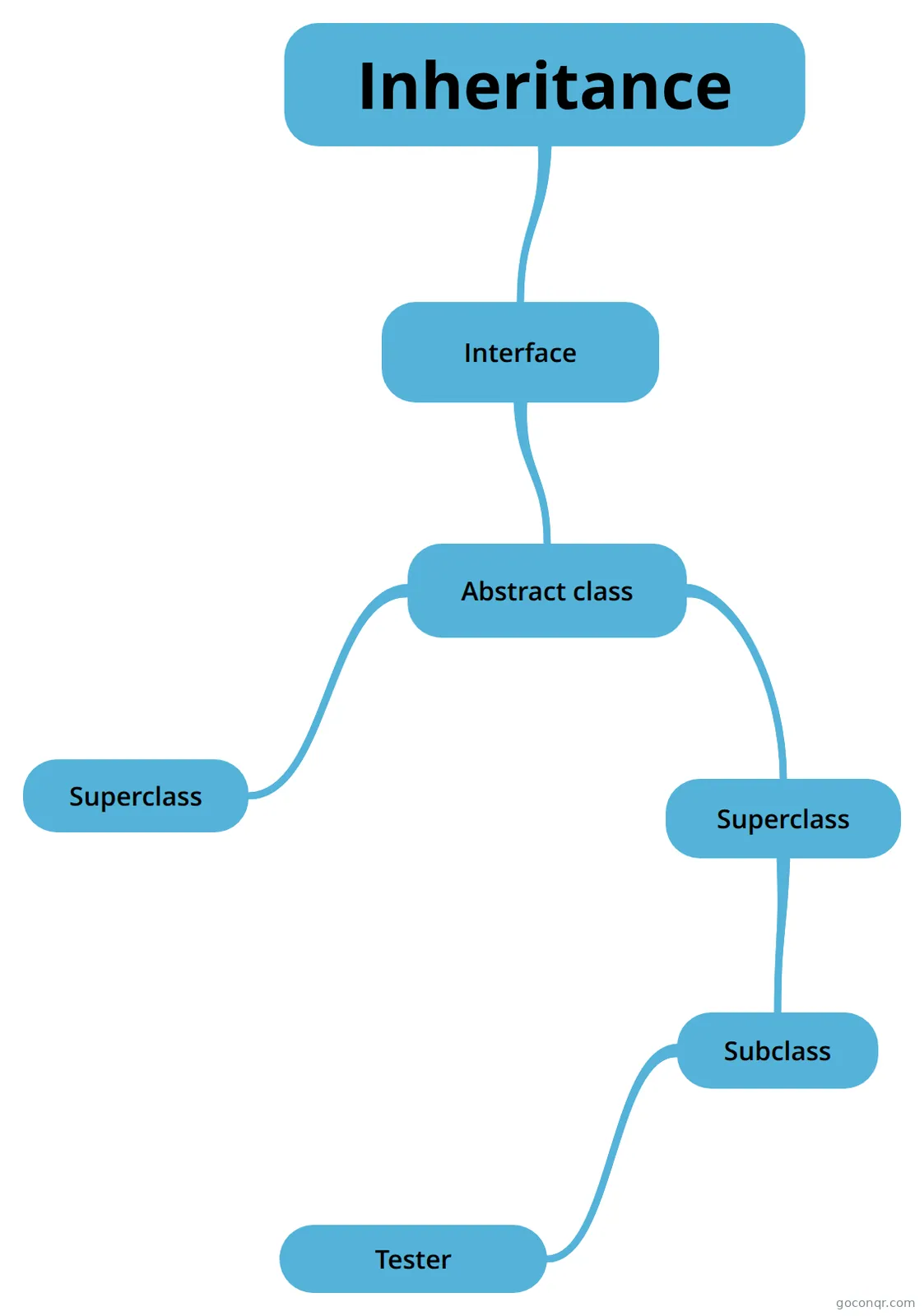 Inheritance A mind map with quizzes and notes about Inheritance that's covered in AP Computer Science By Joanna Zhang
-
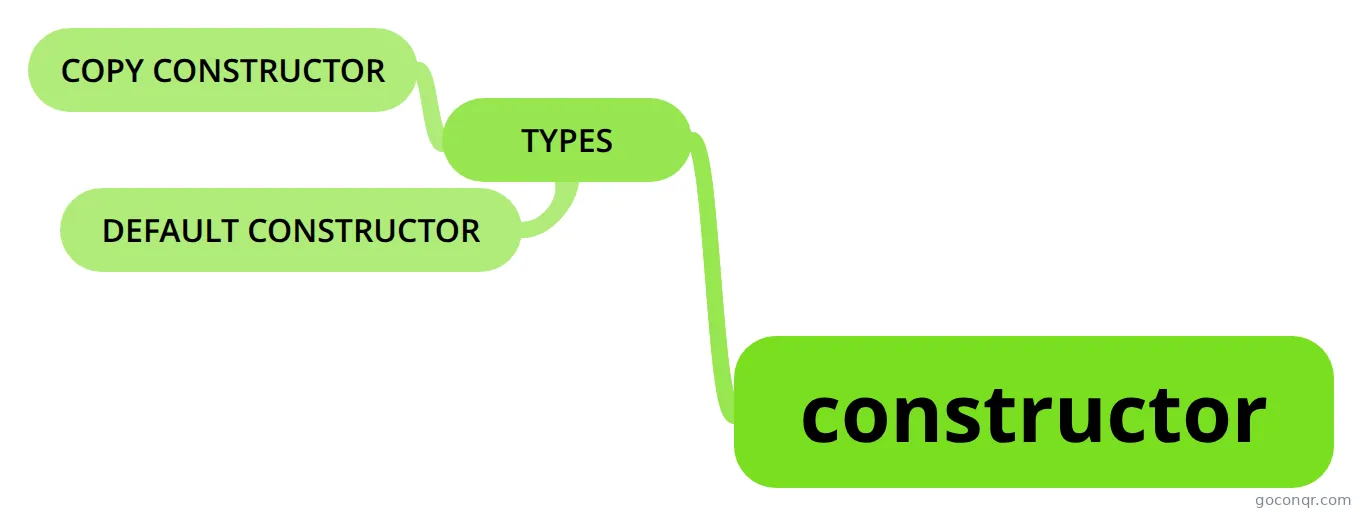 constructor
Flashcards
See all 130 flashcards-
21 cardsRep Object Design and Design Patterns What is Object Design specifically regarding its relationship to Requirements Analysis and System Design?
-
5 cardsCSCI 1302 Test Cram Study When a reference variable is passed as an argument to a method.
-
65 cardsComputer Science
-
33 cardsWeek 2 QC - Revature What is the purpose of inheritance?
-
37 cardsChapter 4 dynamic perspective definition what diagrams to use?
-
57 cardsOO programming What is a class?
-
60 cardsCOMP 206 Unit 1: Introduction to Objects
-
8 cardsFundamental Concepts of Programming
Flowcharts
Notes
See all 34 notes-
OOPs
-
Object Oriented Programming Concepts OBJECT ORIENTED PROGRAMMING CONCEPTS Object Oriented Programming (OOP) is at the core of Java. It is an approach that provides a way for modularizing programs by creating partitioned memory area for both data and func...
-
Object Oriented Programming Concepts OBJECT ORIENTED PROGRAMMING CONCEPTS Object Oriented Programming (OOP) is at the core of Java. It is an approach that provides a way for modularizing programs by creating partitioned memory area for both data and func...
-
OOPs 1. What is OOPS? OOPS is a Object Oriented Programming system in which programs are considered as a collection of objects. Each object is nothing but an instance of a class. 2. Write basic conce...
-
Object Oriented Programming OOPS is a programming model that allows decomposition of a problem into a number of entities called objects and then builds data and functions around these objects.ObjectAn object is a real world entity having attribu...
-
Javascript Lecture Notes Objects in javascript Objects in javascript are really different from other programming languages. Simple types in javascript are number,string,boolean, null and undefined all other values are object.Even arrays...
-
Advantages of OOP Advantages and Disadvantages of Object-Oriented Programming (OOP)This reading discusses advantages and disadvantages of object-oriented programming,which is a well-adopted programming style that uses interacting objec...
-
Python OOPS Concepts Class − A user-defined prototype for an object that defines a set of attributes that characterize any object of the class. The attributes are data members (class variables and instance variables) an...
Slides
Topics in Object-Oriented Programming
More Computing and ICT (programming, computer science, digital skills, educational technology) topics
About Object-Oriented Programming
GoConqr OriginalWhat the resources cover
The page is built around the main ideas of object-oriented programming. The mind map OOP (Object Oriented Programming) sets out classes, objects and how data and methods relate. Concepts of Objects and Classes adds real-life objects and the principles of abstraction and encapsulation. Other maps go deeper into Inheritance, Polymorphism, Aggregation, Generics and Inner classes.
Languages and styles
Many resources are tied to a language. The Java mind map covers constructors, methods and return types. There are quizzes on object-oriented JavaScript, including how to create objects, write a constructor function and show inheritance. C# Lesson Questions Part 2 asks you to predict the output of code with default parameters, and the Inheritance quiz uses C++ classes with constructors and destructors. Flashcards such as Python Beyond the Basics and OOP - Constructors cover vocabulary and syntax.
Where to start and in what order
- Begin with a broad map, such as Mind Map (Classes and Objects), to see fields, methods and constructors together.
- Move to the inheritance and polymorphism maps and the flashcard decks on the same topics.
- Test yourself with Quiz 2 [Object-Oriented Programming], which asks for the three main features of OOP.
- Finish with language-specific quizzes and the design material in Design patterns and Rep Object Design and Design Patterns.
Using quizzes and maps together
Read a map first, then take a quiz on the same topic. Any question you miss shows which branch to revisit. Flashcards are good for terms such as superclass, interface and abstract class. Notes like Subclass Example and Abstract Class Example give short worked cases to compare with your own code.
Where this unit sits
This unit belongs to the Programming strand of Computing and ICT. The listed material is mostly university level, and teachers can use the quizzes and maps as ready-made starting points.
Open a map or quiz that matches what you are studying now, or make your own set once you know the gaps.
Frequently asked questions
Which resource should I open first?
Start with the mind map OOP (Object Oriented Programming) or Mind Map (Classes and Objects). Both lay out classes, objects, fields, methods and constructors in one view. Once those feel familiar, move on to the maps on inheritance and polymorphism, then test yourself with a quiz.
Which programming languages are covered?
The listed resources include Java, C#, C++, JavaScript and Python. You will find a Java mind map, a C# quiz, a C++ inheritance quiz, an object-oriented JavaScript quiz and a Python flashcard deck, plus language-neutral maps and notes on general concepts.
Are the resources free to use?
Yes. Every resource listed here is free to open, study and take, with no account needed. They were made by GoConqr users, not by GoConqr itself, so styles and depth vary from one resource to the next.
Who are these resources for?
Most are aimed at university students and professional candidates working through OOP courses and exams. Teachers can use the quizzes, maps and slide sets as ready-made material. A few resources, such as the AP CS A mind map, may also suit school students.
What do the quizzes test?
They test concepts and code reading. Examples include naming the three main features of OOP, creating constructor functions in JavaScript, working out the output of C# methods, and tracing constructors and destructors in C++ inheritance. Use them after reading a map.
What if I cannot find what I need?
Try a nearby topic, such as interfaces, abstract classes or virtual functions, as many resources overlap. You can also make your own quizzes, mind maps, flashcards and notes with a free account, which also saves your quiz scores.