
Psychodynamic Approach and Psychoanalysis
59 resources created by 52 users
This Psychodynamic Approach and Psychoanalysis page on GoConqr gathers community-made quizzes, mind maps, flashcards and notes, from Freud's levels of mind and psychosexual stages to defence mechanisms and case studies such as Little Hans. It's built for university students and professional candidates, school students and teachers after ready-made material, and it suits revision, recall practice and essay planning. There are over 500 resources here, including more than 20 quizzes and over 270 mind maps, spanning A-level Psychology and GCSE Psychology through to university study. Try a quiz, then make your own.
Top Psychodynamic Approach and Psychoanalysis resources
-
70 questionsCHAPTER 11
-
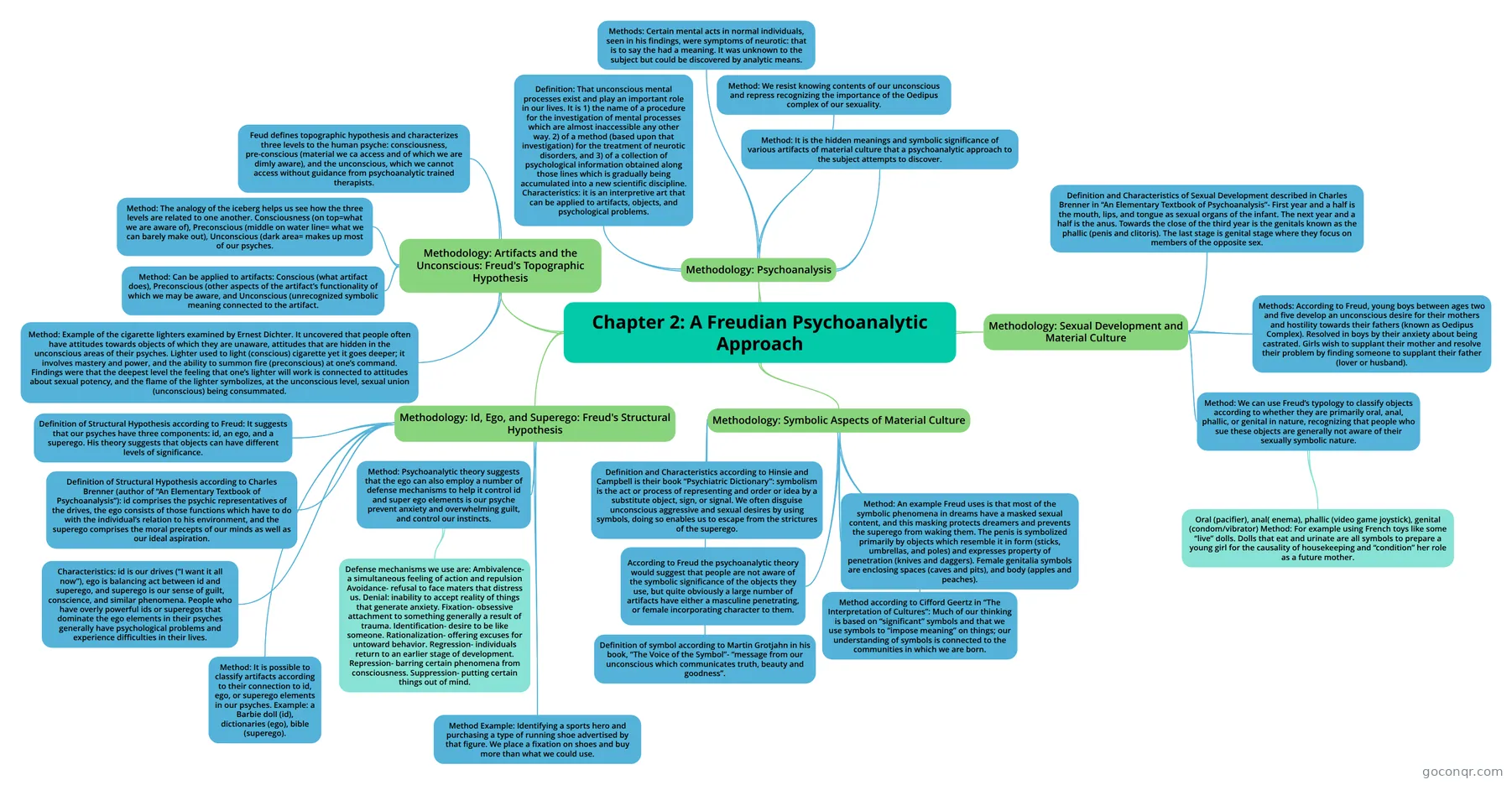 Mind map Chapter 2: A Freudian Psychoanalytic Approach By: Silvana Rodarte
-
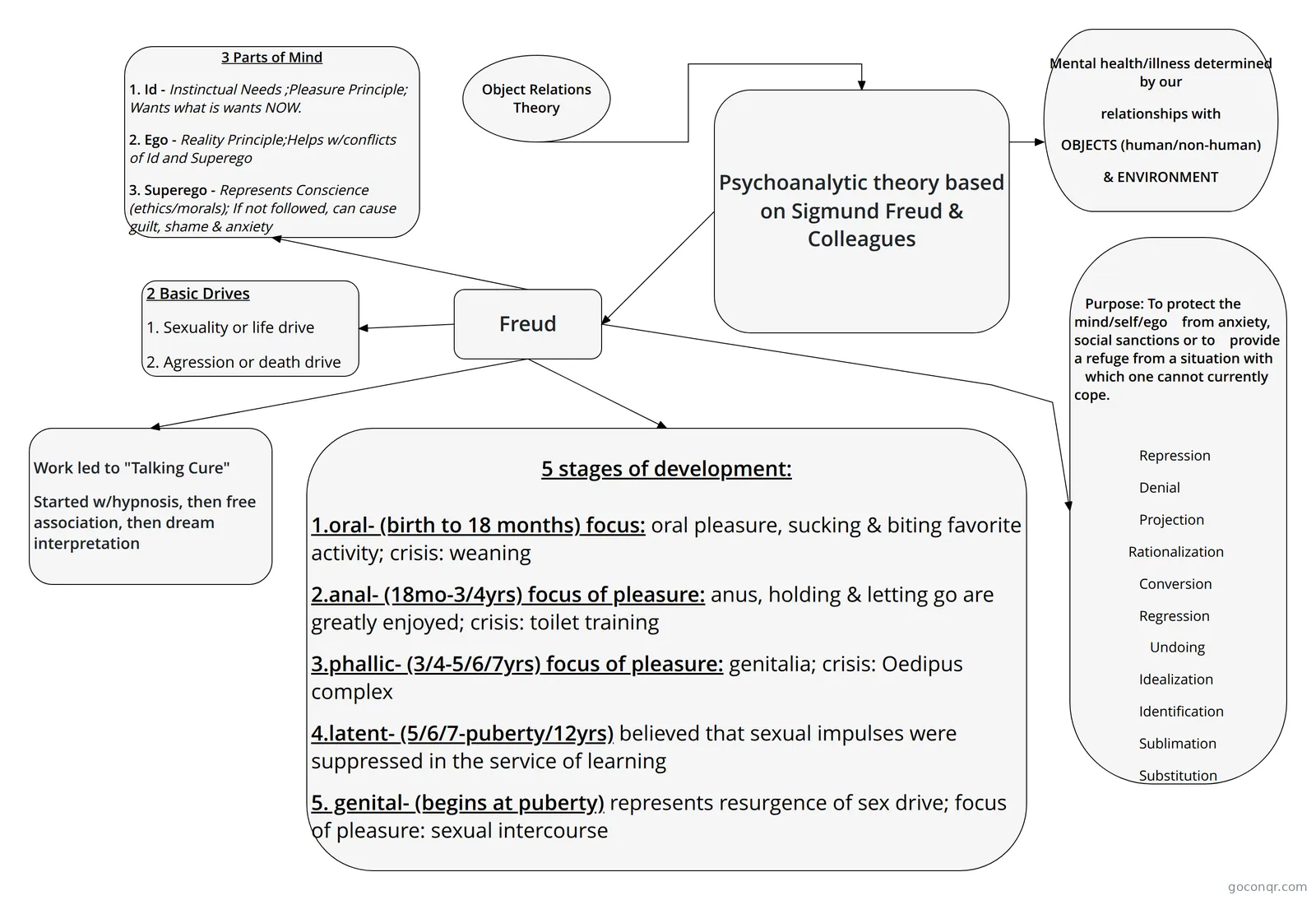 Flowchart Psychoanalytic Theory - Freud Notes for Quiz 1 in OTA course Psch Social Dysfunction
-
Mind map The Psychodynamic Perspective Finished (Unless I've made a ridiculous mistake, then do feel free to make said mistake apparent).
-
28 cardsFreud: topographical vs. structural models Briefly outline how Freud changed psychology in terms of personality
-
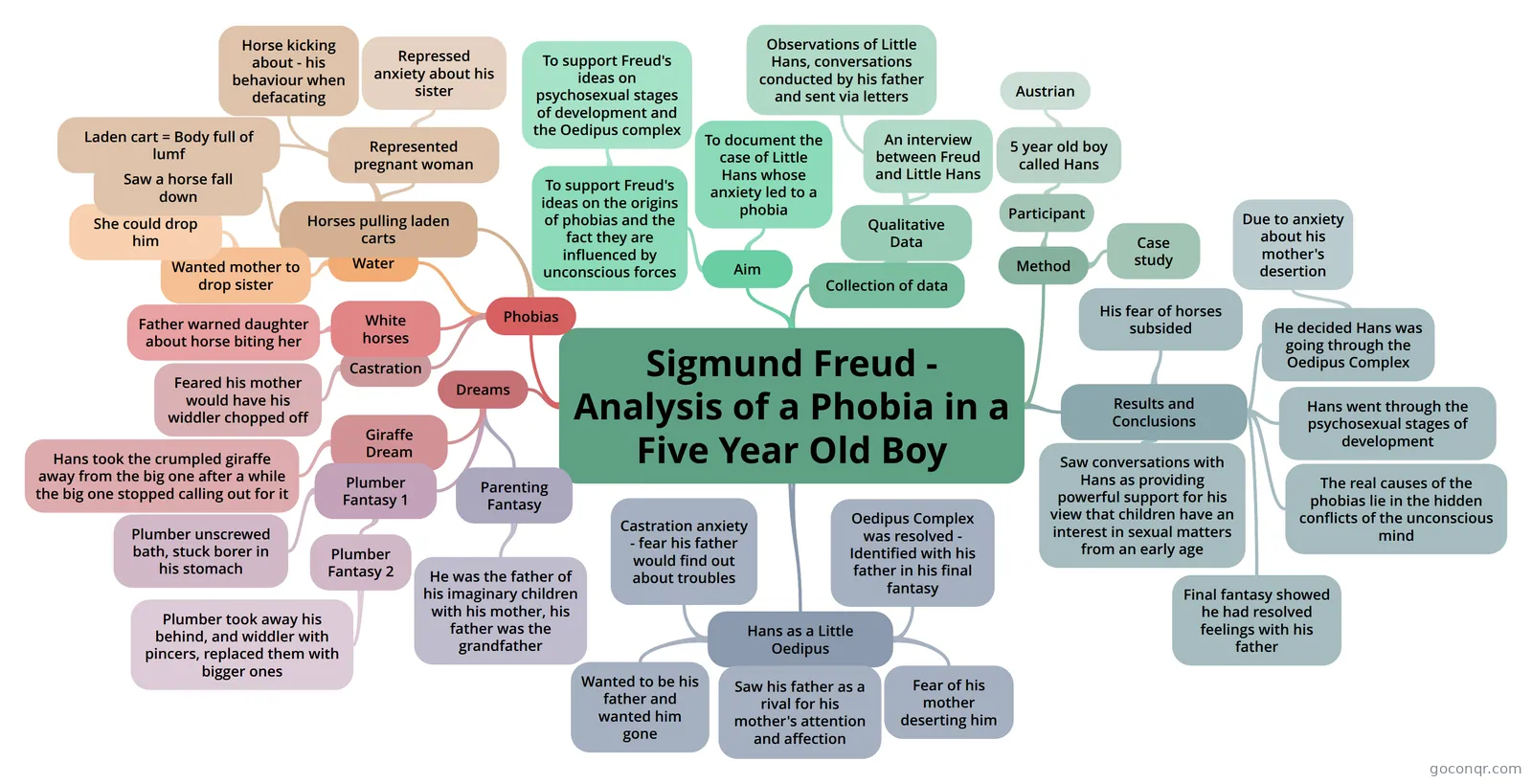 Mind map Sigmund Freud - Analysis of a Phobia in a Five Year Old Boy
-
Mind map Psychoanalytic process Process of the psychoanalitic therapy, steps, theory behind, goals and techniques. Liliana Ojeda
-
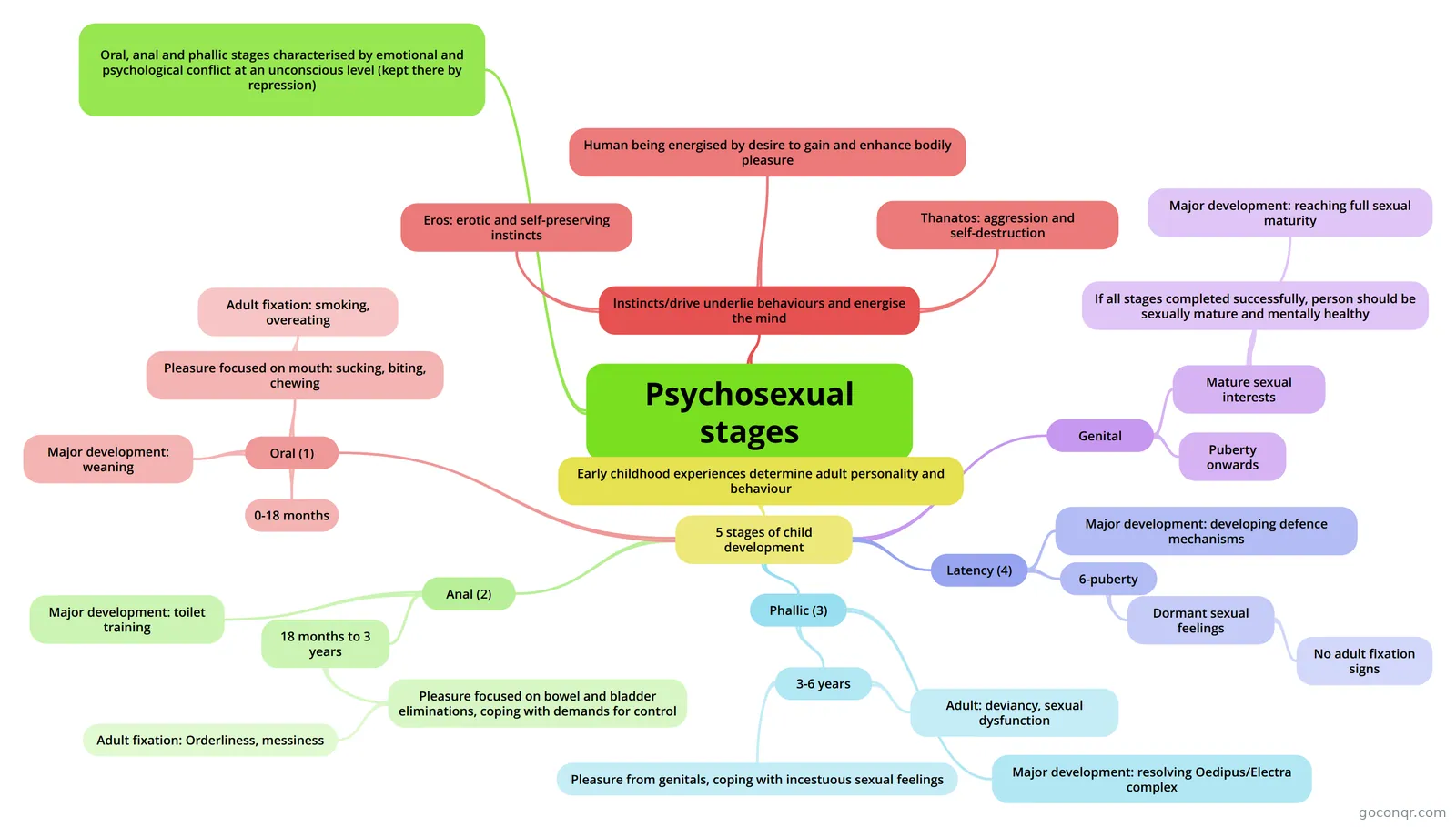 Mind map Psychosexual stages
Quizzes
-
70 questionsCHAPTER 11
-
15 questionsPsychodynamic approach What is the first assumption of the psychodynamic approach?
-
9 questionsPsychodynamic Approach Quiz Which part of the psychodynamic personality is in touch with reality?
-
5 questionsPsychodynamic Quiz AP Psych Who helped along the Psychodynamic approach BESIDES Freud?
-
13 questionsWeek 2 - Post-Freud and Attachment Theory
-
6 questionsPsychodynamic quiz The ego is the rational part of the personality. True or false?
Mind maps
See all 27 mind maps-
Chapter 2: A Freudian Psychoanalytic Approach By: Silvana Rodarte
-
The Psychodynamic Perspective Finished (Unless I've made a ridiculous mistake, then do feel free to make said mistake apparent).
-
Sigmund Freud - Analysis of a Phobia in a Five Year Old Boy
-
Psychoanalytic process Process of the psychoanalitic therapy, steps, theory behind, goals and techniques. Liliana Ojeda
-
Psychosexual stages
-
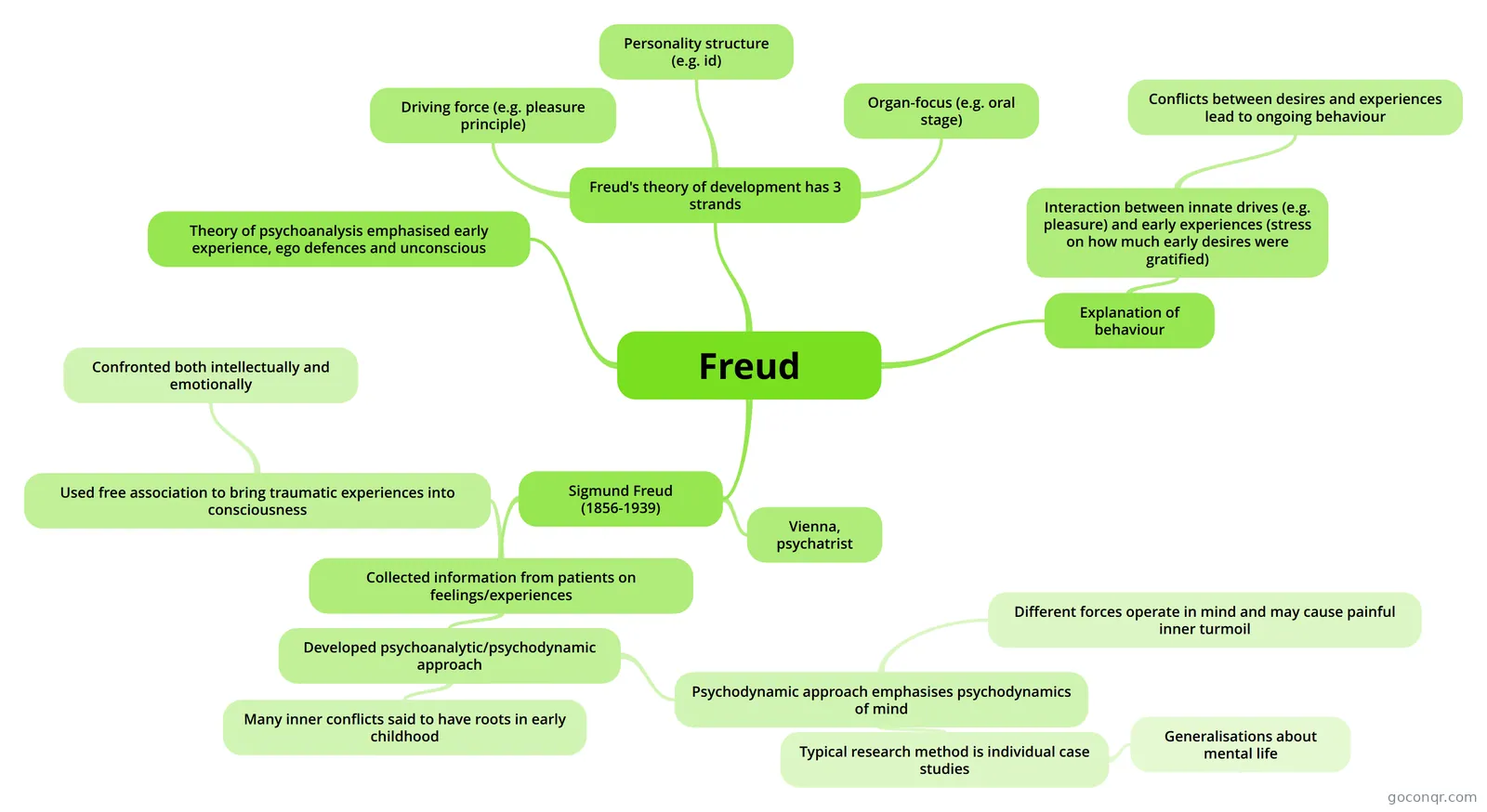 Freud Introduction to Freud's theory of psychoanalysis and the psychodynamic approach to psychology
-
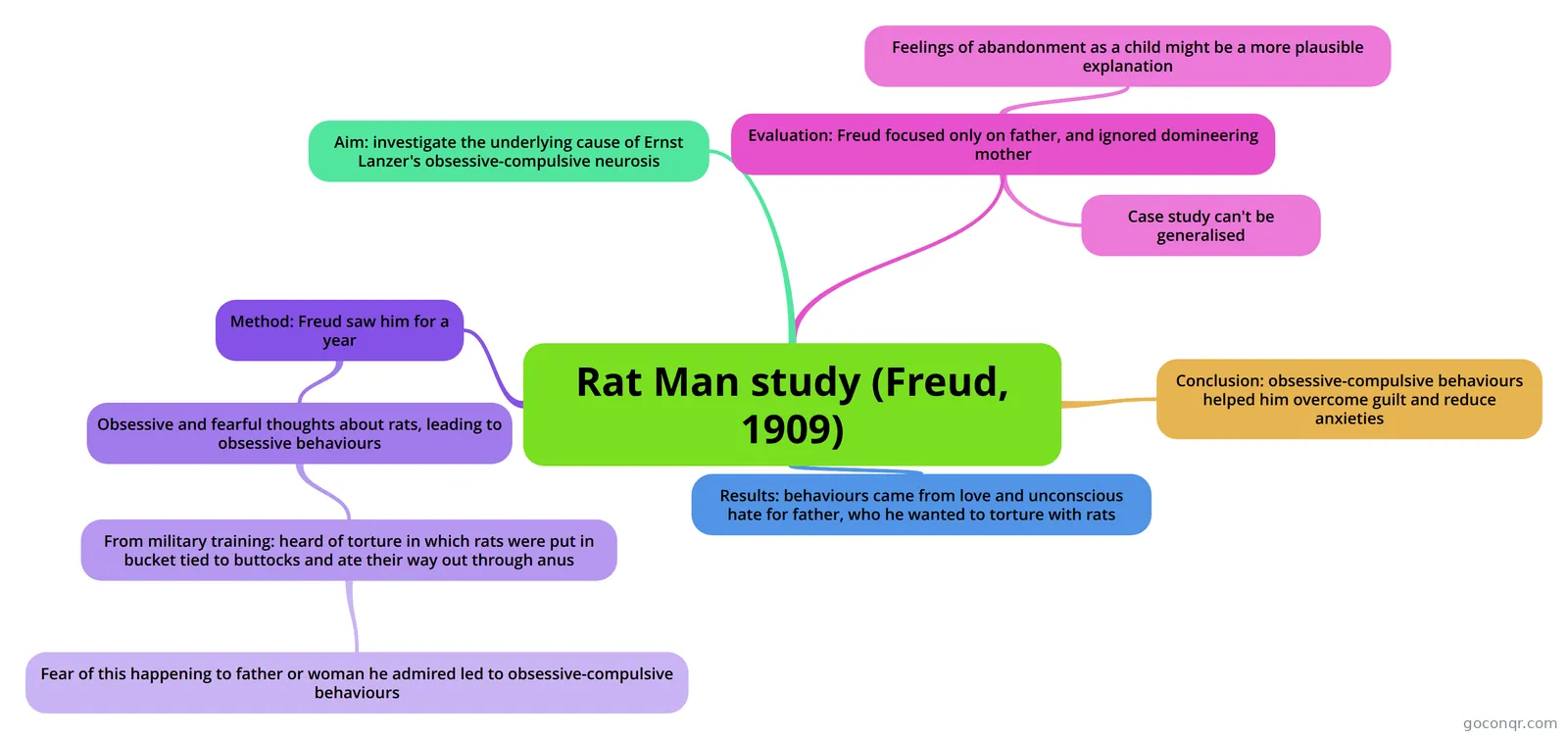 Rat Man study (Freud, 1909)
-
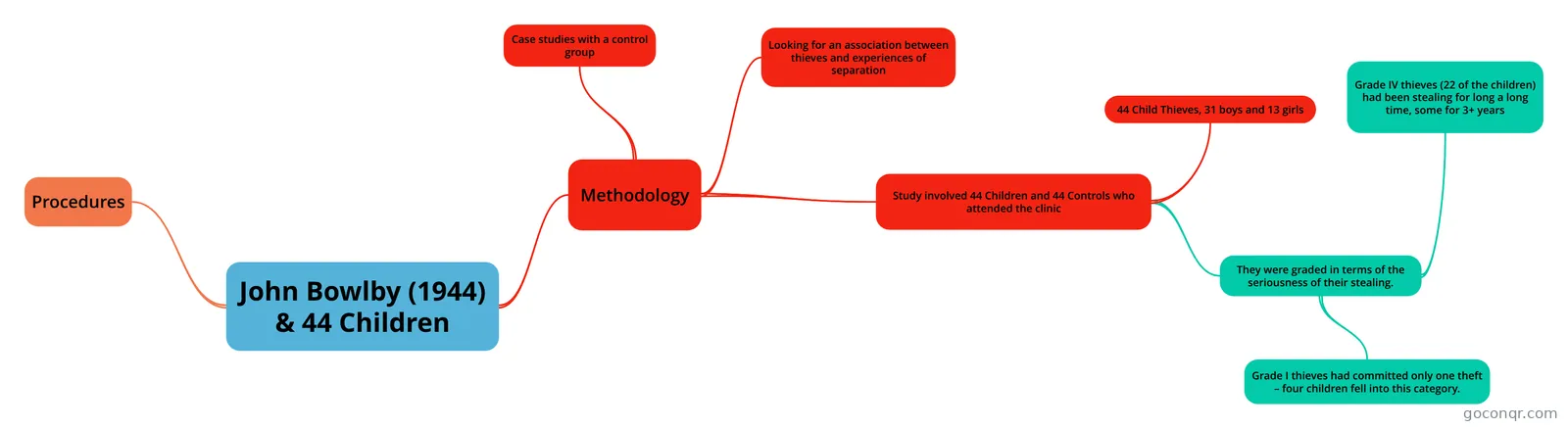 John Bowlby (1944) & 44 Children Psychodynamic Approach - John Bowlby Case Study
Flashcards
See all 21 flashcards-
28 cardsFreud: topographical vs. structural models Briefly outline how Freud changed psychology in terms of personality
-
7 cardsFreud frued
-
7 cardsHorney's Defense Mechanisms
-
49 cardsFreud's Theory of Aggression When did the psychodynamic approach originate?
-
25 cardsL2 Social Psychology - Freud and Psychoanalysis What did Freud think?
-
39 cardschapter 2
-
21 cardsUnderstanding Human Behaviour - Psychodynamic Perspective Sigmund Freud (1856 - 1939)
-
30 cardsCh.7 Human Relations Object Relation Theorist
Flowcharts
Notes
-
Psychology Studies Aim: undestand Little Hans's phobias and to try and treat them.Try to prove oedipus Complex.Procedure: Case study of Litlle Hans, including dream analysis. Information was gathered from Litlle Han's father not from Ha...
-
Social psychological Social Psychological - the unconscious is very important just as the conscious.Emotions and state are very important along with external social and enviromental factors. Study - girls doing worse in maths. L...
-
Outline and Evaluate the Psychodynamic Approach to Abnormality Outline and Evaluate the Psychodynamic Approach to AbnormalityThe psychodynamic approach believes that unconscious desires and unresolved memories can lead to abnormality. It claims that children go through psychosexu...
-
Evidence to support Freud's psychodynamic theory. Carried out a case study to investigate the gender development of a boy known as 'Little Hans'. Aim: To investigate Little Hans's phobia. Method: Hans's father wrote to Freud to tell him about Hans's devel...
More Psychology topics
About Psychodynamic Approach and Psychoanalysis
GoConqr OriginalWhat the resources cover
The page centres on Freud. You will find mind maps on the psychosexual stages, on Id, Ego and Super Ego, and on the levels of mind and personality structure. Several resources turn to the classic case studies: the Rat Man study (Freud, 1909), which looks at the roots of Ernst Lanzer's obsessive-compulsive neurosis, and Little Hans, the five-year-old boy whose anxiety became a phobia. There is also the mind map on John Bowlby (1944) and 44 Children, which uses case studies with a control group to look for a link between thieving and separation.
Where to start
Begin with the mind map called The Psychodynamic Perspective. It sets out the main assumptions: unconscious motives drive much of our behaviour, and childhood is a critical period. Next, open the flashcard deck on Freud's topographical and structural models, which asks what personality is and what the conscious and unconscious mind are.
- Read the assumptions and the Freud overview maps.
- Work through the psychosexual stages and the personality structure.
- Move on to defence mechanisms, using Freud's Defense Mechanisms and Horney's Defense Mechanisms.
- Finish with the case studies.
Using quizzes and maps together
Read a mind map first, then try a quiz such as Psychodynamic approach or Freud Quiz. Note which questions you missed and go back to the matching map or flashcard deck. For evaluation, the maps on the limitations of the psychodynamic approach and Evaluating the Psychodynamic Approach help with essay points. The notes called Outline and Evaluate the Psychodynamic Approach to Abnormality show how an answer can be structured.
Who it suits and where it fits
The resources suit university students and professional candidates, school students and teachers. Some mention A-level Psychology and GCSE Psychology. This unit sits in the Foundations of Psychology strand of the Psychology subject, alongside other approaches you may compare it with.
Next step
Pick one mind map today, then see how much you can recall by taking a quiz. When you are ready, build your own flashcards from the gaps.
Frequently asked questions
Which resource should I open first?
Start with the mind map The Psychodynamic Perspective, which lists the main assumptions, including the role of unconscious motives and childhood. Then try the flashcard deck on Freud's topographical and structural models. Together they give you the core vocabulary before you move on to case studies and defence mechanisms.
What do the mind maps cover?
The mind maps cover Freud's life and theory, psychosexual stages, Id, Ego and Super Ego, levels of mind and personality structure. Others cover case studies such as Little Hans and the Rat Man study, plus Bowlby's 44 Children study, and evaluations and limitations of the approach.
Are the resources free to use?
Yes. Every resource on this page is free to open, study and take, with no account needed. They were made by GoConqr users, not by GoConqr itself. A free account also saves your quiz scores and lets you make your own quizzes, mind maps, flashcards and notes.
Which levels and exams do they suit?
The collection is a mix of secondary and university material. Some resources mention A-level Psychology and GCSE Psychology, while others come from university courses. Check the title and content of each one to see whether it matches your course.
Is there anything on defence mechanisms?
Yes. There are several flashcard decks, including Freud's Defense Mechanisms, Freudian Ego Defense Mechanisms and Horney's Defense Mechanisms, which covers ideas such as blind spots, rationalisation and compartmentalisation. There is also a mind map called Freud's Defence Mechanism for a visual summary.
What if I can't find the topic I need?
Try a different resource type, since the same topic often appears as a map, a deck and a quiz. You can also search under related names, such as Freud or Psychoanalysis. If a gap remains, you can write your own notes or flashcards.