
Stress and Coping
1,047 resources created by 674 users
This Stress and Coping page on GoConqr gathers community-made mind maps, flashcards, quizzes and notes, from acute and chronic stress to daily hassles, workplace stress and stress management. It's built for school students revising a topic, university students and professional candidates filling gaps, and teachers after ready-made material. There are over 1,000 resources here, including more than 50 quizzes and over 600 mind maps, pitched mostly at secondary level with a solid university share. Pick a mind map to get your bearings, then test yourself with a quiz.
Top Stress and Coping resources
-
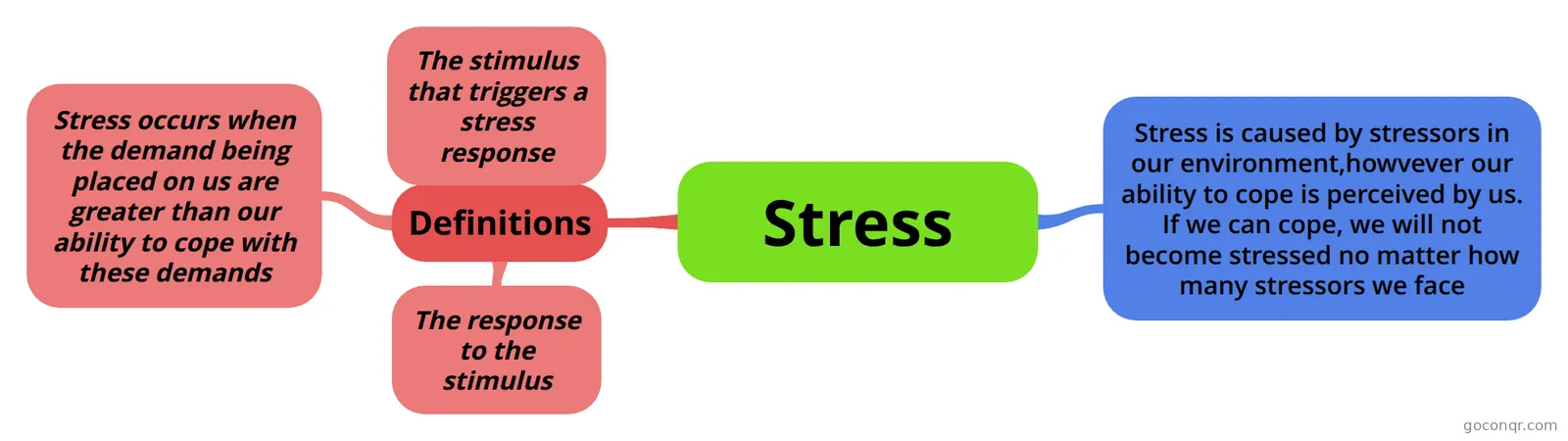
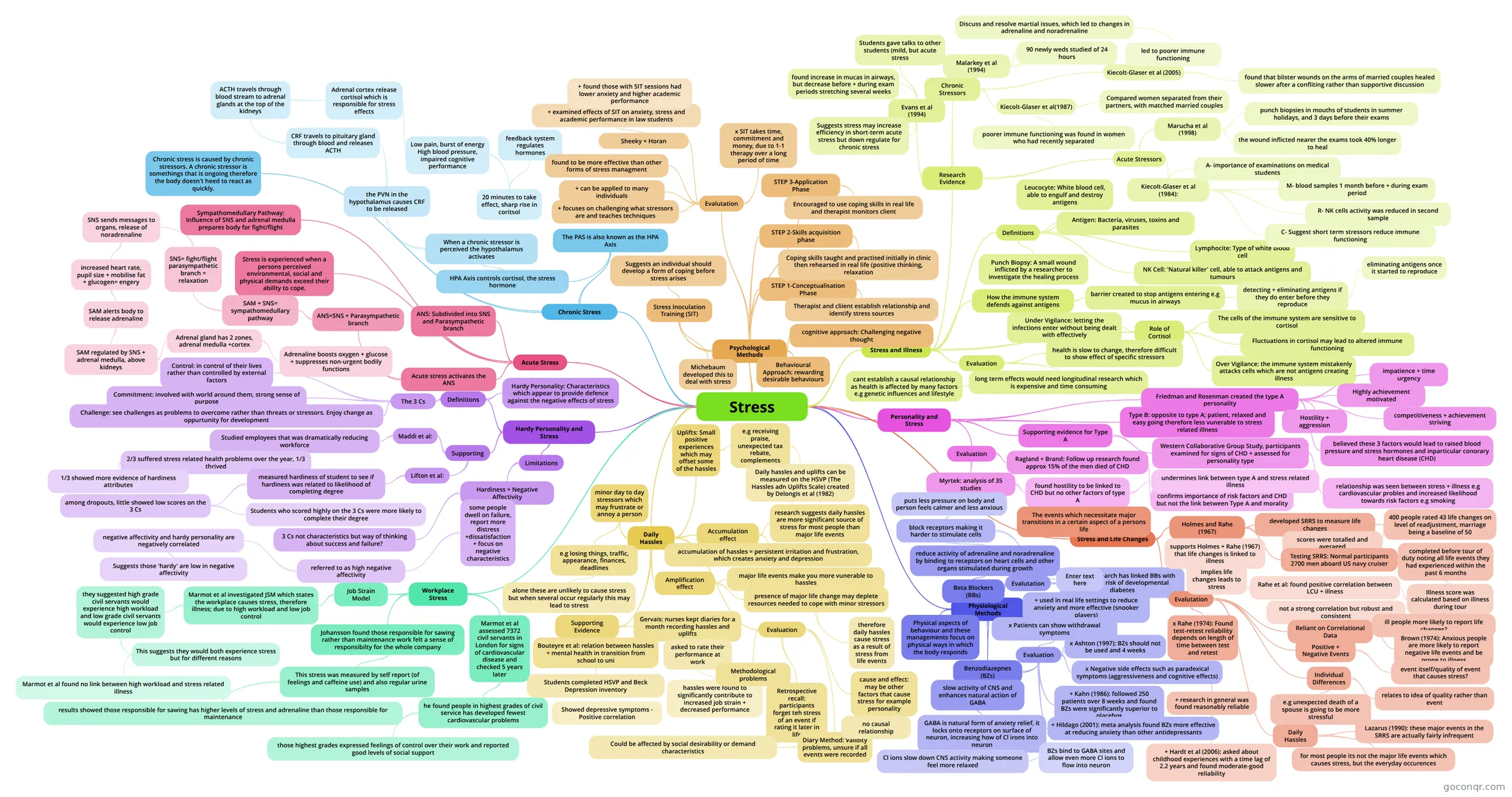 Mind map Stress
-
65 cardsStress and the nervous system VCE PSYCHOLOGY What is a stressor?
-
25 cardsChapter 12 Intro to Psych flashcards
-
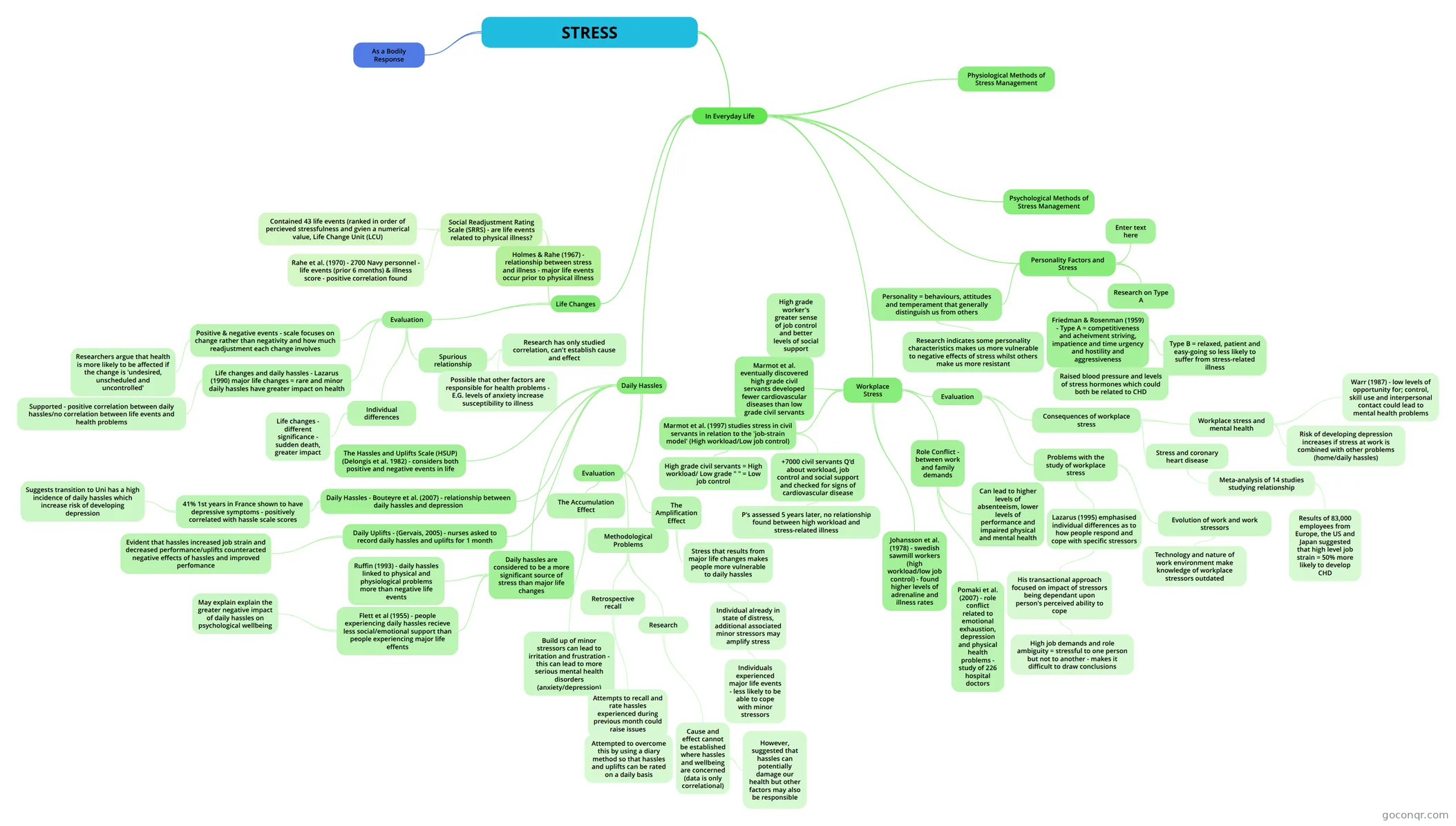 Mind map STRESS
-
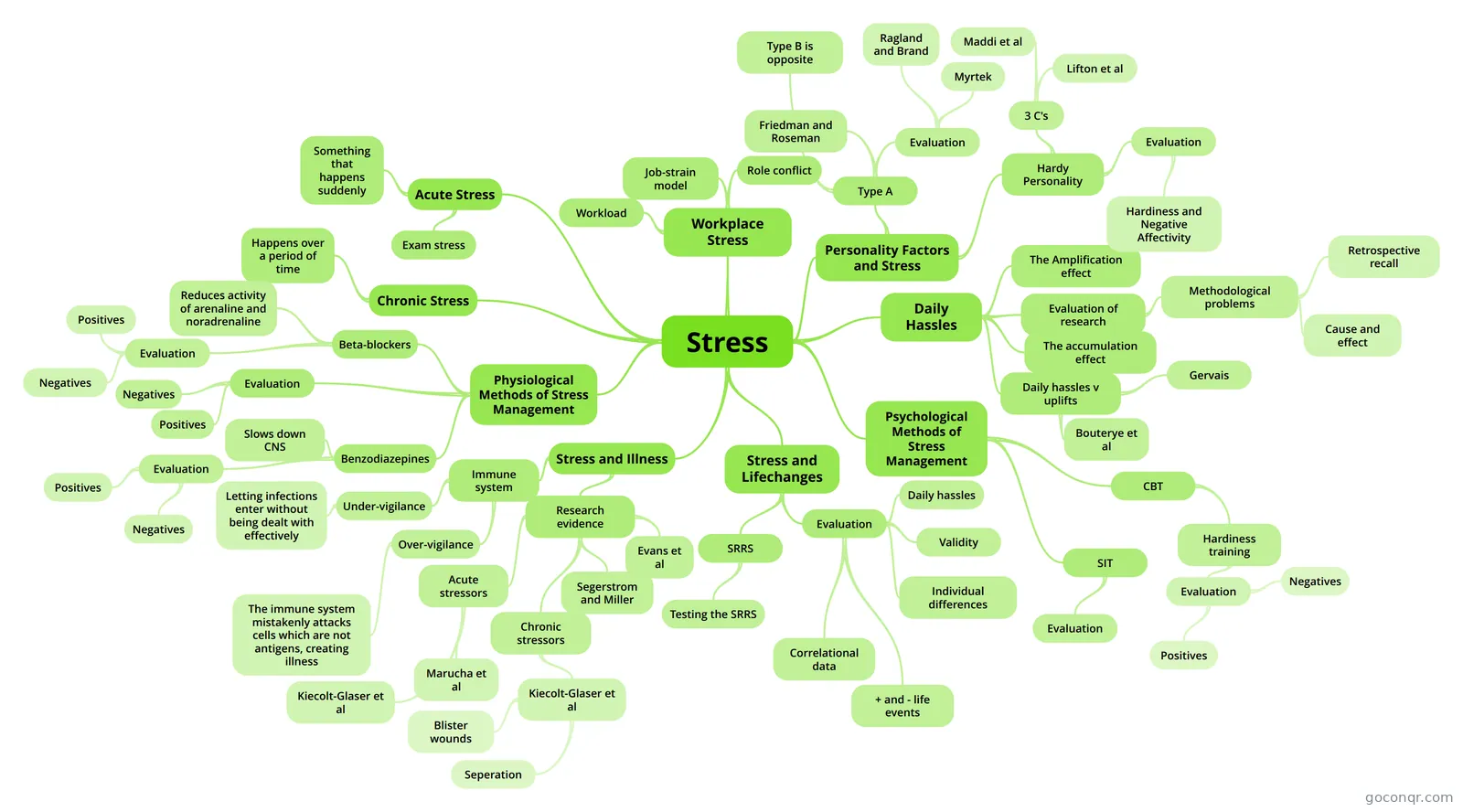 Mind map Stress
-
 Mind map Physiology of stress
-
8 cardsStress Management What is the concept behind stress inoculation training?
-
 Mind map Nature of Stress Basics of stress
Quizzes
See all 62 quizzes-
5 questionsCortisol Quiz How does high levels of cortisol make us feel?
-
68 questionsstress, health and coping what is the aim of health psychology?
-
45 questionsHealth, Stress, and Coping What does a health psychologist study?
-
56 questionsBiological Psychology where are the hypothalamus and the pituitary gland?
-
55 questionsPsych final study guide Psychologists define stress as
-
48 questionsPsychology 13-15 General Psyc: Quiz Bank Chapter 13 2. Circumstances that threaten or are perceived to threaten one's well-b...
-
60 questionsChapter 18 -- Stress, Coping, Adjustment, and Health Which model focuses on how personality influences life style choices (e.g., smoking) that in turn influence...
-
68 questionsPSYC 3P75
Mind maps
See all 688 mind maps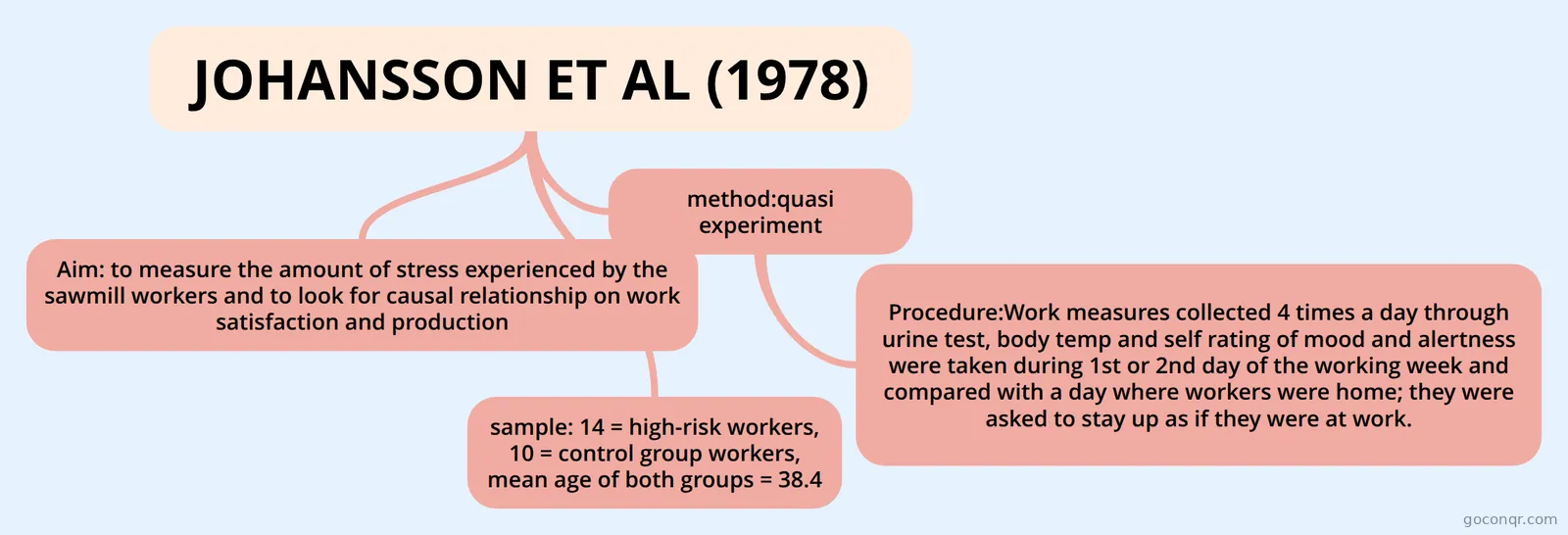

Flashcards
See all 231 flashcards-
65 cardsStress and the nervous system VCE PSYCHOLOGY What is a stressor?
-
25 cardsChapter 12 Intro to Psych flashcards
-
8 cardsStress Management What is the concept behind stress inoculation training?
-
137 cardsAS Psychology Unit 2 Explain the Transactional Model.
-
42 cardsUntitled Glaser et al. into the effects of stress on the immune system
-
28 cardsPsychology Paper 3: Stress
-
42 cardsBiological Psychology AS level Definition of stress: Stress as a stimulus
-
28 cardsTest 3: Feb 8 (Modules 40,41,42)
Flowcharts
See all 20 flowcharts-
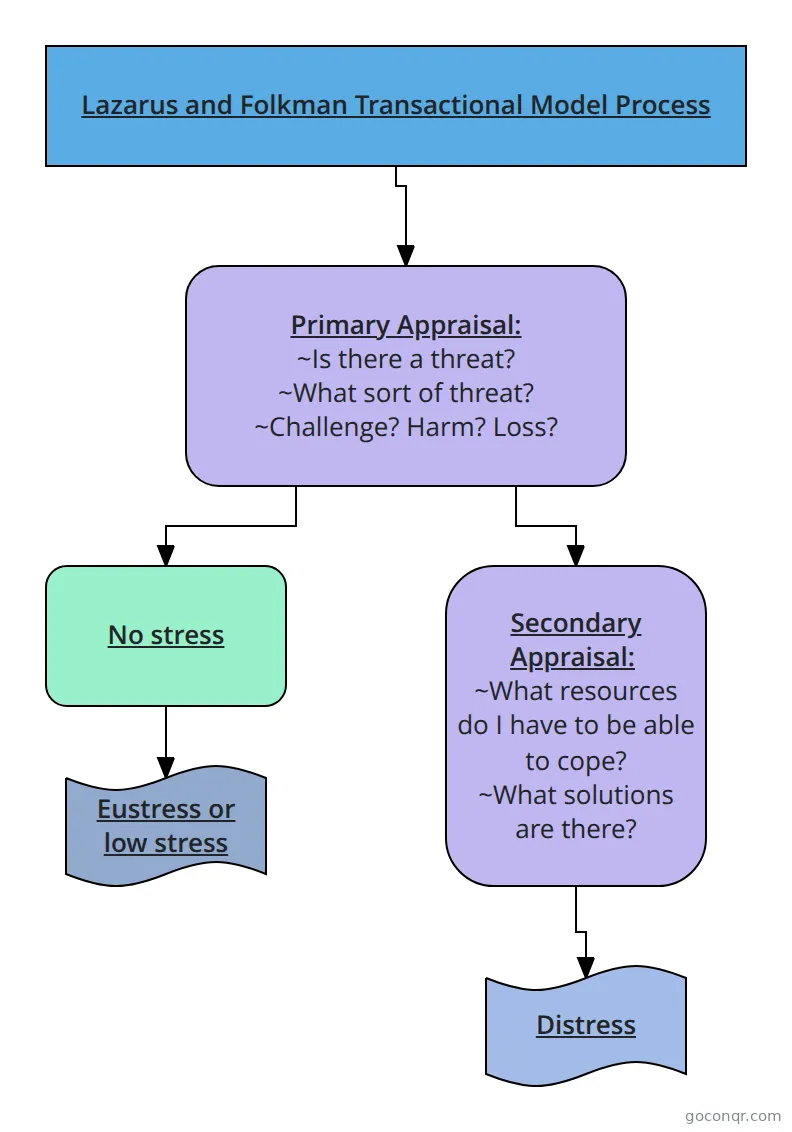 Lazarus and Folkman Model A brief table of primary and secondary appraisal regarding the Lazarus and Folkman model
-
Ingles
-
Physiological responses to stress
-
Response to chronic stressors
-
Response to acute stressors
-
Response to acute (sudden) stressors
-
Response to Chronic (ongoing) stressors
-
Sympathomedullary pathway
Notes
See all 42 notes-
Outline and Evaluate research into the effect of stress and the immune system Research into the effect of stress on the immune system has shown that chronic and acute stress can have different effects on health and well being. Kiecolt-Glaser was one of the main researchers involving stress and ...
-
Psychology: Stress MARMOT - studied effect of stress on civil servants working in Whitehall, LDN. Found: person's position on work place hierarchy had direct impact on level of stress they felt/ their health. 28,000 studied.Ov...
-
stresspt2 explain to me the Causes of Stress: Environmental, Social, and Personal. ChatGPT said: Stress can arise from a wide range of sources, and it’s helpful to group them into three broad categories: environme...
-
Stress and anxiety Stress and its evolving conceptualisation Definitions of stress An external stimuli, also known as a stressor, that causes a change in an individual's physical, mental and emotional state An experienced biological and...
-
Unit 7 Study Questions Define stress. Discuss the relationship between the severity of stress and its effects. (pp. 597-598) Stress is any circumstance that threatens or is perceived ththreaten one's well-being and that thereby tax one's co...
-
Stress Current approach to defining stress emphasises individual differences; The transactional model. The key processes are primary appraisal + secondary appraisal The neuron These make up the nervous system It can transmit...
-
Stress - created from Mind Map Acute Stress Chronic Stress Consequences of Stress
-
chapter 11 Notes Stress, Health and Human Flourishing Notes from the textbookSTRESS AND HEALTH- Stress often strikes without warning Stress: Some Basic Concepts - To psychologists a STRESSOR is a stressful situation or event - A stres...
Slides
Topics in Stress and Coping
More Psychology topics
About Stress and Coping
GoConqr OriginalWhat the resources cover
The unit follows the topic from the nature of stress to how people manage it. The mind maps called Stress cover acute stress, chronic stress, stress and illness, life changes, daily hassles, workplace stress, personality and stress, and both psychological and physiological methods of management. Other maps look at the fight or flight response and the physiology of stress, including the sympathomedullary pathway.
Where to start
Begin with one of the broad maps called Stress to see the whole topic on a single screen. Then move to the flashcard deck Stress Management, which asks about the strengths and weaknesses of stress inoculation training and what hardiness training involves. The Lazarus and Folkman Model flowchart is a useful next stop for how people appraise and cope.
Studies and evaluation
If you need evidence, the notes on research into stress and the immune system start with Kiecolt-Glaser and compare the effects of chronic and acute stress. The mind map Johansson et al (1978) sets out the aim and sample of the sawmill workers study. There are also notes on daily hassles and a deck on Rahe et al.
Using quizzes and maps together
- Read a map and cover the branches you think you know.
- Take a quiz such as Cortisol Quiz or Psychology: Stress Management.
- Return to the map for any branch you missed.
- Repeat with flashcards a few days later.
Where it sits
This unit belongs to the Applied Psychology strand of Psychology. The listed resources mention A-level Psychology, AQA A-level Psychology, AP Psychology and IB, so check that a resource matches your own course before relying on it.
Ready to begin? Open a map, then try a quiz to see what sticks.
Frequently asked questions
Which resource should I open first?
Start with one of the mind maps called Stress. The first ones listed cover acute and chronic stress, stress and illness, life changes, daily hassles, workplace stress, personality and stress, and management methods. They give you the shape of the whole topic before you move on to flashcards.
What do the quizzes cover?
The quizzes include Cortisol Quiz, Psychology: Stress Management, Studies: Stress and Functions of hormones in human behaviour. Some focus on causes of stress, others on techniques for managing it. Use them after reading a map to find which branches you need to revisit.
Are the resources free to use?
Yes. Every resource on this page is free to open, study and take, with no account needed. They were made by GoConqr users rather than by GoConqr itself, so it is worth checking each one against your own course notes.
Which levels and exams do they suit?
Most resources are at secondary level, with a good share for university students. Listed resources mention A-level Psychology, AQA A-level Psychology, AP Psychology and IB. Teachers can also use them as ready-made material for classes.
Is there anything on research studies?
Yes. There are notes outlining and evaluating research on stress and the immune system, notes on daily hassles, and a mind map on Johansson et al (1978). A flashcard deck on Rahe et al covers another named study.
What if I can't find what I need?
Try a different title, such as Daily Hassles, Workplace Stress or Life Changes. If a topic is still missing, a free account lets you make your own quizzes, mind maps, flashcards and notes to fill the gap.