
Glaciers and Cold Environments
23 resources created by 15 users
This Glaciers and Cold Environments page on GoConqr gathers community-made mind maps, flashcards, quizzes and notes, from glacier formation and erosion landforms to periglacial processes, permafrost and the Younger Dryas. It's built for school students, university students and professional candidates revising a topic or filling gaps, and for teachers after ready-made material. There are over 130 resources here, including more than 60 mind maps, 48 flashcard sets' worth of material and 5 quizzes, with GCSE Geography and A-level Geography mentioned. Pick a mind map, try a quiz, then build your own.
Top Glaciers and Cold Environments resources
-
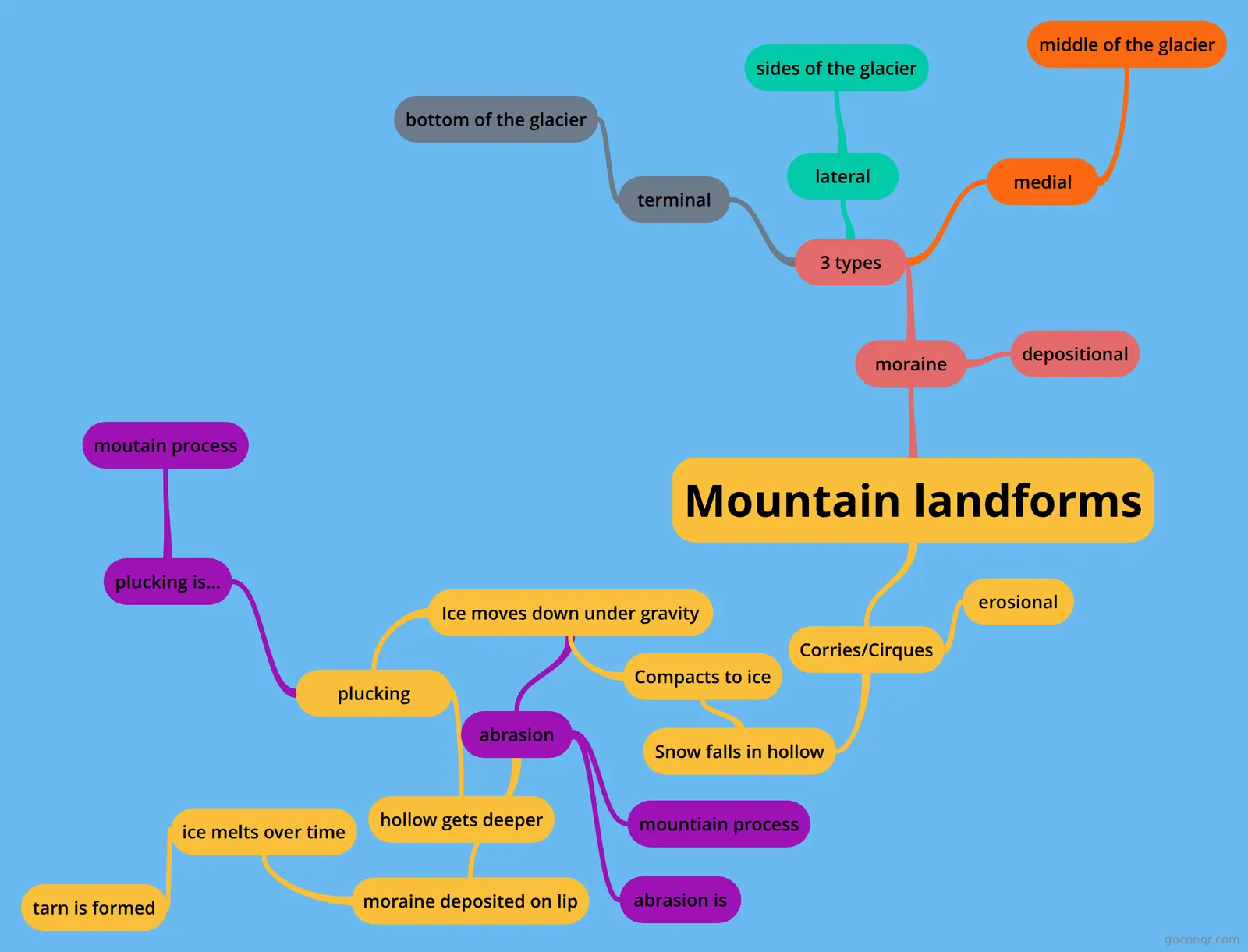
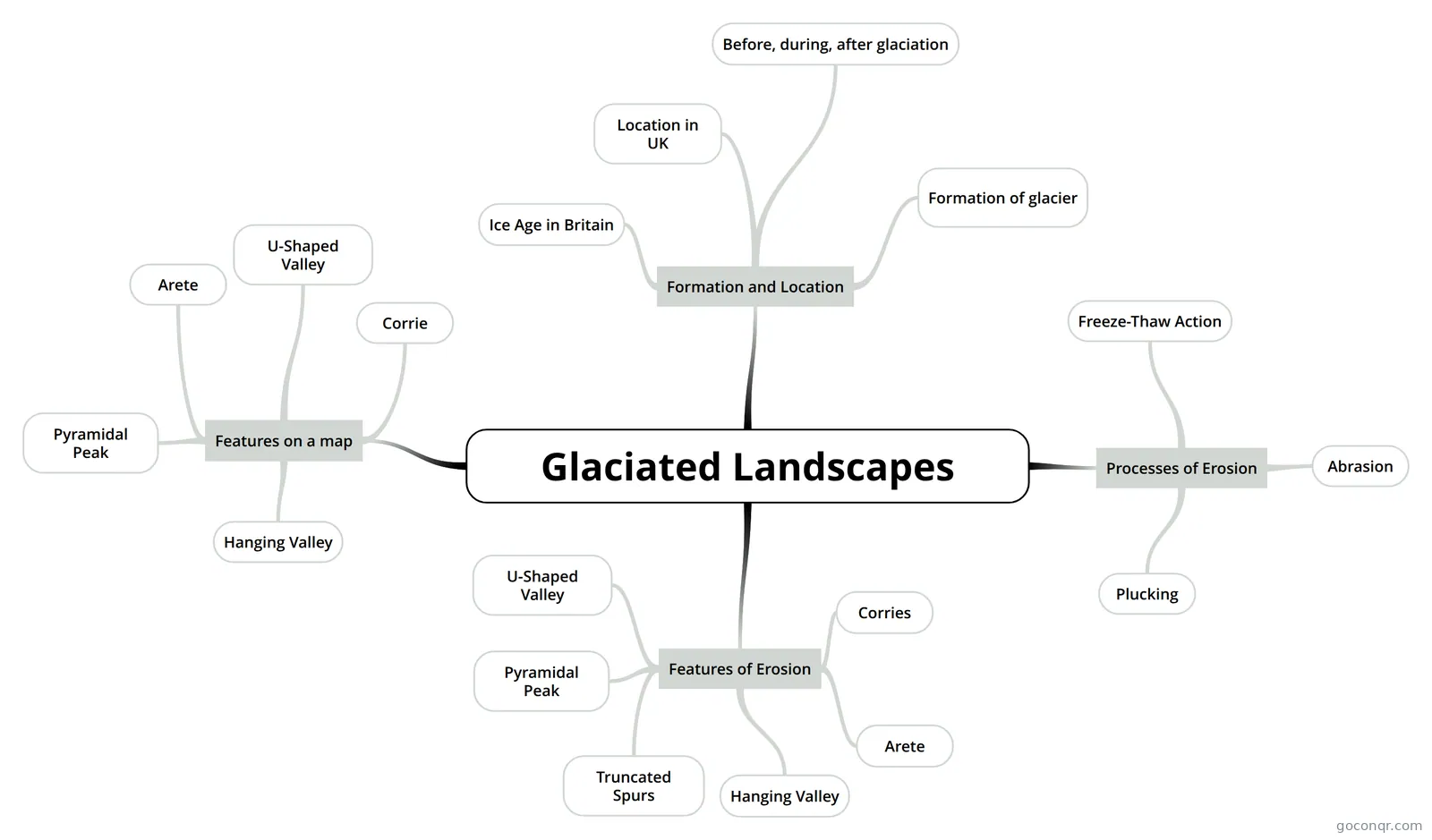 Mind map Glaciated Landscapes
-
10 cardsGlacial Erosion Landforms
-
6 cardsPeriglacial Landforms
-
30 questionsGlacial
-
18 questionsGY116 Water in the Environment Glacier morphologies form a broad continuum, from the smallest niche glacier to the largest ice sheet. Apar...
-
42 cardsPermafrost (BIO 215T) what is permafrost
-
29 cardsGlaciers Factors affecting the snow line?
-
33 cardsIce on the land flash cards
Quizzes
Mind maps
Flashcards
See all 10 flashcards-
10 cardsGlacial Erosion Landforms
-
6 cardsPeriglacial Landforms
-
42 cardsPermafrost (BIO 215T) what is permafrost
-
29 cardsGlaciers Factors affecting the snow line?
-
33 cardsIce on the land flash cards
-
15 cardsIce on the Land (Key terms) What is accumulation, ablation and the snout?
-
26 cardsGlaciation Abrasion, Accumulate, Arete, Boulder Clay, Cirque, Compact, Corrie, Crevasse, Drumlin, Erratic, Esker, Fjor...
-
8 cardsGlacial Deposition and Landforms
Notes
-
GLACIAL PROCESSES & LANDSCAPES Climate Change & Glaciation ** Climate Change: * climate is dynamic, it doesn’t stay the same * there are daily, monthly & annual averages, SO * climate change is a significant change in these averages over hundreds o...
-
French Ch. 5 Defining permafrost: Ground (soil/rock) remains remains at . Permafrost has both a thermal component and a state, It is not permanently frozen ground, rather ground held at Epigenetic Permafrost: normal ground subject...
-
6 - Ice Wedges Ice Wedges: 25-30% of total ice volume, present in the uppermost 5-10m of permafrost. Develop in unconsolidated sediment, best form in lowland poorly drained tundra atop continuous permafrost. Involves deformation of ...
-
8 - Thermokarst Methane bubbling in Siberia: Ebullition accounts for 95% of methane emissions. N Siberian lakes are underlain by Yedoma - organically rich Loess deposits from late Pleistocene. Organic matter underlying thermokarst la...
-
Lecture 3 extra
More Geology and earth sciences topics
About Glaciers and Cold Environments
GoConqr OriginalWhat this unit covers
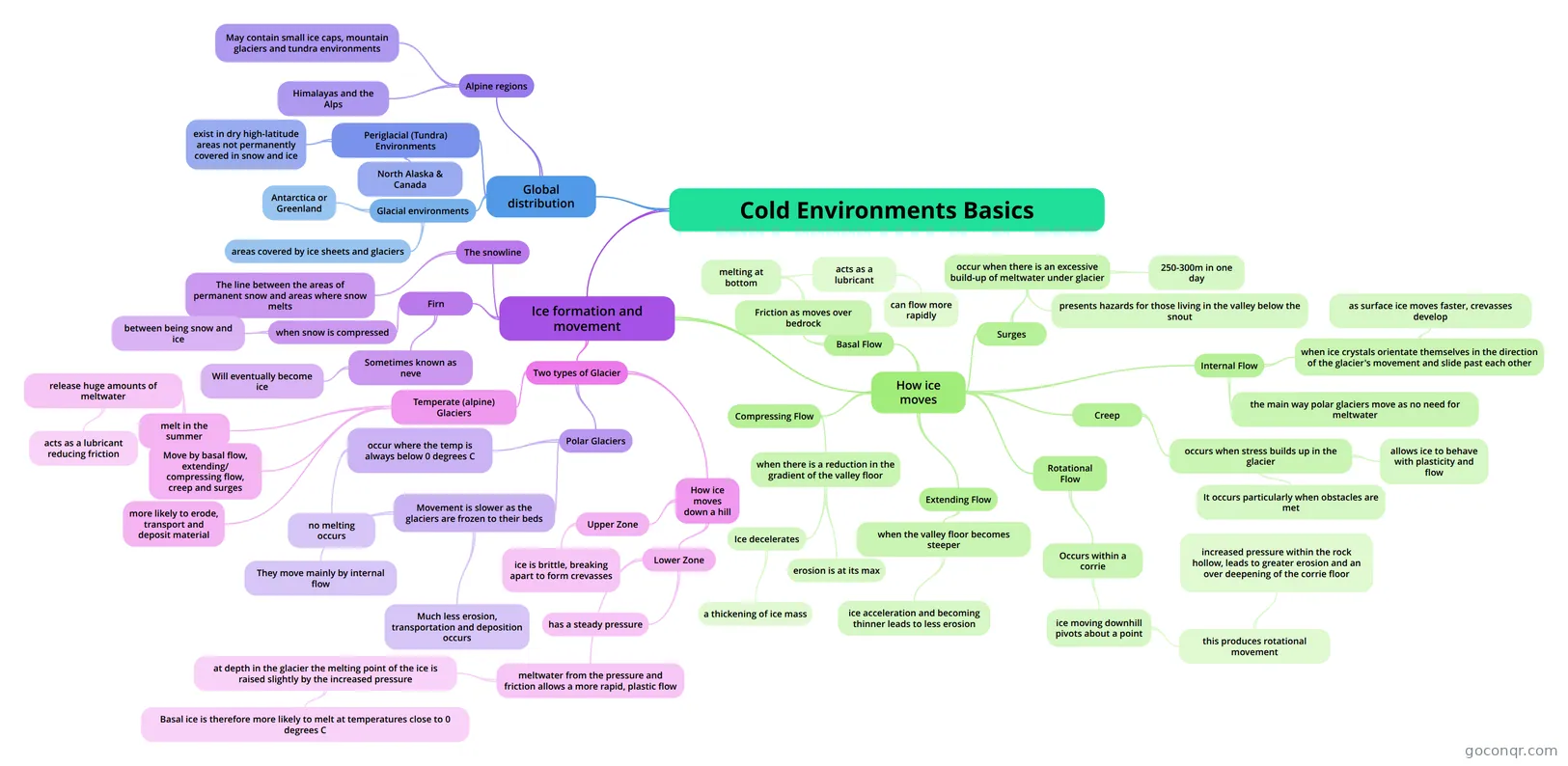
The resources split into two broad themes: glacial environments and periglacial, or cold, environments. On the glacial side you will find material on how snow turns into ice, glacier budgets, types of glacier, ice sheets, glacier movement and erosion. On the periglacial side there are notes on permafrost, ice wedges, thermokarst, pingos and palsas, and snow and slopes.
Where to start
Begin with a broad mind map. Glaciated Landscapes moves from formation and location through processes of erosion, such as freeze-thaw action, abrasion and plucking, to features like the corrie, arete, pyramidal peak and U-shaped valley. The mind map called Glaciers explains how snow transforms into ice as air is squeezed out through compaction.
Then move to the flashcards. Glacial Erosion Landforms covers terms such as arete, corrie, crag and tail, fjord, glacial trough, hanging valley, ribbon lake, roche moutonnée and truncated spur. Periglacial Landforms does the same for pingos, ice wedge polygons, nivation hollows, scree slopes and stone sorted polygons.
Case studies and deeper reading
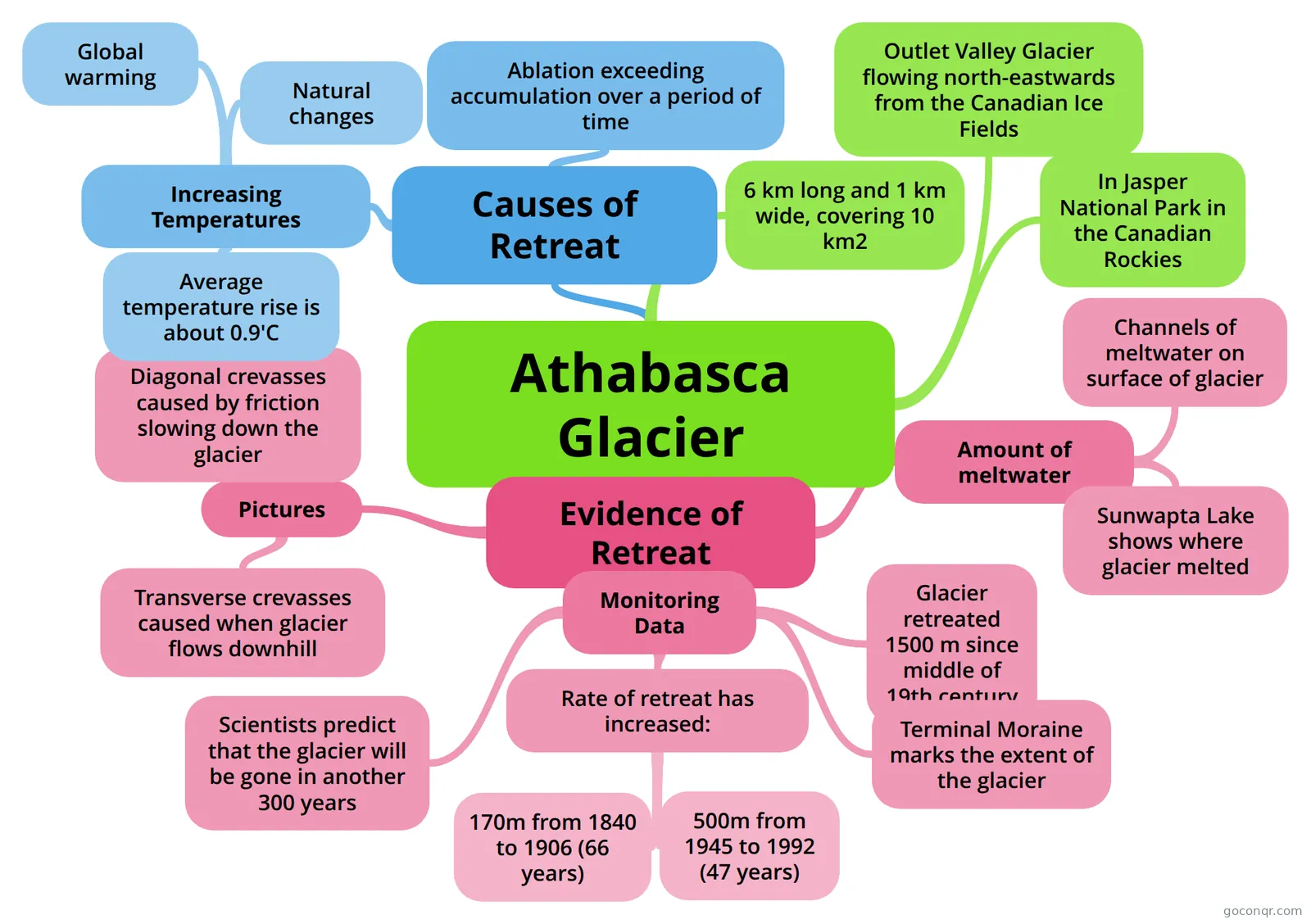
- The Athabasca Glacier mind map looks at an outlet valley glacier in the Canadian Rockies.
- The Younger Dryas note asks you to examine evidence for abrupt climate change.
- The notes Lecture 1 - Introduction and French Ch. 5 explain cold wet and cold dry environments and how permafrost is defined.
Using quizzes and maps together
Read a mind map first, then take a quiz such as Glacial or Periglacial Environments Lecture 1 to see what stuck. Where an answer is shaky, go back to the matching map or flashcard set and look again. The mix suits GCSE Geography and A-level Geography revision as well as university study.
Where it sits
This unit belongs to the Surface Processes and Landscapes strand of Geology and earth sciences. Choose one resource today and see how far it takes you.
Frequently asked questions
Which resource should I open first?
Start with the Glaciated Landscapes mind map. It runs from formation and location through erosion processes and features, so it gives you a framework. After that, the Glacial Erosion Landforms flashcards help you learn the key terms one by one.
What do the periglacial resources cover?
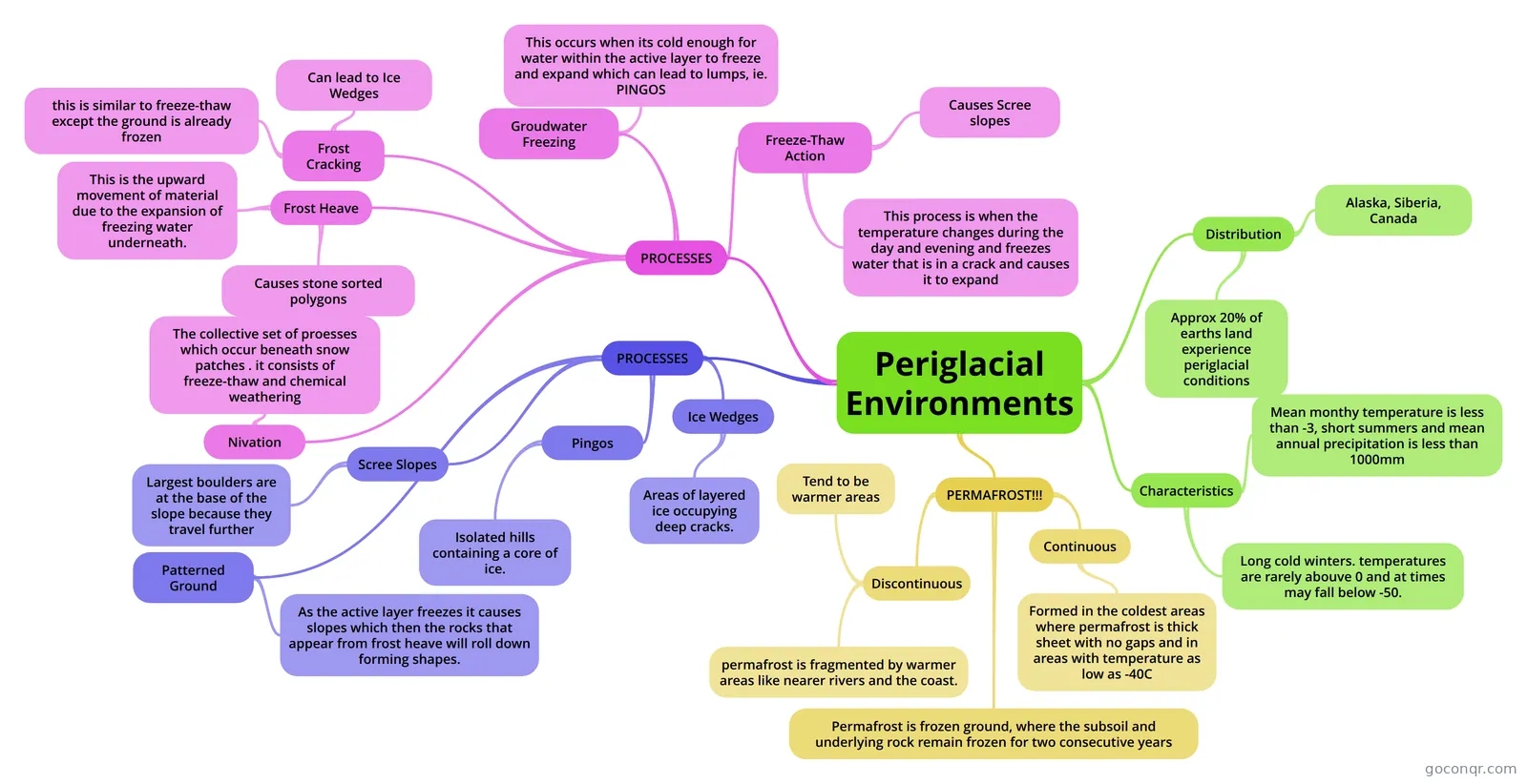
They cover permafrost, ice wedges, thermokarst, pingos and palsas, and snow and slopes in the notes. The Periglacial Landforms flashcards add nivation hollows, scree slopes and stone sorted polygons, while several mind maps cover periglacial processes.
Which exams are these resources suitable for?
The listed resources mention GCSE Geography and A-level Geography. Some of the material is university-level, so it also suits university students and professional candidates. Teachers can use the maps and flashcards as ready-made starting points for lessons.
Are there case studies?
Yes. The page lists a mind map on the Athabasca Glacier in the Canadian Rockies, one on Sólheimajökull, a retreating Icelandic glacier, and one on polythermal glacier advances in Sweden. There is also a quiz on the impacts of the little ice age on people.
Are the resources free, and who made them?
Every resource here is free to open, study and take, with no account needed. They were made by GoConqr users, not by GoConqr. A free account also saves your quiz scores and lets you make your own quizzes, mind maps, flashcards and notes.
What if I cannot find the topic I need?
Try a nearby resource first, such as the mind maps on glacier movement or fluvioglacial deposition. If the gap remains, make your own mind map or flashcard set from your course notes and add it to what is already here.