
Literary Devices and Rhetoric
175 resources created by 163 users
This Literary Devices and Rhetoric page on GoConqr gathers community-made quizzes, mind maps, flashcards and notes, from similes, metaphors and personification to rhetorical appeals and language techniques. It's built for school students practising how to spot and explain devices, and for teachers after ready-made material. There are over 900 resources here, including more than 100 quizzes, over 270 mind maps and more than 550 flashcards, made by over 900 contributors. Try a quiz to find your gaps, then revise with the flashcards.
Top Literary Devices and Rhetoric resources
-
21 cardsAP Lang Summer Course Work Terms just the terms and their definitions
-
46 cardsRhetorical Strategies Flashcards Author uses a quote from an expert or celebrity
-
12 questionsFigurative language Which of these sentences represents a simile?
-
27 cardsA Level: English language and literature techniques = Lexis This is the lexis section of the FSL framework.
-
31 cardsRhetorical Devices
-
21 questionsRhetorical Analysis Ap Exam Review An allusion is a reference to what?
-
10 questionsLanguage features advertisment quiz What persuasive language feature has been used in this image?
-
37 cardsEnglish Language Techniques English Language Techniques
Quizzes
See all 42 quizzes-
12 questionsFigurative language Which of these sentences represents a simile?
-
21 questionsRhetorical Analysis Ap Exam Review An allusion is a reference to what?
-
10 questionsLanguage features advertisment quiz What persuasive language feature has been used in this image?
-
9 questionsStrategies & Appeals How the author addresses their audience can be a rhetorical strategy.
-
12 questionsFigurative Language - Grade 5 Students will identify different types of figurative language based on 5th grade standards.
-
10 questionsSimiles, Metaphors, and Personification Directions: Choose the best type of figurative language for the sentence below. My mouth was as dry as a bone.
-
10 questionsAlliteration, Onomatopoeia, Idioms You could hear the tinkle of ice in a lemonade pitcher.
-
10 questionsEnglish II Midterm Review (Fall 2021) In the poem “In My Country,” the speaker encounters a woman. What main concern does the woman have about th...
Mind maps
See all 23 mind maps-
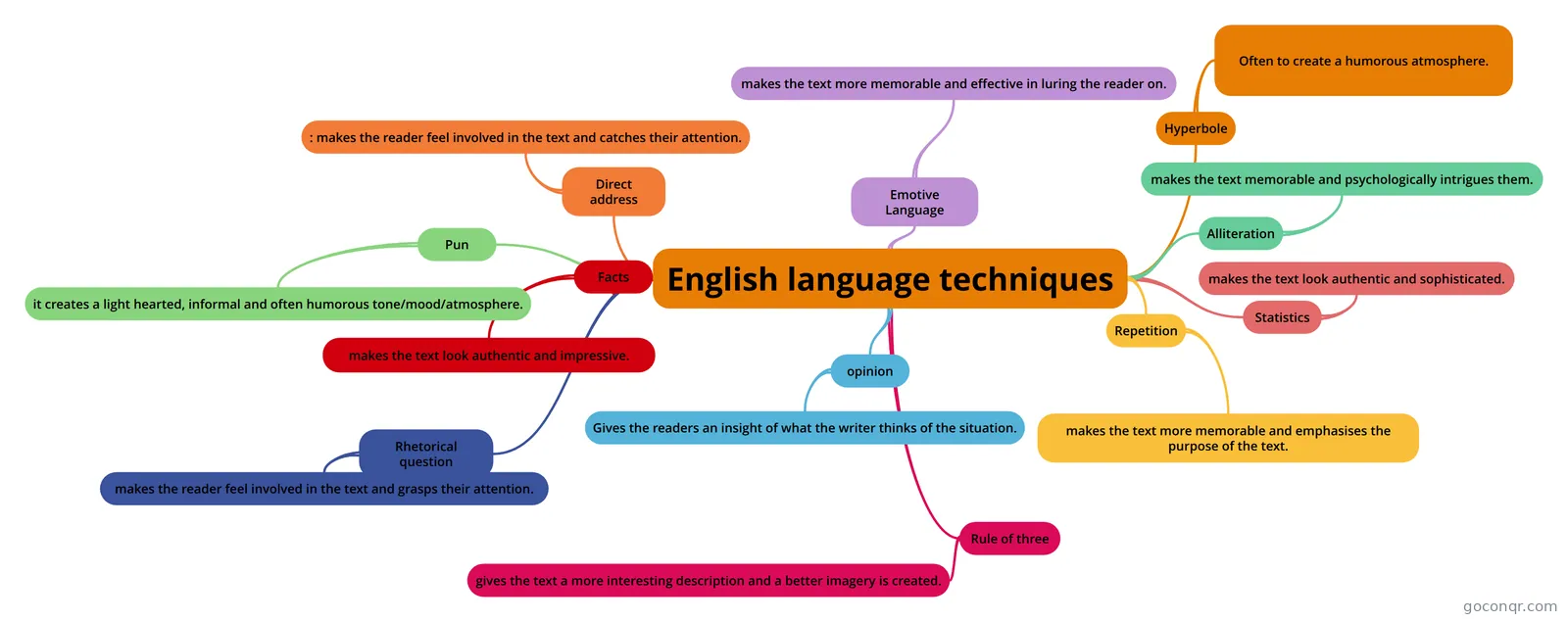 English language techniques improve English skills with these basic steps
-
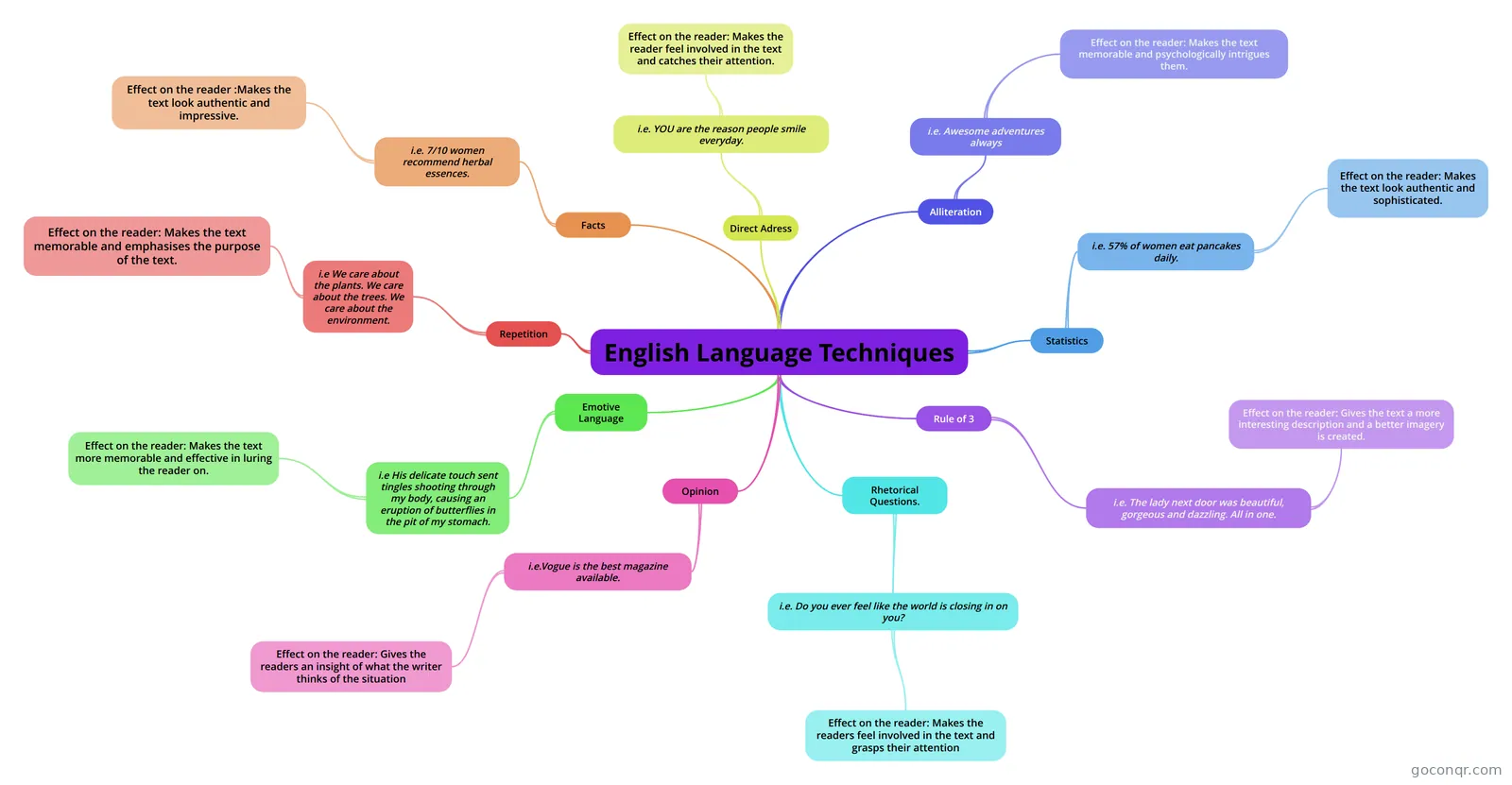 English Language Techniques This will help you on your English Language exam. Guaranteed high grades. :) A good way to remember these t...
-
figures of speech
-
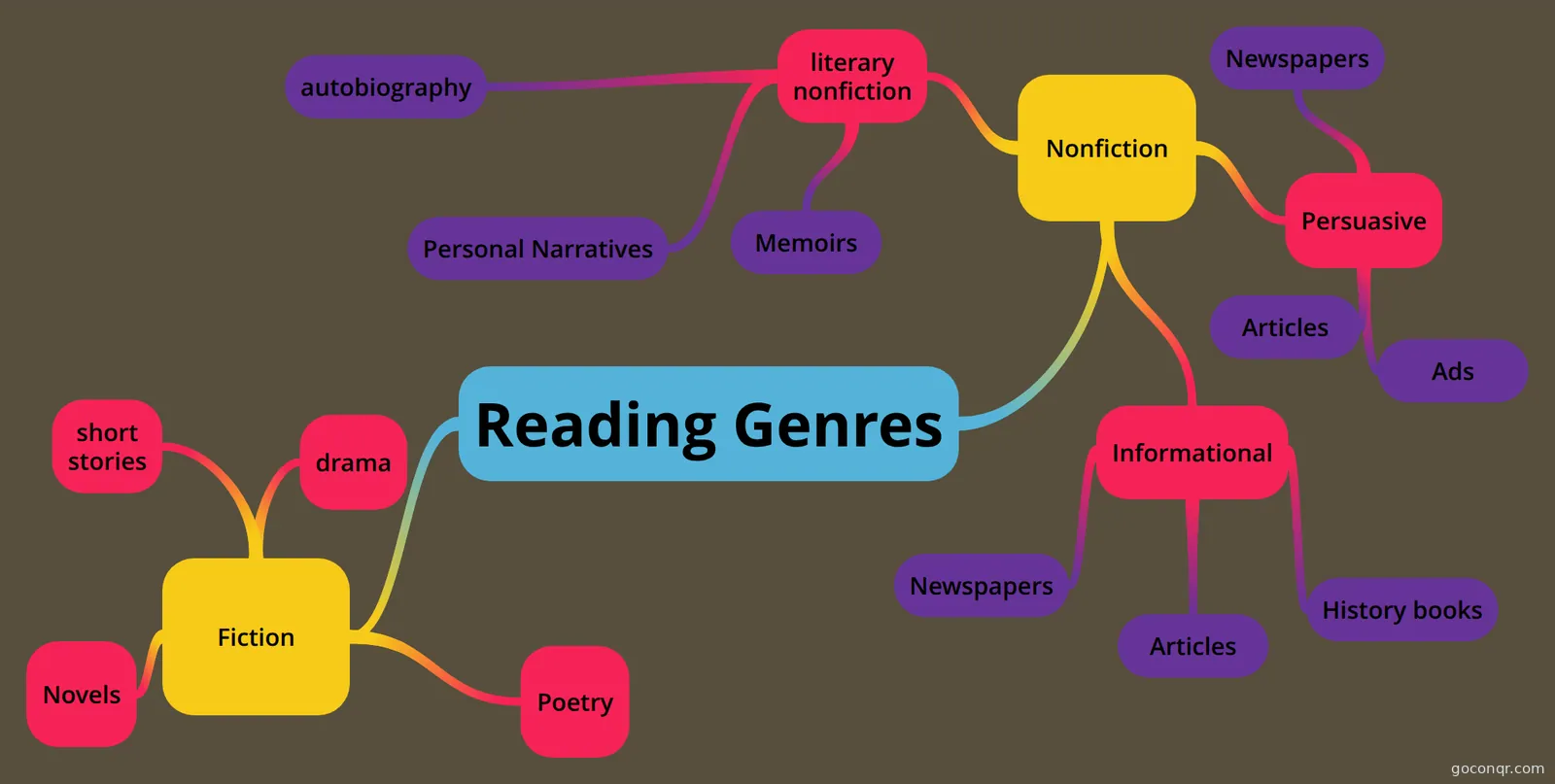 Reading Genres Main genres covered this school year.
-
 English Language Techniques Language Techniques for English
-
English Techniques Is a great study guide to learn your english techniques for your exams
-
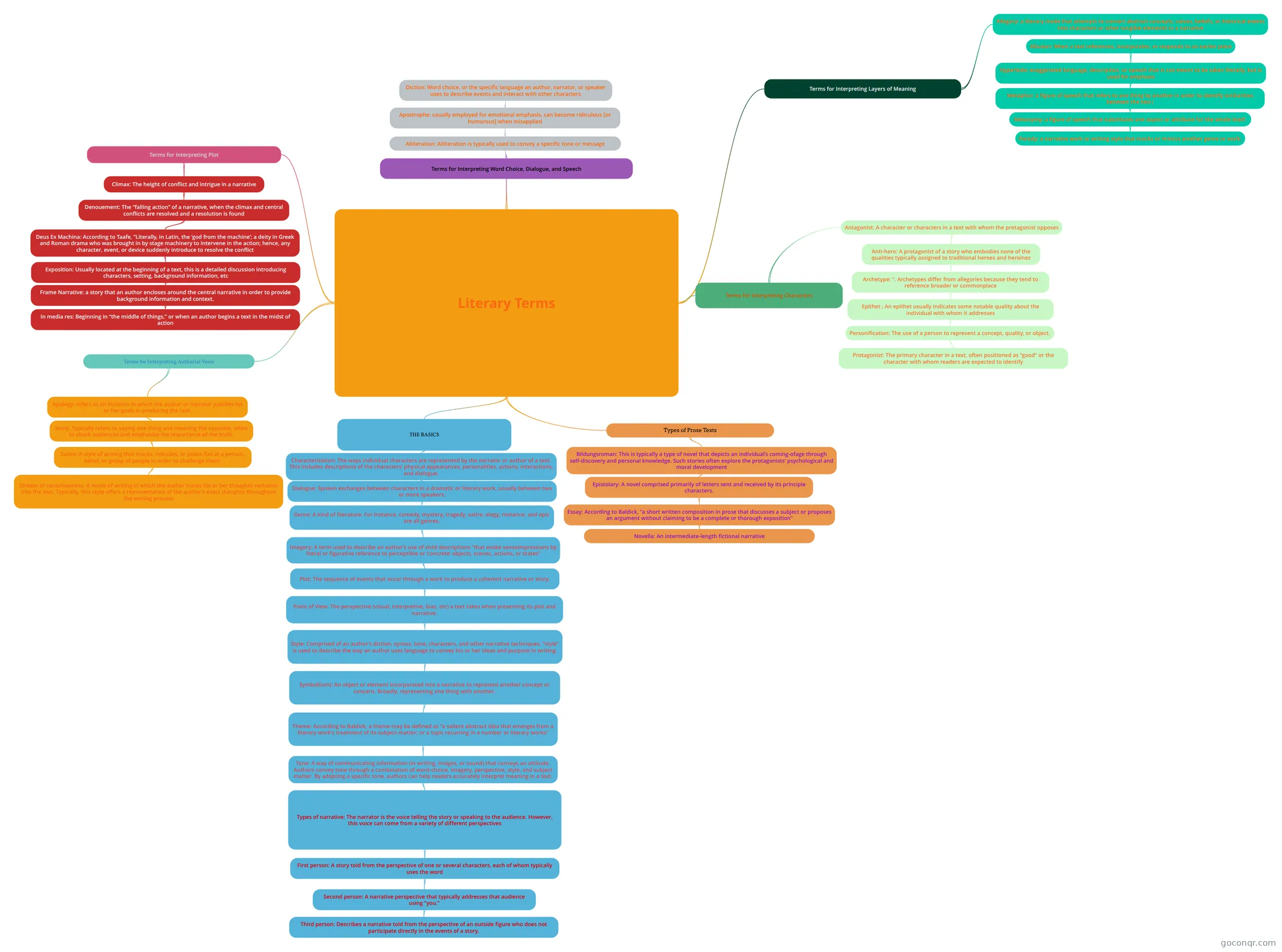 Literary Terms trabajo que se debe terminar hoy
-
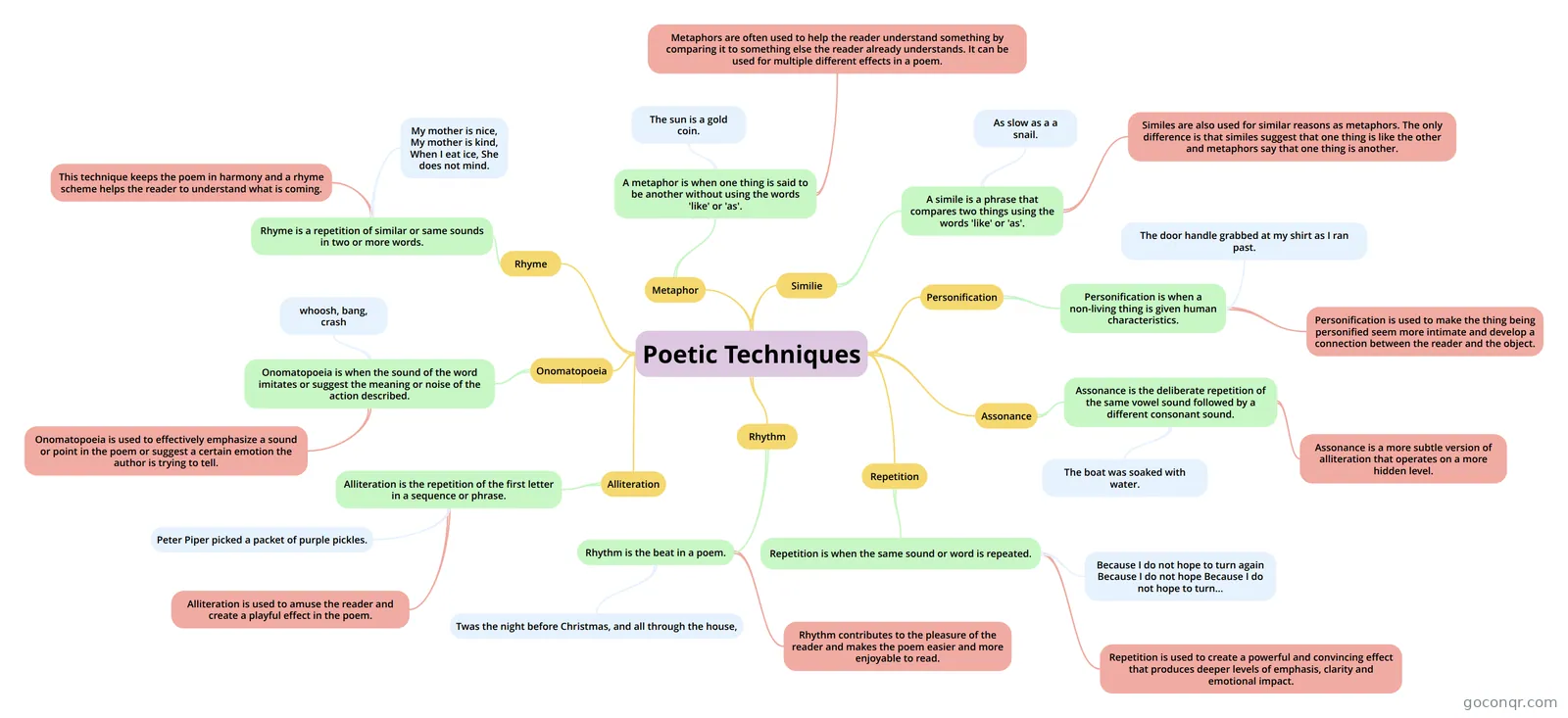 Poetic Techniques Poetic techniques for year 9 English exam.
Flashcards
See all 102 flashcards-
21 cardsAP Lang Summer Course Work Terms just the terms and their definitions
-
46 cardsRhetorical Strategies Flashcards Author uses a quote from an expert or celebrity
-
27 cardsA Level: English language and literature techniques = Lexis This is the lexis section of the FSL framework.
-
31 cardsRhetorical Devices
-
37 cardsEnglish Language Techniques English Language Techniques
-
28 cardsUnfamiliar Text Flashcards These flashcards are made to help NCEA Level 1 students learn their unfamiliar texts quickly and efficientl...
-
23 cardsLanguage Arts Important Words These are basic language arts terms that are important to know.
-
13 cardsFunctional Skills English - Language Features Flashcards Repeated letter sound, (not just the same letter) used in a phrase or sentence.
Flowcharts
Notes
-
ELA 10-1: Final Study Notes ELA 10-1: Final Study Notes Short Stories are shorter stories with distinct writing. They have little to no background or details. They focus on being a full story that can be readable in one sitting, with...
-
Aspects of Rhetoric Aspects of Rhetoric Rhetorical Situation ATP A-Audience T-Topic P-Purpose . Exigency: motivation/purpose. What causes the writer to write.
-
AP Language and Composition All persuasive works rely on reasoning to lead the reader through the line of argument. It includes a thesis, the body of the text, and a series of claims that provide evidence for the thesis. -- Thesis: The main...
-
Poetry Terminology Poetry Terminology:Alliteration: repetition of closely connected words beginning with the same letter, usually a consonant. Used to highlight the feeling of sound and movement, or to bind words together. Assonance: re...
-
English SOL Study Guide
-
Metaphor A metaphor is when one thing is compared to another but without using words such as 'like' or 'as' Listen to this song 'Everythibg' by Michael Buble Read the lyrics as you listen to the song and see how many metaphors...
Slides
More English language topics
About Literary Devices and Rhetoric
GoConqr OriginalWhat this page covers
This unit sits in the Literature and Text Analysis strand of English language. It brings together figurative language, sound devices, language techniques for analysing unfamiliar texts, and rhetoric. Most of the material suits secondary school students, and the listed resources mention exams such as GCSE English Language, GCSE English Literature, A-level English Language and AP English Language and Composition.
Where to start
If the terms are new, begin with the quiz Similes, Metaphors, and Personification. It asks you to choose the right type of figurative language for a sentence such as "My mouth was as dry as a bone." Then try Figurative Language - Grade 5 for simpler practice, and Alliteration, Onomatopoeia, Idioms for sound devices.
Techniques for analysis
Several flashcard decks list the techniques you are asked to name in an exam answer:
- DAFOREST Language Technique flashcards covers direct address, alliteration, fact, opinion, rhetorical question, emotive language, statistics and the rule of three.
- Unfamiliar Text Flashcards runs from word classes to hyperbole, assonance and euphemism.
- Functional Skills English - Language Features Flashcards gives short definitions in plain wording.
For older students, the A-level lexis deck covers terms such as jargon, monosyllabic lexis and restricted code.
Rhetoric and appeals
The quiz Strategies & Appeals explains that a rhetorical move is what the author is trying to accomplish, while the strategy is how. Rhetorical Analysis Ap Exam Review tests aphorism, oxymoron, allusion, irony and paradox. The notes Pathos, Logos, Ethos give a quick refresher first.
Using quizzes and maps together
Read a mind map such as English language techniques to see how each device links to its effect on the reader. Then take a quiz to check what stuck, and return to the flashcards for any term you missed. Teachers can set a deck or quiz as a starter or revision task.
When you are ready, pick one quiz, note your weak spots and make a mind map of your own.
Frequently asked questions
Which resource should I start with?
Start with the quiz Similes, Metaphors, and Personification. It gives a sentence and asks you to pick the type of figurative language, which quickly shows what you already know. Follow it with Alliteration, Onomatopoeia, Idioms, then move on to the technique flashcards for analysis work.
What do the flashcards cover?
The decks cover language techniques and terms such as direct address, alliteration, rhetorical questions, emotive language, hyperbole, assonance and the rule of three. There are also decks on rhetorical strategies, poetic devices and A-level lexis, so you can choose by level and purpose.
Are the resources free to use?
Yes. Every resource listed here is free to open, study and take, with no account needed. They were made by GoConqr users, not by GoConqr itself. A free account also saves your quiz scores and lets you make your own quizzes, mind maps, flashcards and notes.
Which exams do these resources suit?
The listed resources mention GCSE English, GCSE English Language, GCSE English Literature, A-level English Language, AP English Language and Composition and Functional Skills English, among others. Most are aimed at secondary students, so check a resource's title and content against your own course.
What are the rhetoric resources about?
They look at how writers persuade an audience. The quiz Strategies & Appeals separates moves from strategies, the notes Pathos, Logos, Ethos introduce the appeals, and Rhetorical Analysis Ap Exam Review tests terms like irony, paradox and allusion.
What if I cannot find a device I need?
Try searching by a related term, such as figures of speech, poetic devices or language techniques, as several mind maps and decks use different names for similar content. You can also make your own flashcards or mind map for the missing device.