
Mood and Anxiety Disorders (Depression, Phobias, OCD)
38 resources created by 35 users
This Mood and Anxiety Disorders page on GoConqr gathers community-made quizzes, mind maps, flashcards and notes on depression, bipolar disorder, phobias, generalised anxiety and OCD. It's built for university students and professional candidates, school students, and teachers after ready-made material. Revise diagnosis, explanations and treatments, or test yourself on key studies. There are over 500 resources here, including more than 30 quizzes, over 300 mind maps and more than 90 flashcard decks, from A-level and GCSE Psychology to university abnormal psychology. Pick a topic and try a quiz.
Top Mood and Anxiety Disorders (Depression, Phobias, OCD) resources
-
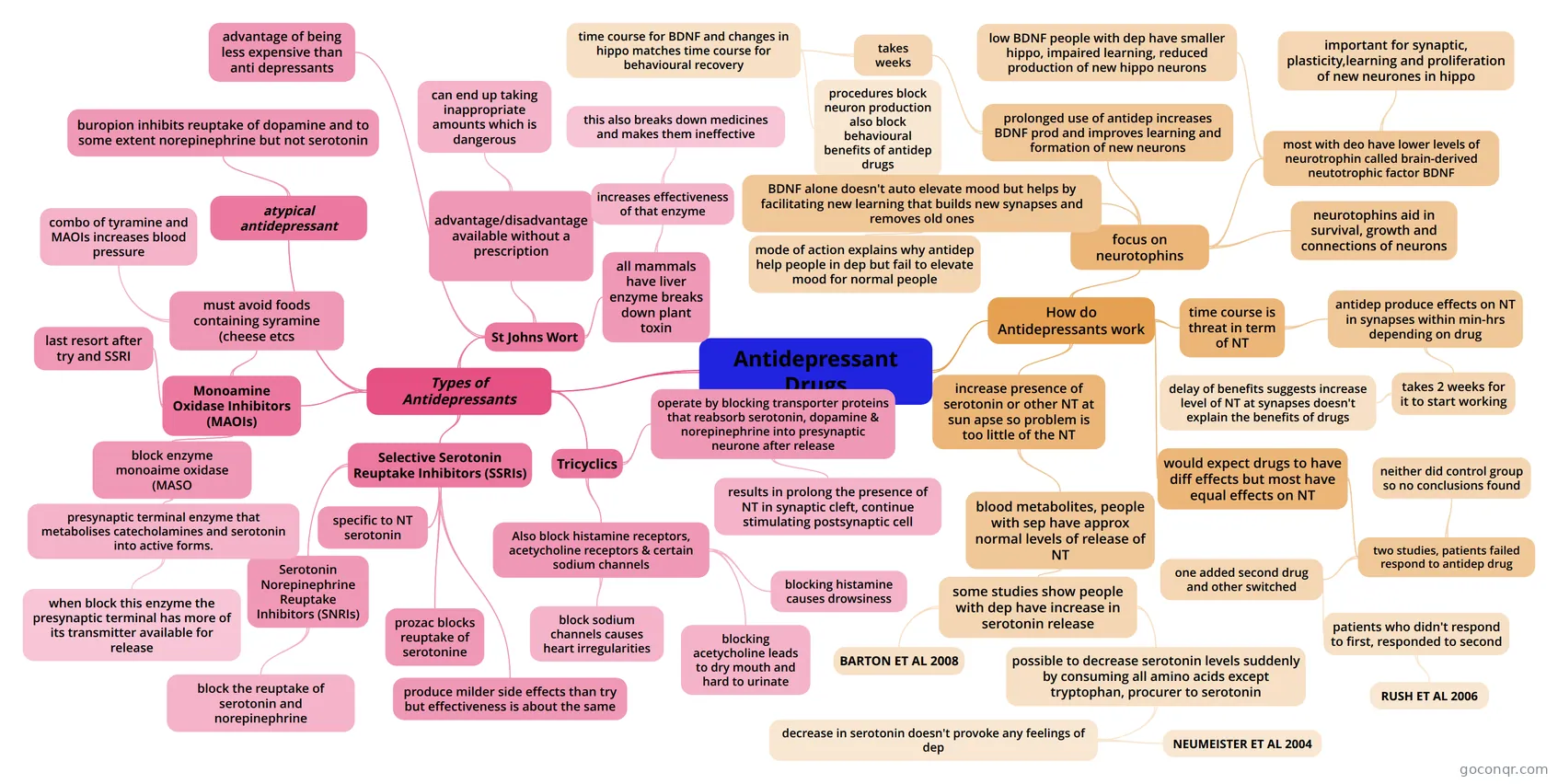 Mind map Antidepressant Drugs
-
Mind map Mood Disorder
-
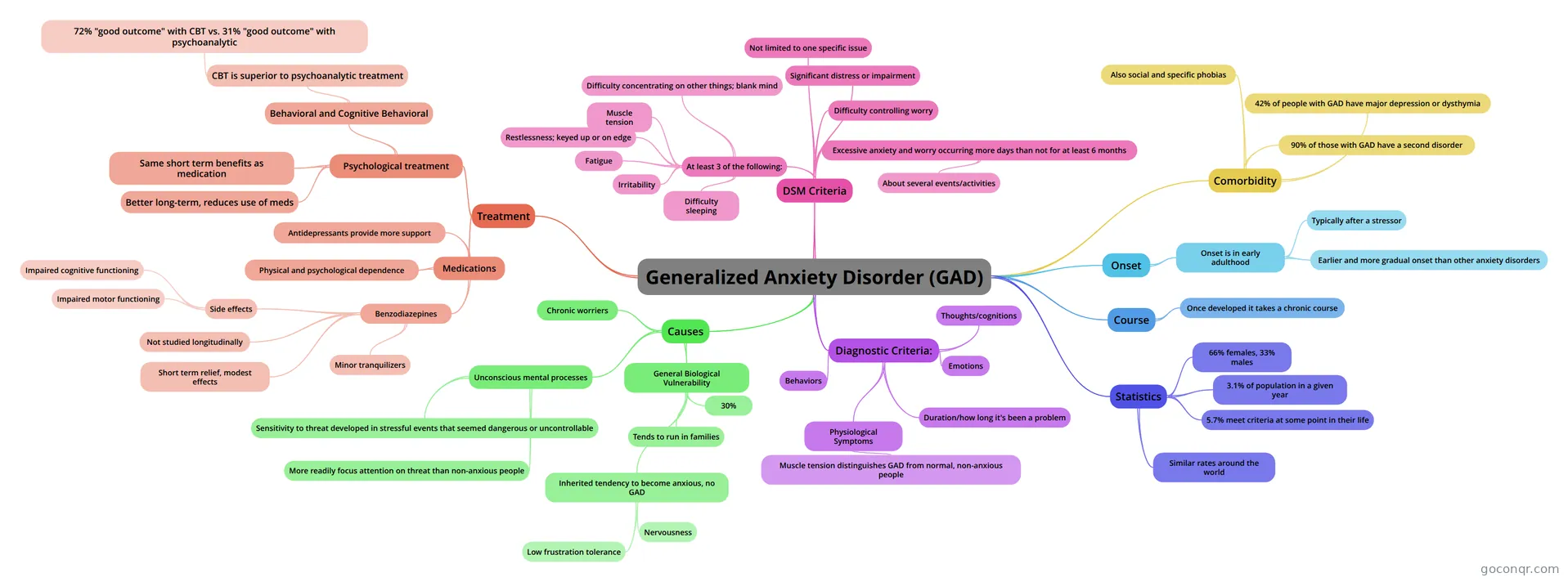 Mind map Generalized Anxiety Disorder (GAD)
-
3 cardsAnxiety Name 5 anxiety and related disorders listed in the DSM-5
-
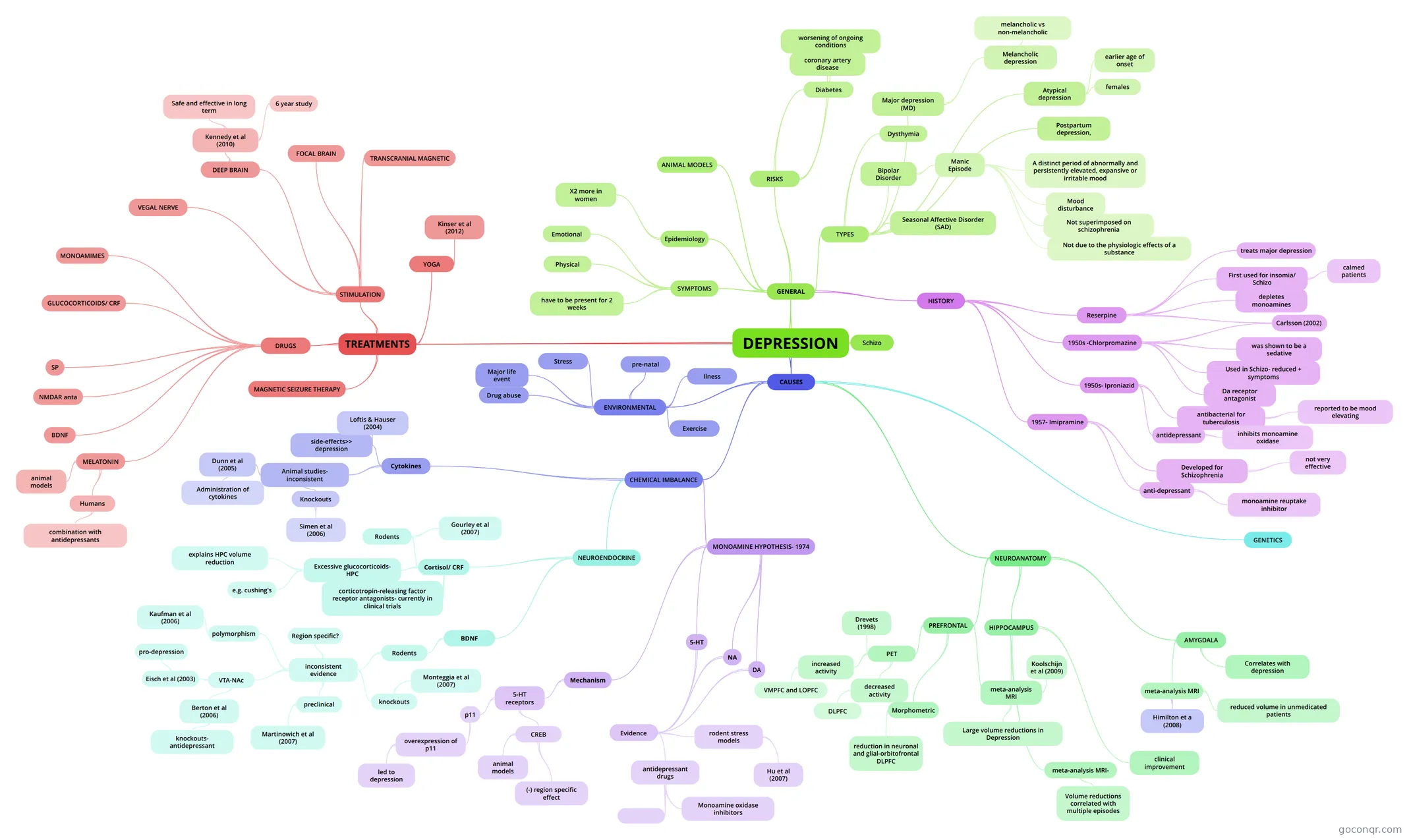 Mind map DEPRESSION
-
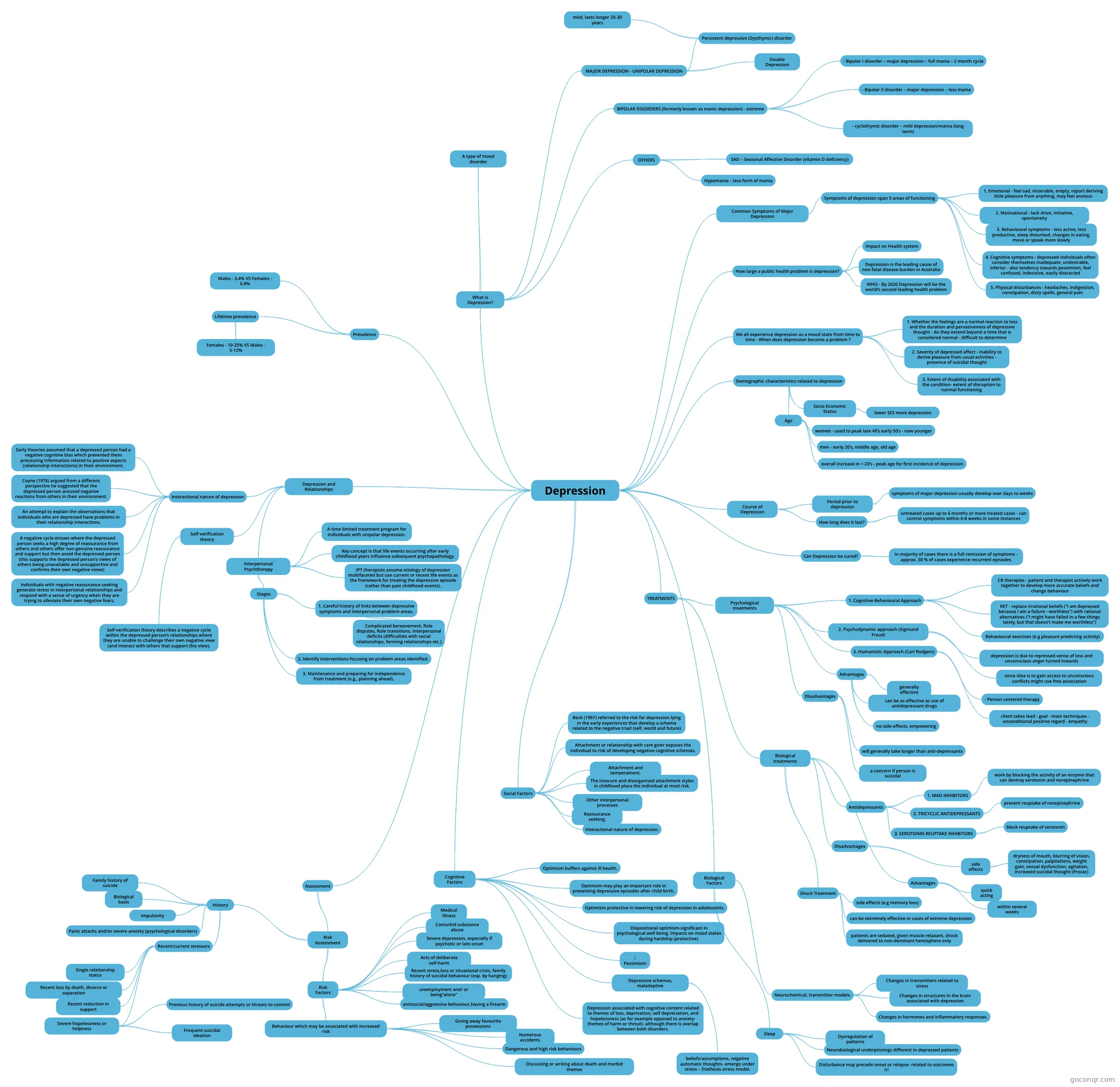 Mind map Depression Psychology exam prep
-
31 cardsChapter 6 - Mood Disorders Major Depressive Episode
-
74 cardsmental health lecture 4 is variations in moods normal?
Quizzes
Mind maps
See all 23 mind maps-
Antidepressant Drugs
-
Mood Disorder
-
Generalized Anxiety Disorder (GAD)
-
DEPRESSION
-
Depression Psychology exam prep
-
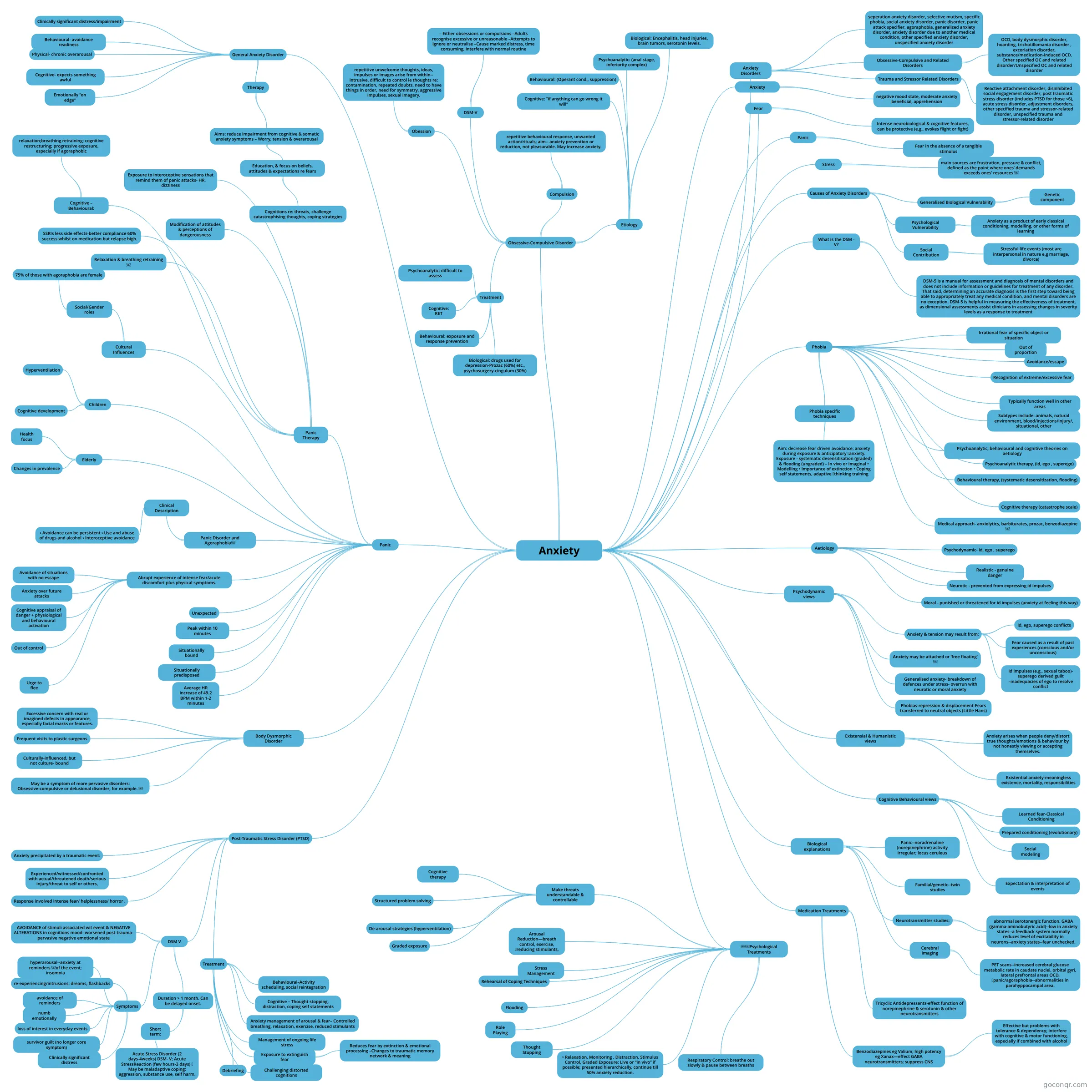 Anxiety psychology exam
-
Anxiety Disorders Covers all of anxiety disorders
-
Developmental Psychology - Anxiety (When Does Adaptive Anxiety Become Pathological?) Developmental Psychology - Anxiety
Flashcards
-
3 cardsAnxiety Name 5 anxiety and related disorders listed in the DSM-5
-
31 cardsChapter 6 - Mood Disorders Major Depressive Episode
-
74 cardsmental health lecture 4 is variations in moods normal?
-
40 cardsAbnormal Psychology - Depression
-
13 cardsBIS and Anxiety What is the core of anxiety? Who is more anxious male or female? How is anxiety scaled? What three componen...
-
15 cardsAnxiety and OCD Flashcards What are the main components of the Triple-Vulnerability Model?
-
13 cardsCBT approach to Depression Clark Beck & Brown (1992)
-
10 cardsanxiety sorry if anyone else is trying to coherently use these. good luck
Notes
-
Treatments of Anxiety disorders Systematic desensitisation by Wolpe 1958 This treatment aims to reduce undesirable responses to particular situations, this theory is based on the idea of conditioned response to stimuli in the en...
-
Biological Approach to Treating OCD Drug Therapy:Drug therapy for mental disoders aims to increase/decrease levels of neurotransmitters in the brain or to increase/decrease their activity. OCD is associated with low levels of seratonin so drugs work in ...
Slides
More Psychology topics
About Mood and Anxiety Disorders (Depression, Phobias, OCD)
GoConqr OriginalWhat this page covers
The resources sit in the Psychopathology and Treatment strand of Psychology. They fall into three clusters: mood disorders, anxiety disorders and phobias, and OCD. Treatments appear across all three.
- Mood disorders: several mind maps called Depression cover types, symptoms, causes and treatment. The Mood Disorder map explains bipolar disorder, and the DEPRESSION map notes that symptoms must be present for two weeks.
- Anxiety: the Generalized Anxiety Disorder (GAD) mind map sets out the diagnostic criteria under thoughts, emotions, behaviours and physical symptoms.
- Phobias and OCD: the Phobias map looks at clinical characteristics, biological explanations, reliability, validity and therapies. Others cover Biological explanation for OCD and issues of classification and diagnosis.
Where to start
Begin with a broad mind map for the disorder you are studying. For depression, try the Mood Disorder map, then the Depression maps. For anxiety, start with the Generalized Anxiety Disorder (GAD) map. Then move to the flashcard deck MOOD DISORDERS & SUICIDE, which covers major depressive episodes, anhedonia and mania.
Treatment and evaluation
The Antidepressant Drugs map explains how tricyclics block the reuptake of serotonin, dopamine and noradrenaline. For evaluation, look at the map on CBT for adult anxiety disorders in clinical practice, a meta-analysis, and the one on predicting response to cognitive therapy and medication in depression. Maps on psychodynamic and sociocultural explanations help with A-level style AO1 and AO2 points.
Using quizzes and maps together
- Read a map and say each branch aloud from memory.
- Take a quiz, such as Anxiety Disorders Revision Quiz or Treatments for Phobias.
- Note the questions you missed and go back to the matching map branch.
- Use flashcards to fix definitions and key studies.
School students will find A-level and GCSE Psychology material, while university students will find lecture and chapter decks on abnormal psychology. Teachers can pick maps and quizzes to share as ready-made material.
Ready to begin? Open one map, then test yourself with a quiz and see what sticks.
Frequently asked questions
Where should I start with depression?
Start with the Mood Disorder mind map for the main types, including bipolar disorder. Then read the Depression maps on signs, causes and treatment. The flashcard deck MOOD DISORDERS & SUICIDE is a good next step for major depressive episodes, anhedonia and mania.
Are there resources on phobias and OCD?
Yes. The Phobias mind map covers clinical characteristics, biological explanations, reliability, validity and therapies. Other maps cover explanations of and therapies for phobic disorders. For OCD, there are a flashcard deck, a slide set, and a map on the biological explanation.
Which levels and exams do these suit?
Most resources are for university students, with a large share for school students. The listed resources mention A-level Psychology and GCSE Psychology. Many university decks follow abnormal psychology lectures and textbook chapters, so check the titles to find your level.
Are the resources free to use?
Yes. Every resource here is free to open, study and take, with no account needed. They were made by GoConqr users, not by GoConqr itself. A free account also saves your quiz scores and lets you make your own quizzes, maps, flashcards and notes.
Is there anything on treatments?
Yes. The Antidepressant Drugs mind map explains types of antidepressants and how they work. There are also maps on treatment for mood disorders, CBT for adult anxiety disorders, and therapies for phobic disorders, plus notes on treating anxiety disorders.
What if my topic is missing?
Try a related title, as many resources cover several disorders at once. Anxiety decks often include OCD, and mood disorder decks include bipolar disorder. If you still cannot find what you need, build your own map or flashcards to fill the gap.