
Nutrition, Diet and the Digestive System
420 resources created by 380 users
This Nutrition, Diet and the Digestive System page on GoConqr gathers community-made mind maps, quizzes, flashcards, notes and slide sets, from digestion and absorption to enzymes, vitamins and balanced diets. It's built for school students revising a topic and teachers after ready-made material. There are over 4,000 resources here, including more than 260 quizzes, over 2,500 mind maps and more than 950 flashcard decks, with many aimed at GCSE, IGCSE and A-level Biology. Pick a topic, try a quiz to find your gaps, then make your own flashcards.
Top Nutrition, Diet and the Digestive System resources
-
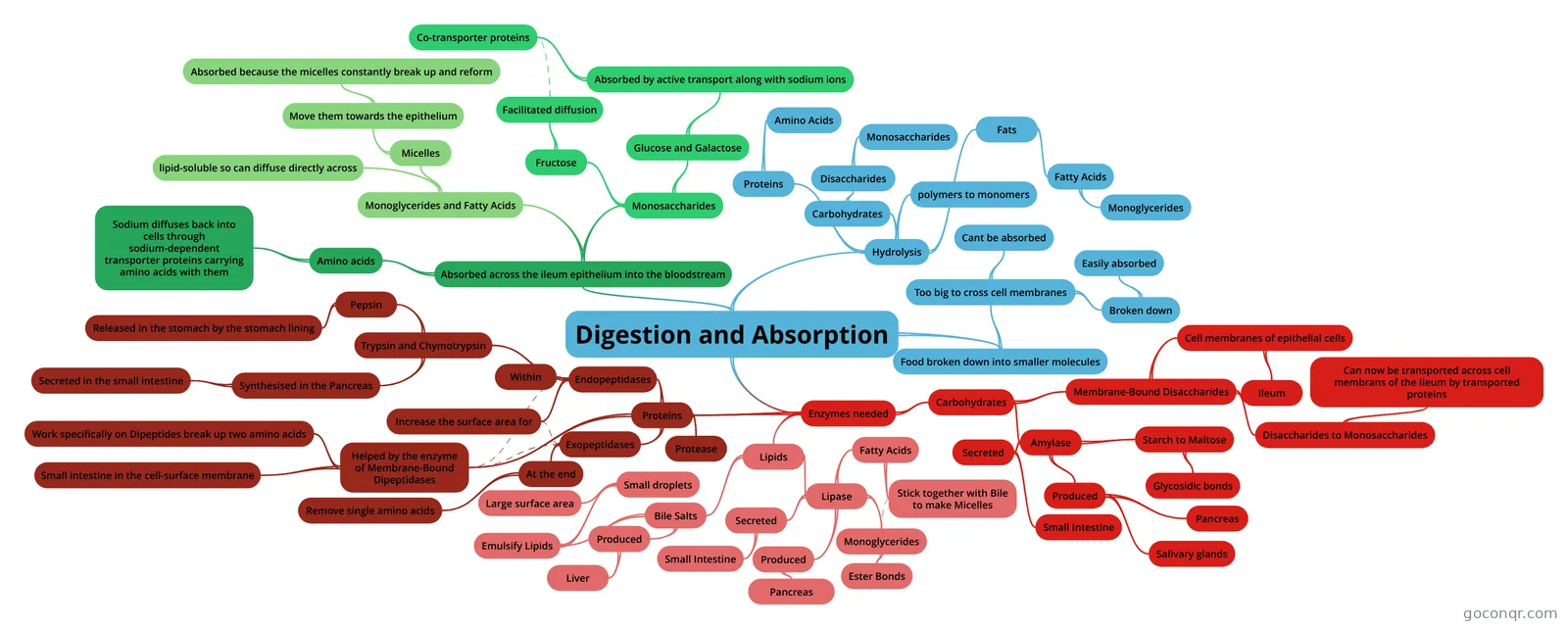 Mind map Digestion and Absorption
-
65 cardsFood Technology flash cards What are Proteins?
-
19 cardsTopic Nutrition II Topic Nutrition II
-
Mind map diet
-
23 questions0654 Nutrition in Animals Quiz Which type of food is not digested before being absorbed by the body?
-
17 questionsHuman nutrition: the digestive system (Biología 3º ESO SB) Match each system to its description: It introduces food into the body, and prepares and transforms it to e...
-
20 questionsG7 Food & Digestion Quiz 2 Which type of food is NOT digested before being absorbed by the body?
-
32 cardsYear 10 - 1.3 Digestion and the digestive system in humans Why is digestion needed?
Quizzes
See all 59 quizzes-
23 questions0654 Nutrition in Animals Quiz Which type of food is not digested before being absorbed by the body?
-
17 questionsHuman nutrition: the digestive system (Biología 3º ESO SB) Match each system to its description: It introduces food into the body, and prepares and transforms it to e...
-
20 questionsG7 Food & Digestion Quiz 2 Which type of food is NOT digested before being absorbed by the body?
-
28 questionsVitamins quiz What does B1 do?
-
9 questionsChapter 3 End of term test Review Quiz! What is digestion?
-
5 questionsYear 8 Science - Biology - A Healthy Diet What is a healthy diet?
-
17 questionsB1.1 - Balanced Diet What is a balanced diet?
-
19 questionsThe digestive system A food substance found in many foods is?
Mind maps
See all 182 mind maps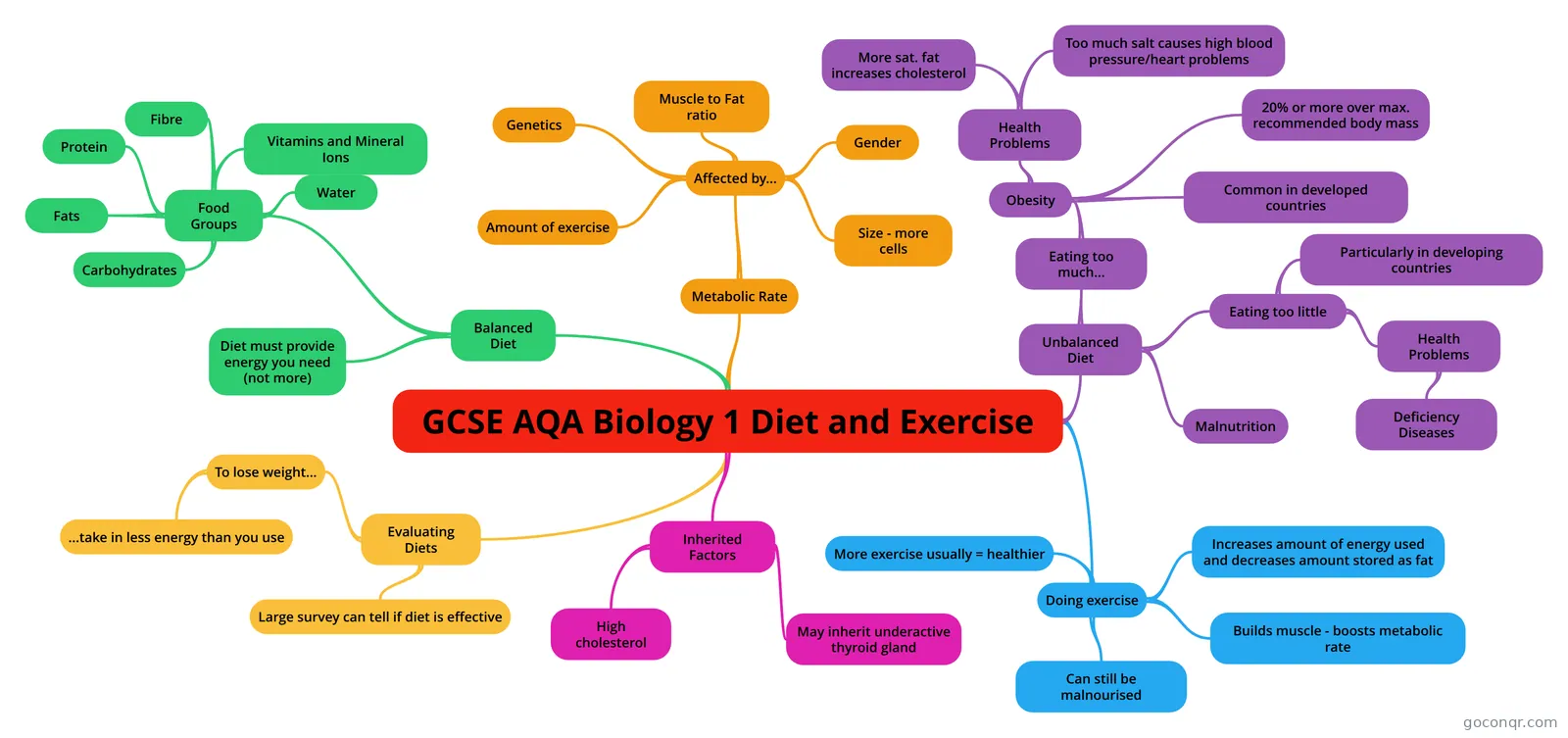
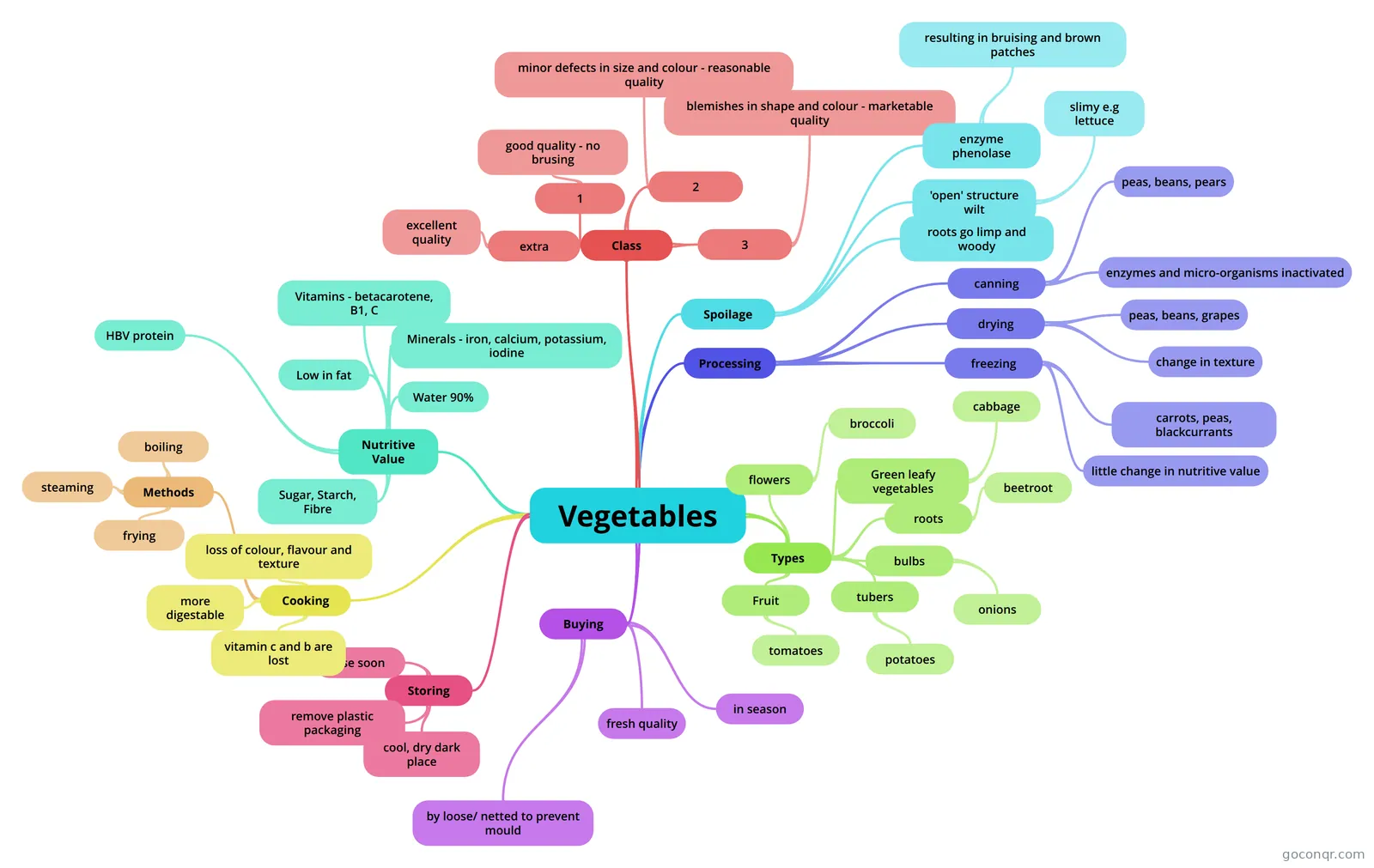
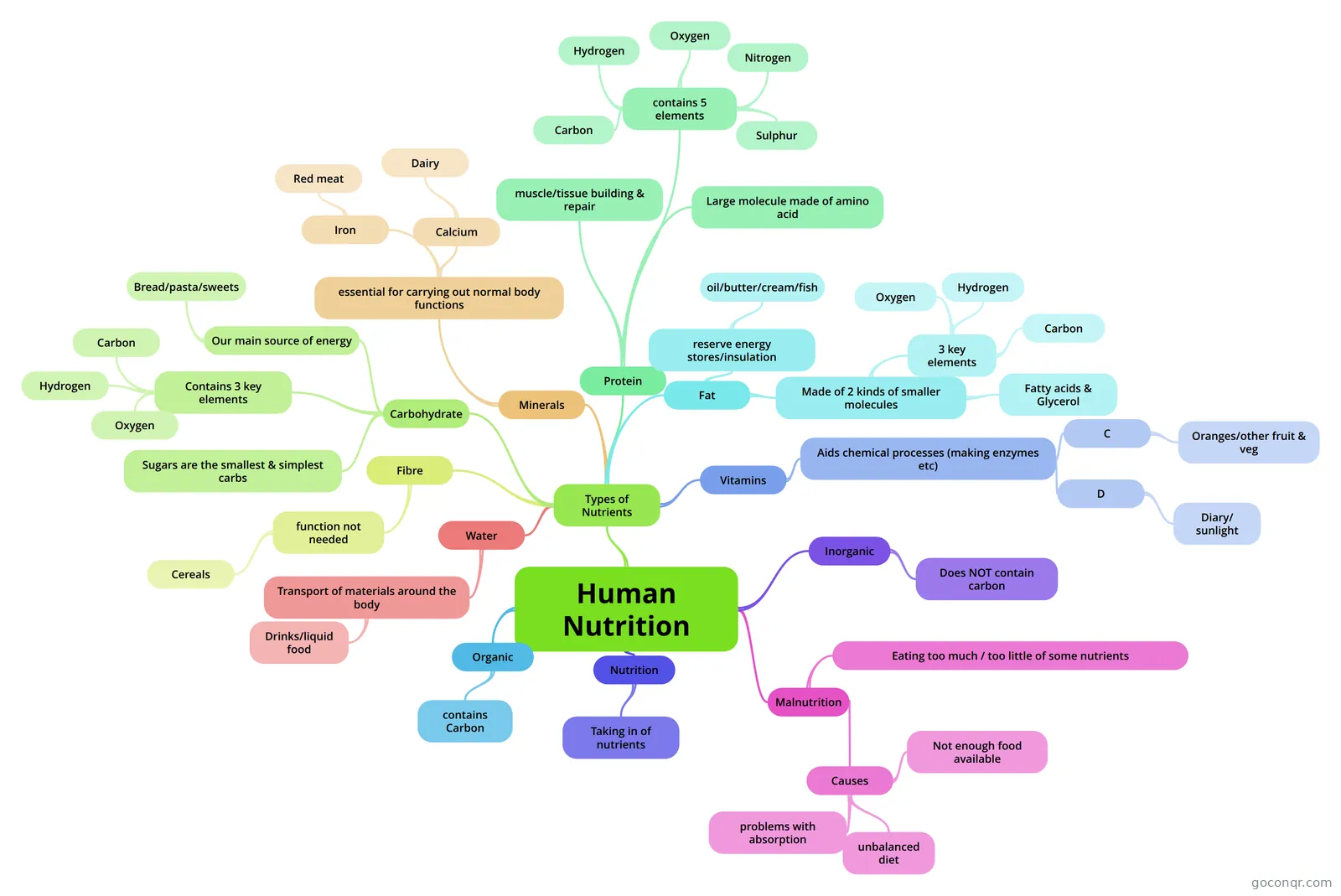
Flashcards
See all 145 flashcards-
65 cardsFood Technology flash cards What are Proteins?
-
19 cardsTopic Nutrition II Topic Nutrition II
-
32 cardsYear 10 - 1.3 Digestion and the digestive system in humans Why is digestion needed?
-
21 cardsDIGESTION what is mechanical digetsion
-
23 cardsModule 3.1 Digestion Module 3.1 Digestion
-
15 cardsFLASHCARDS ABOUT DIGESTIVE SYSTEM What is the first part of the small intestine?
-
11 cardsDIGESTIVE SYSTEM CONTINUATION WHAT IS A STOMACH?
-
9 cardsB1.1.1 Diet and Exercise Flash Cards Define: balanced diet
Flowcharts
Notes
See all 25 notes-
Carnivores, Omnivores and Herbivores Digestion In The Mouth Food is both physically and chemically digested in the mouth The food is physically digested using the teeth Starch is chemically digested in the mouth using enzyme amylase which is made in the ...
-
GCSE Biology unit 1.1 DIET AND EXERCISE7 food groups: fibre- keeps the bowels working properly water- used for chemical reactions and transport protiens- used by the body to release energy and to build cells carbohydrates- used by the body...
-
Biology AQA 3.1.2 Carbohydrate digestion Food is taken into the mouth and chewed, this breaks in up causing a larger surface areaSaliva enters the mouth and mixes with these secretionsSaliva contains amylase which hydrolises starch in maltoseThese secretions...
-
Exchange in the gut Food is digested so that molecules are small and soluble so that they can be absorbed Most absorption happens in the small intestine The small intestine is designed to allow the maximum absorption of food molecules It...
-
The role of bile After the stomach, food travels to the small intestine. The enzymes in the small intestine work best in alkaline conditions, but the food is acidic after being in the stomach. Bile is an alkaline substance produced by...
-
Food Nutrition is the way in which an organism obtains its food A nutrient is any substance that is important in sustaining life (the major nutrients are proteins, carbohydrates, lipids, vitamins, minerals, and water). The...
-
Digestion and Absorption Food is Broken Down into Smaller Molecules During Digestion The large biological molecules (e.g. starch, proteins) in food are too big to cross cell membranes. this means they can't be absorbed from the gut into the b...
-
Components of Food Vitamins Two Groups: Water soluble (B complex & C) and Fat soluble (A, D, E & K). VITAMIN C Also called absorbic acid found in citrus ...
Slides
More Biology and natural sciences topics
About Nutrition, Diet and the Digestive System
GoConqr OriginalWhat this unit covers
The page follows food through the body. Some resources look at what we eat, such as the Human Nutrition mind map, which separates organic and inorganic nutrients and looks at malnutrition. Others follow food as it is broken down, absorbed and used. Listed exams include GCSE Biology, A-level Biology, IGCSE Biology, IB Biology and KS3 Science, plus GCSE Food Technology and GCSE Home Economics.
Where to start
Begin with the The Digestive System mind map. It lists the digestive tract and the organs beside it, and splits digestion into mechanical and chemical. Then open Digestion and Absorption, which explains why big molecules must be broken down by hydrolysis before they can cross cell membranes.
Next, read Enzymes and Digestion. It shows starch, protein and fats as large molecules and sugars, amino acids, glycerol and fatty acids as the small ones they become.
Diet and nutrients
- The Food Technology flash cards cover proteins, carbohydrates, fats and vitamins, with what each vitamin is needed for and where it comes from.
- The Vitamins quiz tests this, including a deficiency such as beri-beri.
- The Food and Digestion mind map explains that a balanced diet depends on age, size, sex and activity.
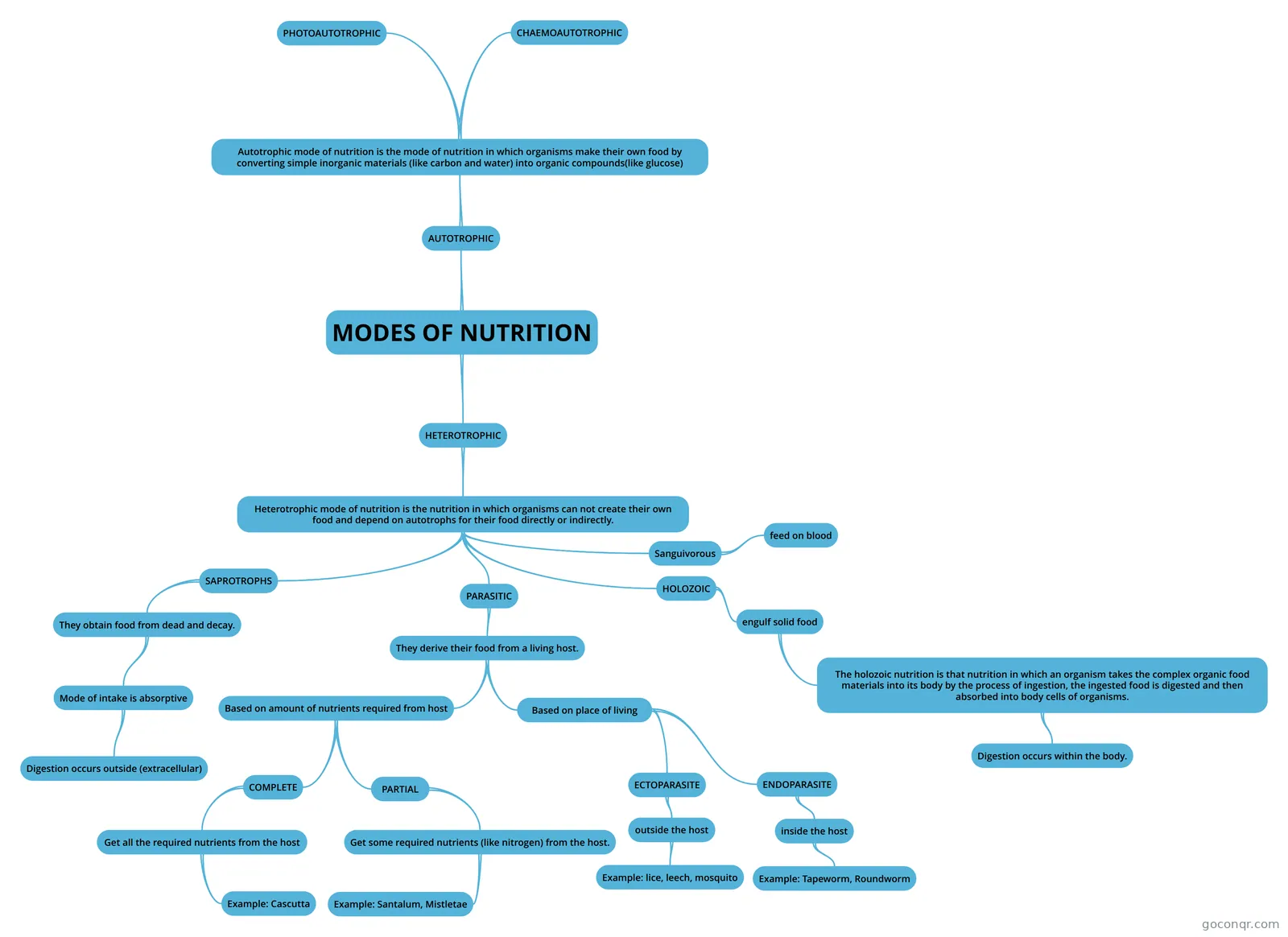
- The MODES OF NUTRITION mind map covers autotrophic nutrition, where organisms make their own food.
Using maps and quizzes together
- Read a mind map and cover the branches you can recall.
- Take a quiz on the same topic, such as Digestion Quiz.
- Note the questions you missed and go back to the map.
- Use a flashcard deck for the terms that stick badly.
Where it fits
This unit sits in the Human Body strand of Biology and natural sciences. Pick one resource, work through it, then try building your own set of flashcards from what you learn.
Frequently asked questions
Which resource should I open first?
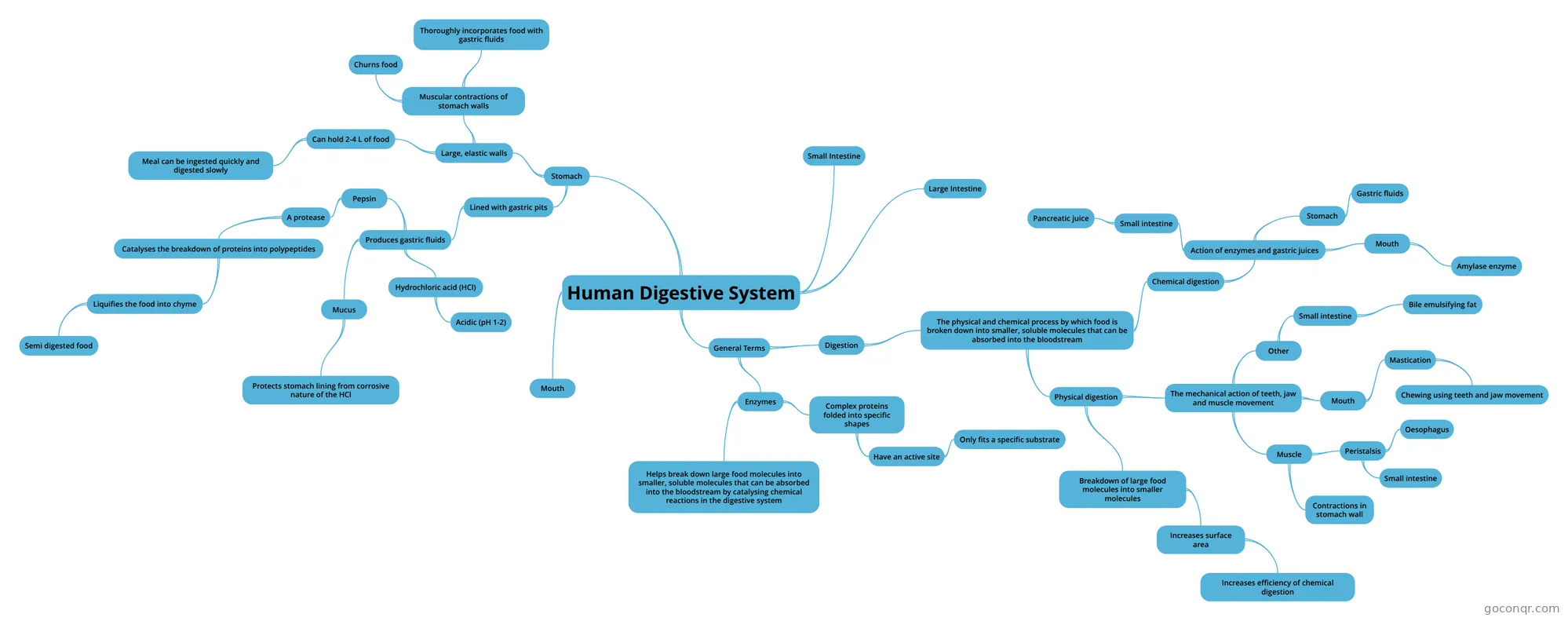
Start with the mind map called The Digestive System. It sets out the organs of the digestive tract, the liver and pancreas, and the difference between mechanical and chemical digestion. After that, Digestion and Absorption and Enzymes and Digestion build on it step by step.
What do the vitamin resources cover?
The Vitamins quiz asks what vitamins such as B1 and B2 do and where they come from, including the nerve and muscle condition beri-beri caused by a lack of B1. The Food Technology flash cards also cover vitamin A and B12, alongside proteins, carbohydrates and fats.
Which exams are these resources linked to?
The listed resources mention GCSE Biology, AQA GCSE Biology, IGCSE Biology, A-level Biology, IB Biology and KS3 Science. There are also resources for GCSE Food Technology, GCSE Home Economics and GCSE Science. Check each resource title to see which course it was made for.
Are the resources free, and who made them?
Yes. Every resource here is free to open, study and take, with no account needed. They were made by GoConqr users, not by GoConqr itself. If you want to save your quiz scores or make your own quizzes, maps, flashcards and notes, a free account lets you do that.
Is there anything on enzymes?
Yes. The mind maps Enzymes and Digestion and Enzymes sit alongside the flashcard decks 6.9 Enzymes and Digestion and Digestion - enzymes and what they break down. The quiz The Role Of Enzymes In Digestion lets you check what you have learned.
What if I can't find my topic?
Look through the related titles first, as diet, fats, balanced diet and digestion each appear in several formats. If your exact topic is missing, you can build your own mind map, flashcards or notes on it, working from the ones that are listed.