
Mind map
Electrical Control Measures
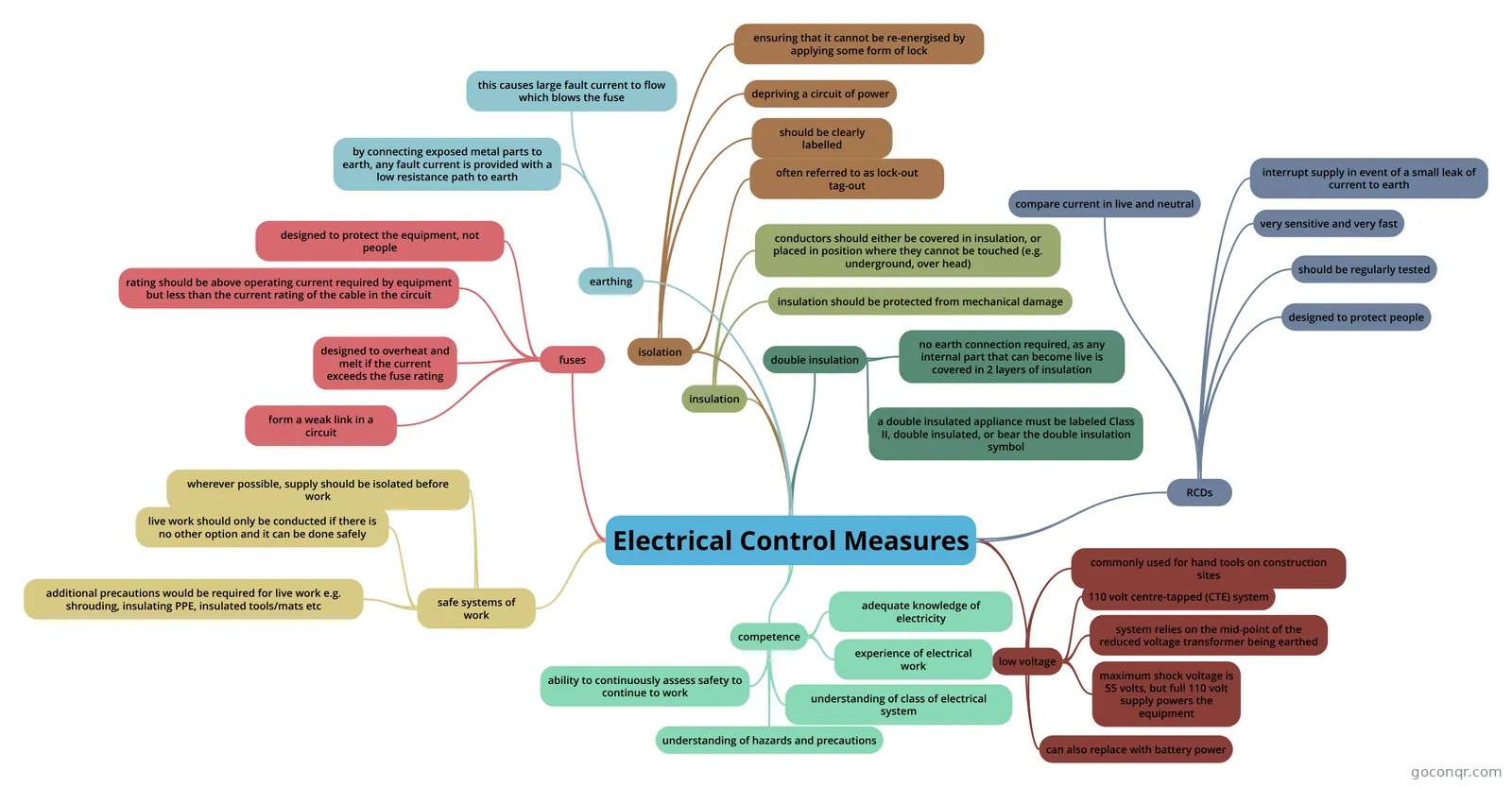
Mind map: Electrical control measures
Map content
Electrical Control Measures
fuses
- form a weak link in a circuit
- designed to overheat and melt if the current exceeds the fuse rating
- rating should be above operating current required by equipment but less than the current rating of the cable in the circuit
- designed to protect the equipment, not people
earthing
- by connecting exposed metal parts to earth, any fault current is provided with a low resistance path to earth
- this causes large fault current to flow which blows the fuse
isolation
- depriving a circuit of power
- ensuring that it cannot be re-energised by applying some form of lock
- should be clearly labelled
- often referred to as lock-out tag-out
insulation
- conductors should either be covered in insulation, or placed in position where they cannot be touched (e.g. underground, over head)
- insulation should be protected from mechanical damage
double insulation
- no earth connection required, as any internal part that can become live is covered in 2 layers of insulation
- a double insulated appliance must be labeled Class II, double insulated, or bear the double insulation symbol
RCDs
- compare current in live and neutral
- interrupt supply in event of a small leak of current to earth
- very sensitive and very fast
- should be regularly tested
- designed to protect people
low voltage
- commonly used for hand tools on construction sites
- 110 volt centre-tapped (CTE) system
- system relies on the mid-point of the reduced voltage transformer being earthed
- maximum shock voltage is 55 volts, but full 110 volt supply powers the equipment
- can also replace with battery power
competence
- adequate knowledge of electricity
- experience of electrical work
- understanding of class of electrical system
- understanding of hazards and precautions
- ability to continuously assess safety to continue to work
safe systems of work
- wherever possible, supply should be isolated before work
- live work should only be conducted if there is no other option and it can be done safely
- additional precautions would be required for live work e.g. shrouding, insulating PPE, insulated tools/mats etc