
Homeostasis and Excretion
1,810 resources created by 1,346 users
This Homeostasis and Excretion page on GoConqr gathers community-made mind maps, flashcards, quizzes, slides and notes, from blood glucose control and thermoregulation to urine formation and the kidney. It's built for school students revising a topic, and for teachers after ready-made material. There are over 1,700 resources here, including more than 80 quizzes and over 900 mind maps, mostly at secondary level and tagged with GCSE, IGCSE, A-level and IB Biology. Pick a mind map, try a quiz to find your gaps, then make your own.
Top Homeostasis and Excretion resources
-
Mind map AQA GCSE Biology - Homeostasis and Response All important information from the AQA GCSE Biology Revision Guide on topic Homeostasis and Response.
-
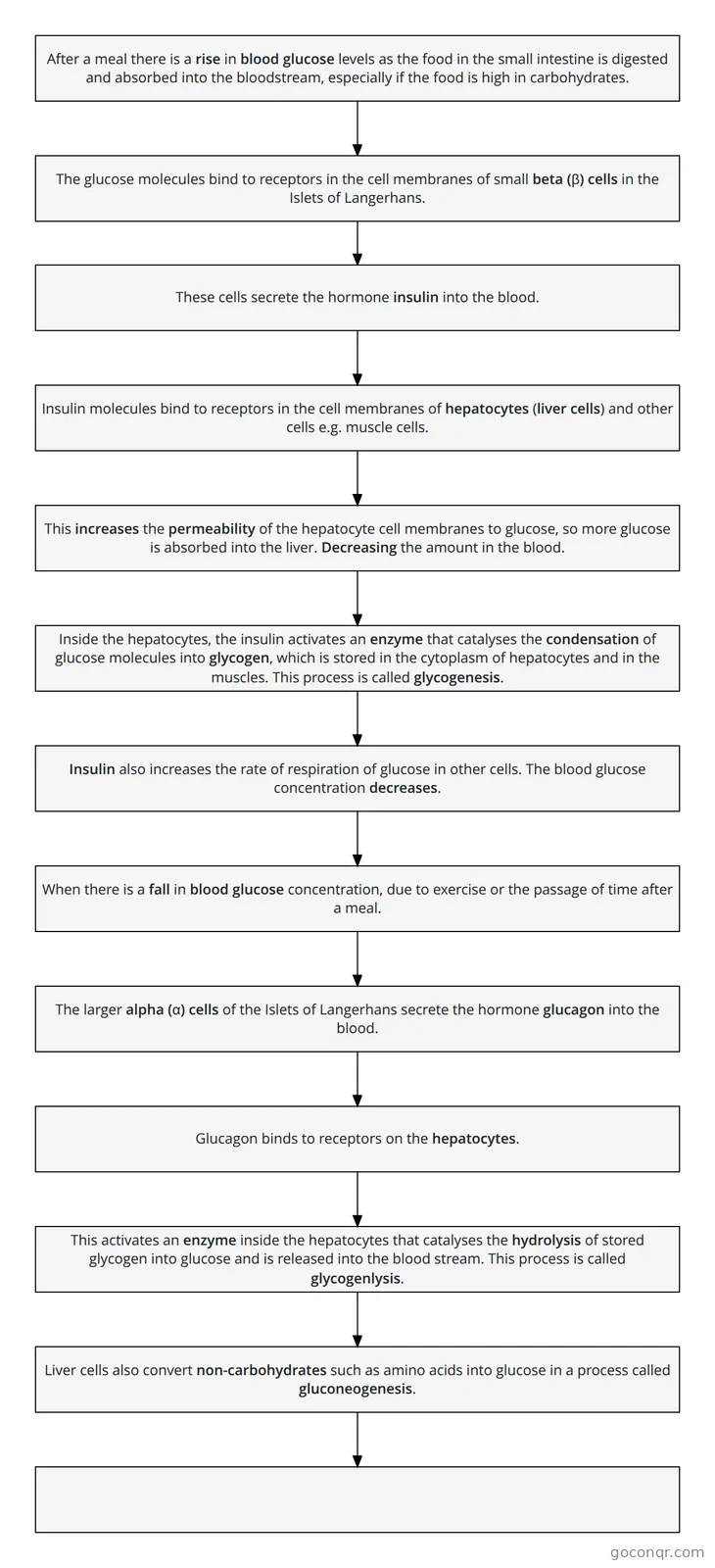 Flowchart Blood glucose A flow diagram of how negative feedback controls blood glucose concentrations
-
28 cardsMaintaining a balance Explain why the maintenance of a constant internal environment is important for optimal metabolic efficiency
-
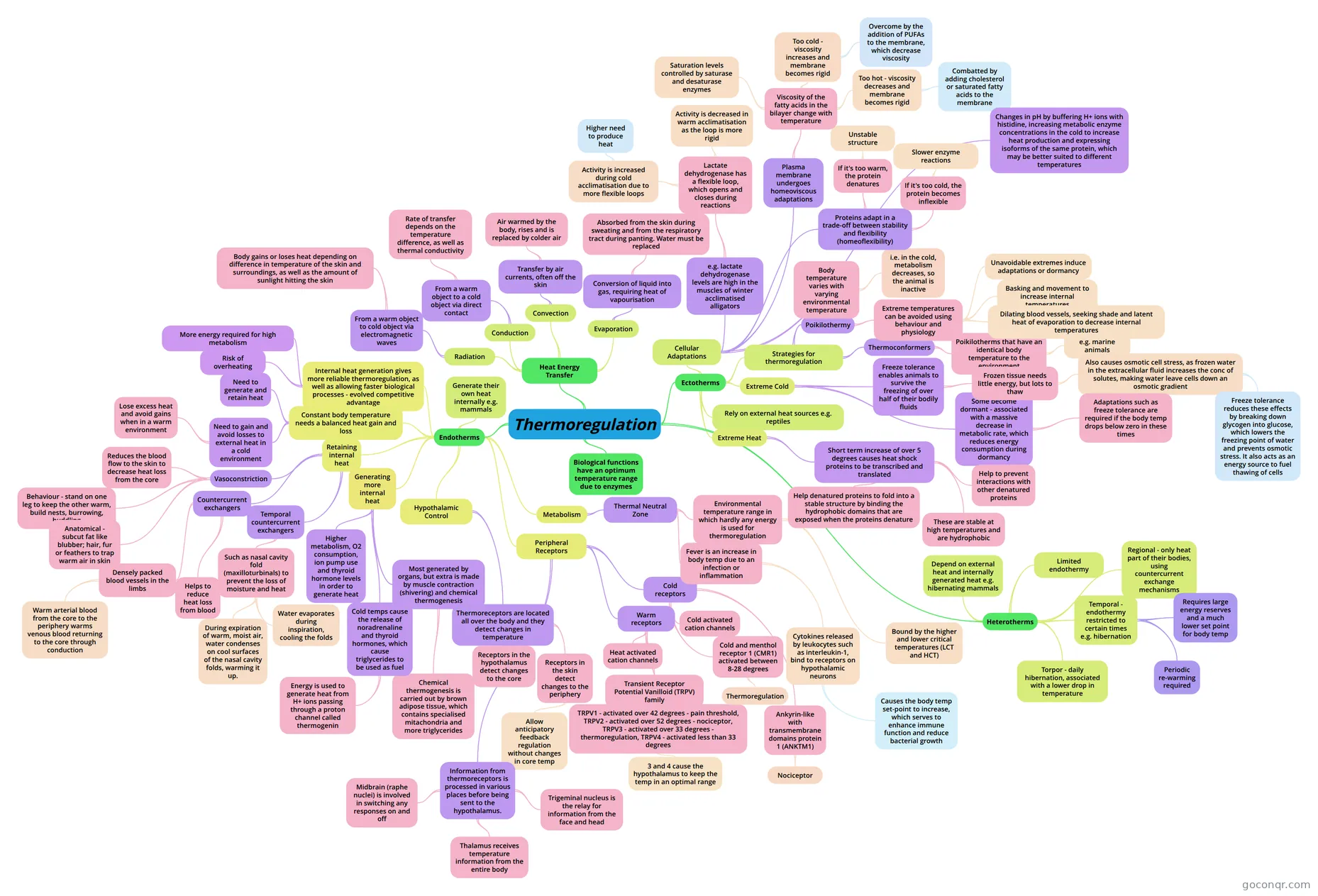 Mind map Thermoregulation
-
64 cardsAQA, GCSE, combined science, BIOLOGY, paper 2 What is meant my the term 'homeostasis'?
-
Mind map GCSE AQA Biology 3 Kidneys & Homeostasis A mind map showing information about homeostasis, kidney function & failure and controlling blood glucose.
-
Mind map Homeostasis and Excretion
-
19 cardsflashcards for Homeostasis and Response what is Homeostasis?
Quizzes
See all 100 quizzes-
29 questionsExcretion and Osmoregulation Urea is excreted by?
-
7 questionsSkin What makes the hair stand up?
-
5 questionsT5-5.- What causes kidney stones? What are the precipitating factors of kidney stone formation?
-
48 questionsBio 23 - Exam 4 If ammonia is so toxic, how do fish diffuse it out of their bodies directly?
-
18 questionsHomeostasis 18 questions
-
20 questionsExcretion Quiz What is used and produced in the ornithine cycle?
-
31 questionsExcretion What is excretion?
-
11 questionsB7 Quiz - Body control systems (Blood sugar/temperature) The human body is designed to function most efficiently at 27 degrees Celsius.
Mind maps
See all 989 mind maps-
AQA GCSE Biology - Homeostasis and Response All important information from the AQA GCSE Biology Revision Guide on topic Homeostasis and Response.
-
Thermoregulation
-
GCSE AQA Biology 3 Kidneys & Homeostasis A mind map showing information about homeostasis, kidney function & failure and controlling blood glucose.
-
Homeostasis and Excretion
-
13. Excretion in humans Syllabus (extended) 2021
-
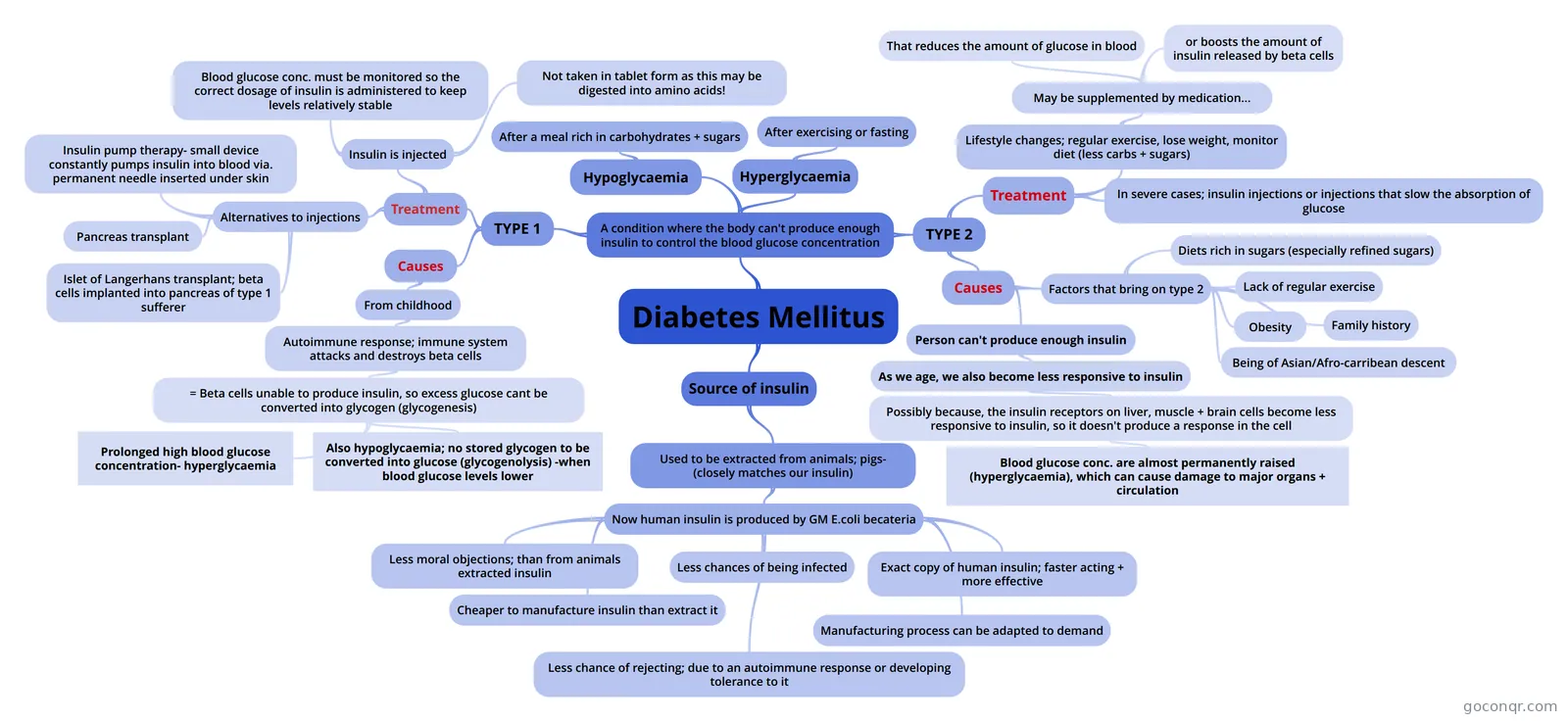 Diabetes Mellitus
-
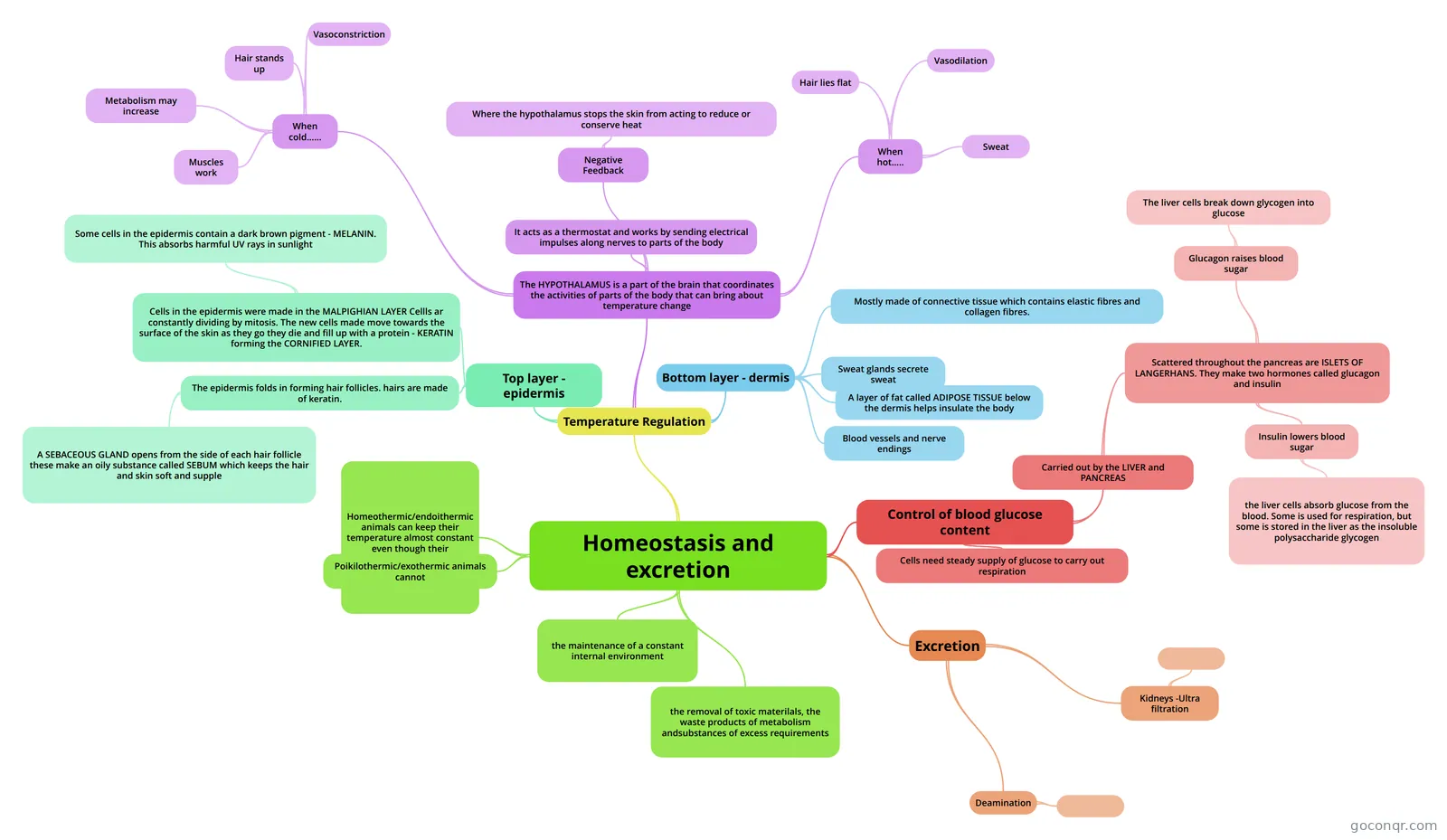 Homeostasis and excretion
-
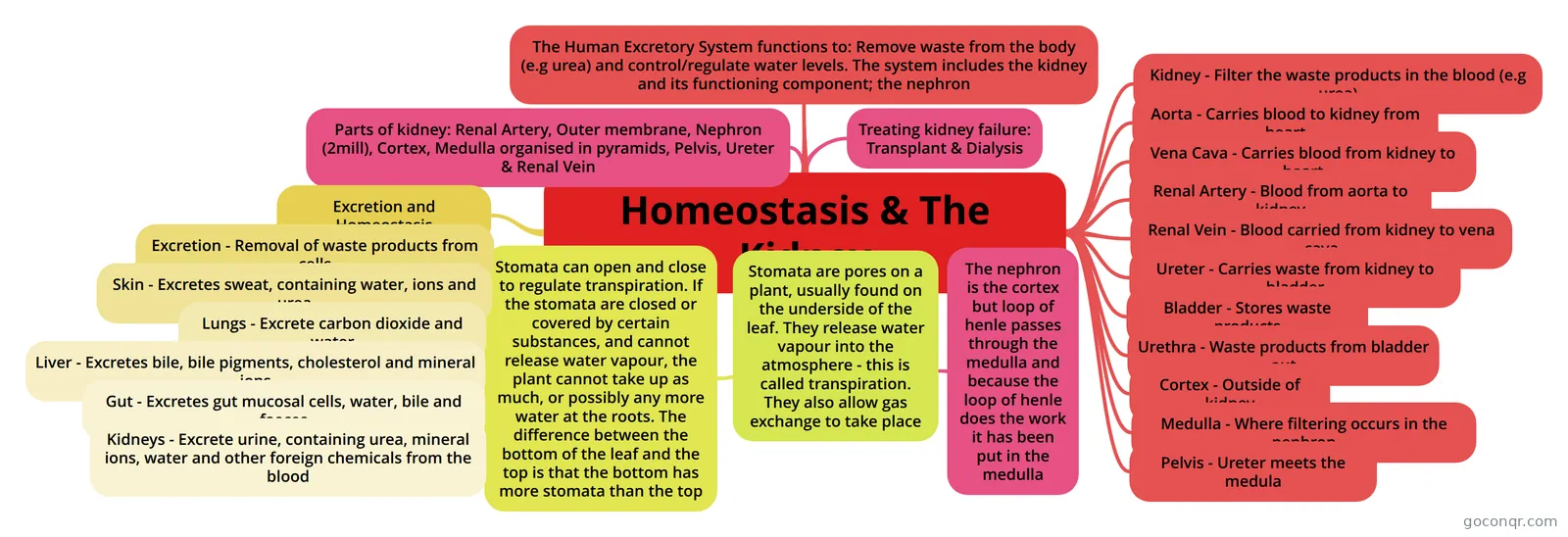 Homeostasis & The Kidney
Flashcards
See all 584 flashcards-
28 cardsMaintaining a balance Explain why the maintenance of a constant internal environment is important for optimal metabolic efficiency
-
64 cardsAQA, GCSE, combined science, BIOLOGY, paper 2 What is meant my the term 'homeostasis'?
-
19 cardsflashcards for Homeostasis and Response what is Homeostasis?
-
23 cardsYear 11 - Topic 5: Response and regulation What are sense organs?
-
9 cardsControlling body temperature
-
18 cards4.6.2 Control of water and ion content of the body How does water leave the body?
-
13 cardsThermoregulation Regulation of temperature
-
13 cardsHomeostasis - Biology Leaving Cert What is homeostasis?
Flowcharts
See all 33 flowcharts
Notes
See all 74 notes-
3. Plants and animals regulate the concentration of gases, water and waste products of metabolism in Explain why the concentration of water in cells should be maintained within a narrow range for optimal functionWhy water is important -75% of cells are made from water1. Water is the solvent for all metabolic rea...
-
Homeostasis HomeostasisHomeostasis is the balancing of body functions to maintain constant internal environmentThe body needs to be kept in a steady condition so that the cells in the body can perform correctly and efficiently. T...
-
Blood Glucose Regulation Blood Glucose · Glucose C6H12O6 o Glucose: 6C monosaccharide- type of carbohydrate o Destination: cell cytoplasm and mitochondria o Glucose converted (pyruvic acid which enter the mitochondria then) to ATP to release ...
-
Chapter 1: Communication Homeostatis:Maintenance of a stable internal environment Factors: -Amount of water (Osmosis)-Glucose (Affects respiration)-Temperature (Metabolism and denature) Amount of water:Low temperature slo...
-
Thermoregulation Tolerance Ranges • The best range of conditions for an organism to live in is called its optimal range. • However, as not all animals can live in their optimal range, they can sustain life within a range of conditions...
-
Communication, Homeostasis and Energy
-
Thermoregulation Thermoregulation · Body temperature: 37˚ optimum internal temperature o TOO HOT – cells at risk of denature o TOO COLD – cells too slow to metabolize enough for survival · Temperature receptors monitor temperature and...
-
maintaing a balance Enzymes- Role of enzymes Enzymes are organic catalysts. Catalyst is a substance that speeds up or brings about a chemical change without itself being used up in a reaction. As well as speeds up reactions, enzymes enab...
Slides
See all 30 slidesMore Biology and natural sciences topics
About Homeostasis and Excretion
GoConqr OriginalWhat this unit covers
The resources follow two linked ideas: keeping the body's internal conditions steady, and removing waste. Many of the mind maps start with the definition of homeostasis as a stable internal environment, then move to negative feedback, body temperature, water content, ion content and blood sugar.
Where to start
- Begin with the mind map AQA GCSE Biology - Homeostasis and Response for an overview.
- Move to the flowchart Blood glucose, which follows what happens after a meal, when glucose levels rise.
- Use the mind map Thermoregulation to compare endotherms, ectotherms and heterotherms.
- Finish with the slides on urine formation, which begin with glomerular filtration in the renal corpuscle.
Using maps, cards and quizzes together
Read a map first, then cover it and try to rebuild the branches from memory. The flashcard deck Homeostasis - Biology Leaving Cert asks short questions such as what the kidneys control. Another deck for AQA GCSE Combined Science asks what homeostasis means and what the automatic controls in negative feedback are. Once the cards feel easy, take a quiz such as Excretion and Osmoregulation or Homeostasis. Wrong answers show you which map to revisit.
Different courses, one topic
The listed resources mention GCSE Biology, AQA GCSE Biology, GCSE Combined Science, IGCSE Biology, A-level Biology and IB Biology. Wording and depth differ between them. Some stay with the basics, while others cover osmoregulation and kidney failure in more detail. Check a resource against your own course before relying on it.
Where it sits
This unit belongs to the Coordination and Control strand of Biology and natural sciences. It sits beside other topics on how the body senses and responds.
Ready to begin? Open a mind map, work through a quiz, and see which gaps remain.
Frequently asked questions
Which resource should I open first?
Start with the mind map AQA GCSE Biology - Homeostasis and Response. It sets out the definition, negative feedback and the conditions the body controls. After that, the Blood glucose flowchart and the Thermoregulation mind map make good next steps, before you move on to the kidney.
What do the mind maps cover?
They cover homeostasis and negative feedback, body temperature control, blood glucose and diabetes, and the kidney and urine formation. Some also cover osmoregulation and the liver's role in excretion. Titles such as Diabetes Mellitus, Urinary System and Kidney function show how specific they get.
Are the resources free to use?
Yes. Every resource listed here is free to open, study and take, with no account needed. They were made by GoConqr users, not by GoConqr itself. A free account also saves your quiz scores and lets you make your own quizzes, mind maps, flashcards and notes.
Which exams do these resources suit?
The listed resources mention GCSE Biology, AQA GCSE Biology, GCSE Combined Science, GCSE Science, IGCSE Biology, A-level Biology, IB and IB Biology. Most are at secondary level, so they suit school students. Check the title and content against your own specification.
Is there anything for teachers?
Teachers can use the slide sets, such as Urine Formation and Mechanisms of Homeostasis, along with the flowcharts, mind maps and quizzes as ready-made material for a lesson or revision session. Since the community made them, read each one through before setting it.
What if I can't find my topic?
Try a nearby word, such as kidney, excretion, thermoregulation or blood glucose, since similar topics are often titled differently. If nothing fits, make your own mind map, flashcards or notes with a free account. That also helps you remember the material.