
Skeletal and Muscular Systems
171 resources created by 149 users
This Skeletal and Muscular Systems page on GoConqr gathers community-made quizzes, mind maps, flashcards, notes and slides, from bone types and synovial joints to the sliding filament theory and muscle contraction. It's built for school students revising a topic, and for teachers after ready-made material. There are over 1,200 resources here, including more than 200 quizzes and over 500 mind maps, mostly at secondary level. Pick a quiz to find your gaps, then explore the maps.
Top Skeletal and Muscular Systems resources
-
42 cardsLab 4: The Appendicular Skeleton (Lab Material) BIOL252L Shemer Midterm 2
-
20 questionsB7 Quiz - The Skeleton, Movement and Exercise Label the skeleton with the correct bones.
-
67 cardsThe Skeletal System The Skeleton Is:
-
23 questionsMuscles - sliding filament theory What is muscle made up of?
-
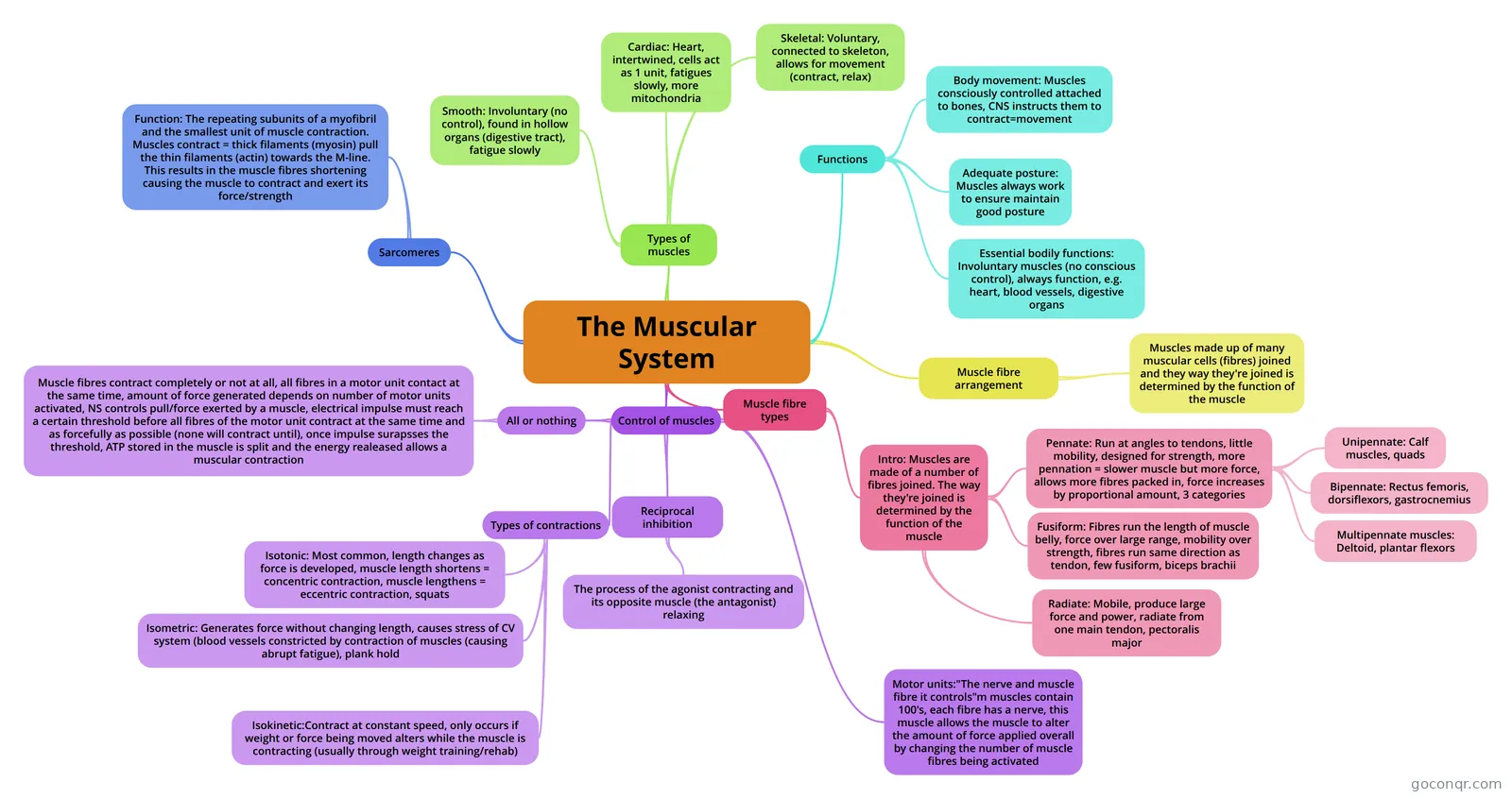 Mind map The Muscular System
-
Mind map The Skeleton and Muscles
-
21 questionsAnatomy Final 2017 What forms the skeletal system?
-
31 cardsLocomotor system What are the three parts in which we can divide our body?
Quizzes
See all 41 quizzes-
20 questionsB7 Quiz - The Skeleton, Movement and Exercise Label the skeleton with the correct bones.
-
23 questionsMuscles - sliding filament theory What is muscle made up of?
-
21 questionsAnatomy Final 2017 What forms the skeletal system?
-
20 questionsBones, Muscles & Skin: The Human Skeleton Type the correct name of each bone
-
22 questionsThe human skeleton Label the bone
-
9 questionsMuscle Shape And Function What is the main focus of convergent musces? (Many fibres, short length)?
-
7 questionsBones in english (Laura Machado Callejas, María José Salado Salgado, Rocío Gámez Alcalá) Hand bones (Laura Machado Callejas, María José Salado Salgado, Rocío Gámez Alcalá) :
-
5 questionsSkeletal and Muscular systems Label the skeleton
Mind maps
See all 42 mind maps-
The Muscular System
-
The Skeleton and Muscles
-
The Skeletal System
-
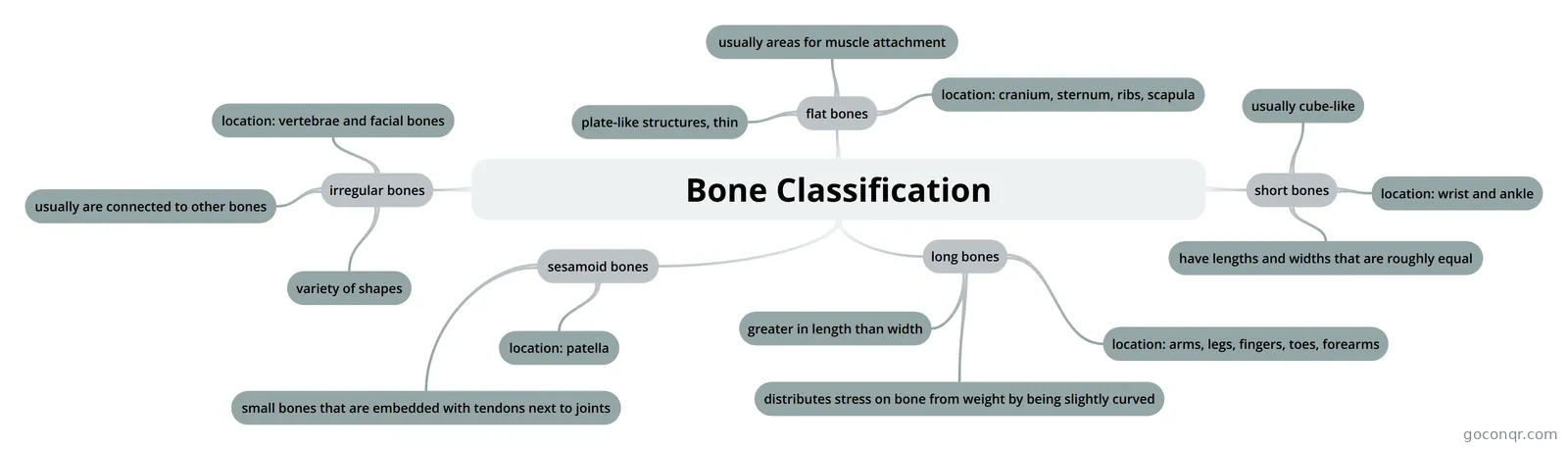 Bone Classification Bone shape and location
-
Bones, Joints and Muscles
-
Functions of the skeleton - SADPAM
-
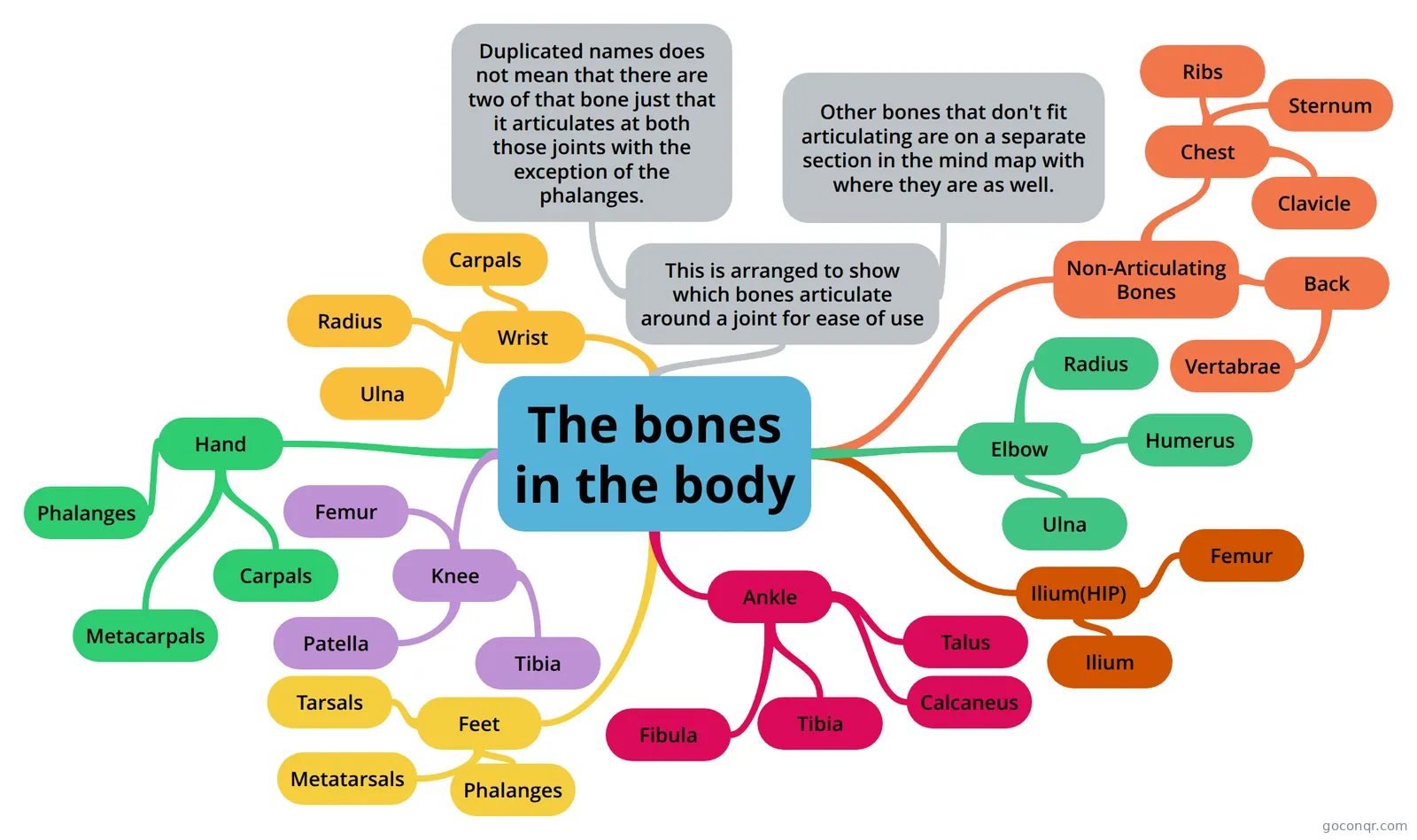 The bones in the body The a-level bones check for GCSE ones and remove which ones you don't need in your own space after pinning it.
-
Muscle skeleton Mind Map on Bio all, created by zeeshan tjmal on 12/05/2018.
Flashcards
See all 68 flashcards-
42 cardsLab 4: The Appendicular Skeleton (Lab Material) BIOL252L Shemer Midterm 2
-
67 cardsThe Skeletal System The Skeleton Is:
-
31 cardsLocomotor system What are the three parts in which we can divide our body?
-
11 cardsJoints Sutures Fibrous Joint
-
9 cardsPhysiology & Anatomy revision cards Skeletal System Name all the major bones in the skeletal system
-
39 cardsLab 4: The Appendicular Skeleton (ID Material) BIOL252L Shemer Midterm 2
-
5 cardsMUSCULAR SYSTEM The muscular system is responsable for the movement of the human body.
-
91 cardsHealth 1 Unit 1 Test Guide Freshman/Unit 1/October 2018
Flowcharts
-
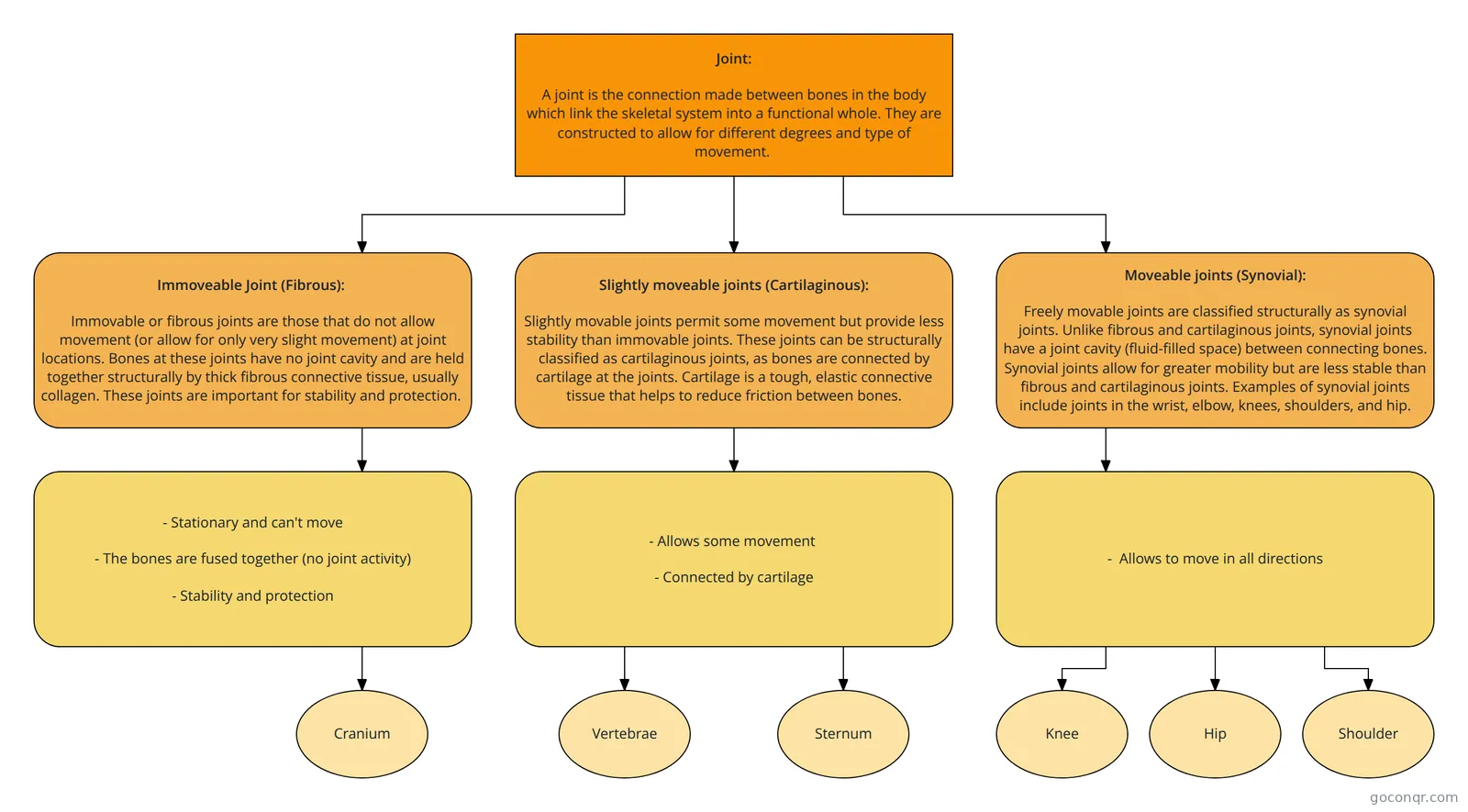 Types of joints 3 different types of joints and examples
-
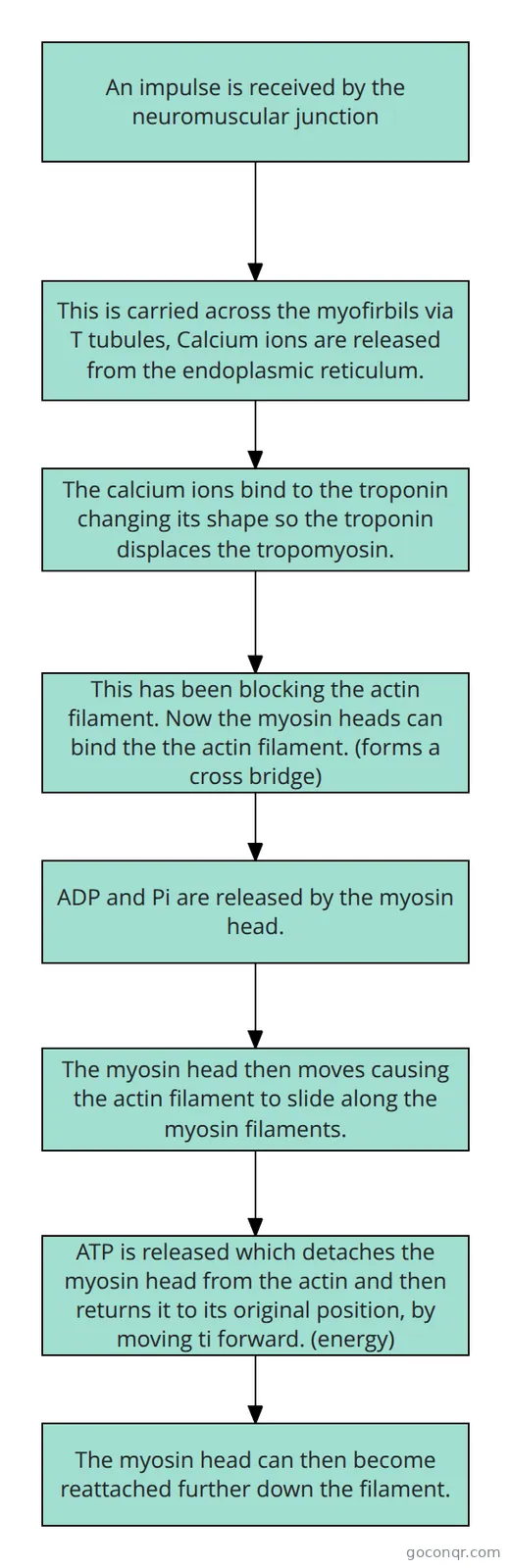 myosin and actin
-
Types of moveable joints (synovial) Types of moveable joints (synovial) with examples and an image
-
Components of Muscle Flow Chart A flow chart to organize the hierarchy of muscles and their terms to better understand how they all connect...
-
Inside a bone and how to take care of bones Inside a bone with labelled picture and how to take care of bones
-
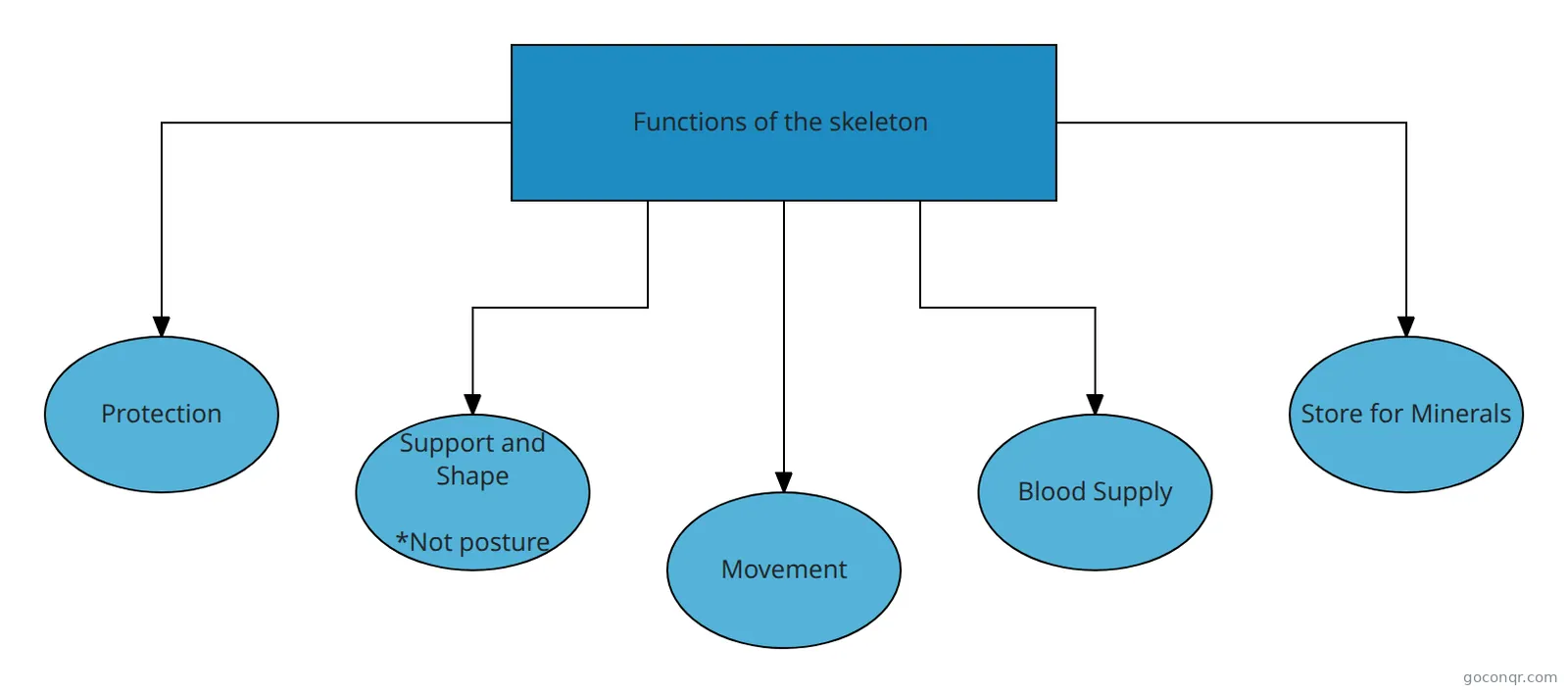 Functions of the skeleton The 5 main functions of the skeleton system
Notes
See all 10 notes-
Bones Functions of the Skeletal System Support Movement Protection Storage (calcium) Red blood cell formation Gross Structure of Bones Bone Tissue- Compact (Strength and load bearing)- Cancellous / Spongy (Shock absorption)...
-
MUSCLE CONTRACTION STRUCTURE OF SKELETAL MUSCLENeuromuscular junction - the point where a motor neurone meets a skeletal muscle fibreMuscles are effector organs that respond to nervous stimulation by contracting and bringing about movem...
-
Muscles Muscles Properties:Excitable - responds to an external stimulus.Conductivity - can pass stimuli on.Contractility - ability to shorten.Elasticity - ability to return to original shape.Functions:Create movement - by con...
-
The skeleton and how the muscles work by CGP The skeleton and how the muscles move The human skeletal system is made up of 206 bones and in the muscular system, there are 640 muscles. Together these systems are really important for allowing you to move around. T...
-
Purposegames Links to purpose gamesParts of the Skull http://www.purposegames.com/game/0aed4b06f4Parts of the skullhttp://www.purposegames.com/game/eb008fb9a0Bones of the axial skeletonhttp://www.purposegames.com/game/bones-of-the...
-
Chp.8 skeletal and muscular systems - created from Mind Map parts of human skeleton diagram do not need joints and stermum missing collar bone/shoulder blade functions of skeleton support provides rigid base against which muscles pull on protection types of joints fixed/fused ...
-
Skeleton Divided Axial Skeleton Which provides a central support axis. It includes the skull, vertebral column, sternum (breastbone) and ribs. Appendicular Skeleton Which includes the bones of the limbs as well as the shoulder girdle ...
-
4 types of bones Long bones- arms, palms, fingers, legs, instep Short bones- wrists and ankles Flat bones- ribs, breastbone, cranium, shoulder girdle Irregular Bones- hips, vertebrae, bones in skull
Slides
More Biology and natural sciences topics
About Skeletal and Muscular Systems
GoConqr OriginalWhat this unit covers
The listed resources split into two connected halves: the skeleton and the muscles. On the skeleton side you will find bone names, bone types, the functions of the skeleton and the different kinds of joint. On the muscle side the focus is on muscle structure, muscle shape and function, and how muscles contract.
Where to start
Begin with the quiz B7 Quiz - The Skeleton, Movement and Exercise. It asks you to label the skeleton, name its functions and explain haematopoiesis. If you want to learn names first, try Bones, Muscles & Skin: The Human Skeleton, where you type the correct name of each bone.
Next, move to joints. The flashcard deck Joints lists cartilage joints and the synovial types, including hinge, pivot, condyloid, saddle and ball and socket. The flowchart Types of joints and the Joints and connective tissues quiz let you check what you have learned.
Muscles and contraction
The quiz Muscles - sliding filament theory starts from the basics: what muscle is made up of, why each muscle fibre is a single cell, and what multinucleate means. The flowchart Stages of Muscle Contraction and the deck Sliding Filament Theory give you the same ideas in a different form. For fibre types, there is a quiz on slow-twitch versus fast-twitch muscle fibres.
Using quizzes and maps together
Read a mind map such as The Skeleton and Muscles first. It sets out support, protection and the other functions of the skeleton in one view. Then take a quiz on the same topic and note which answers you missed. Go back to the map for those branches only. Flashcards suit short, repeated sessions, and the mind maps are a quick way to review before a test.
The resources mention GCSE Biology, A-level Biology, GCSE PE, GCSE Physical Education and ATAR Human Biology, so you can look for material that matches your course. Teachers can pick a ready-made quiz or slide set for a lesson.
Where it sits
This unit belongs to the strand The Human Body in Biology and natural sciences. Choose one resource today and see how far you get.
Frequently asked questions
Which quiz should I try first?
Try B7 Quiz - The Skeleton, Movement and Exercise. It covers labelling the skeleton, the functions of the skeleton and bone tissue, so it shows quickly what you already know. If your weak spot is muscle, start with Muscles - sliding filament theory instead.
What do the mind maps on this page cover?
The mind maps cover the skeleton, bone classification, synovial joints, the three types of muscle, muscle tissue and the sliding filament model. The Skeleton and Muscles sets out the functions of the skeleton, such as support and protection. There are over 500 mind maps to browse.
Are the resources free to use?
Yes. Every resource listed here is free to open, study and take, with no account needed. They were made by GoConqr users, not by GoConqr itself, so it is worth checking that a resource matches your own course before relying on it.
Which levels and exams do these resources suit?
Most of the material is at secondary level. The resources mention GCSE Biology, A-level Biology, GCSE PE, GCSE Physical Education and ATAR Human Biology. School students can use them for revision, and teachers can use them as ready-made classroom material.
Can I find help with joints specifically?
Yes. Look at the Joints flashcard deck, the Types of joints flowchart, the Joints and connective tissues quiz and the Synovial Joints mind map. Together they cover cartilage joints and synovial types, including hinge, pivot, saddle and ball and socket joints.
What if the topic I need is missing?
Browse the related quizzes, notes and slide sets first, since titles vary a lot between contributors. If you still cannot find it, a free account lets you make your own quizzes, mind maps, flashcards and notes, and keeps your quiz scores.