
Classification of Living Things
271 resources created by 240 users
This Classification of Living Things page on GoConqr gathers community-made quizzes, mind maps, flashcards and notes, from the five kingdoms and the three domains to binomial naming, phylogeny and vertebrates and invertebrates. It's built for school students revising a topic and teachers after ready-made material, with a few university students and professional candidates also dipping in. There are over 2,000 resources here, including more than 100 quizzes, over 1,200 mind maps and over 500 flashcards. Pick a mind map to start, then test yourself with a quiz.
Top Classification of Living Things resources
-
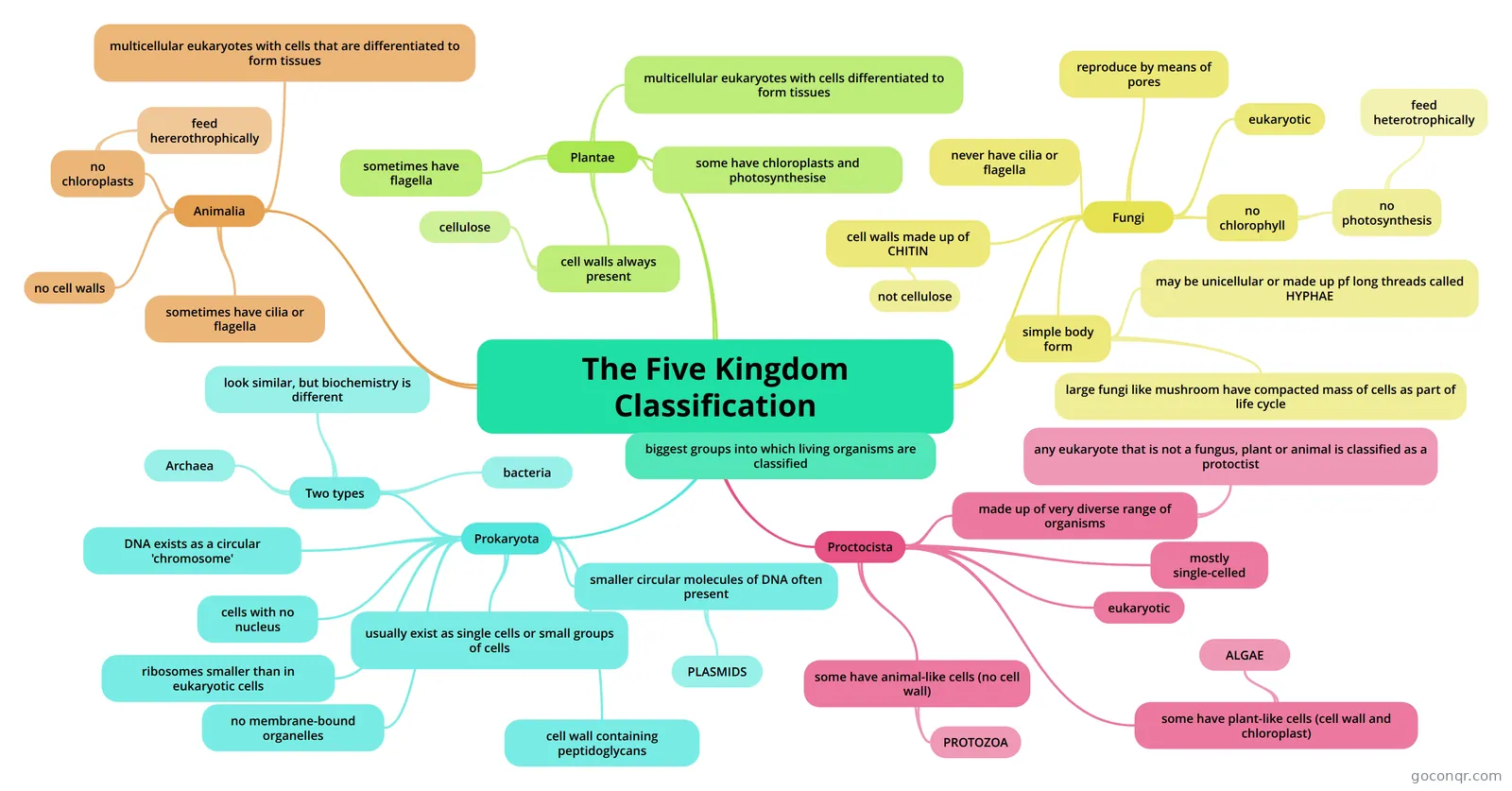 Mind map The Five Kingdom Classification
-
24 questionsPhylogeny Chapter 20 The legless condition that is observed in several groups of extant reptiles is the result of
-
48 cardsHonors Biology 1. What are the domains of life?
-
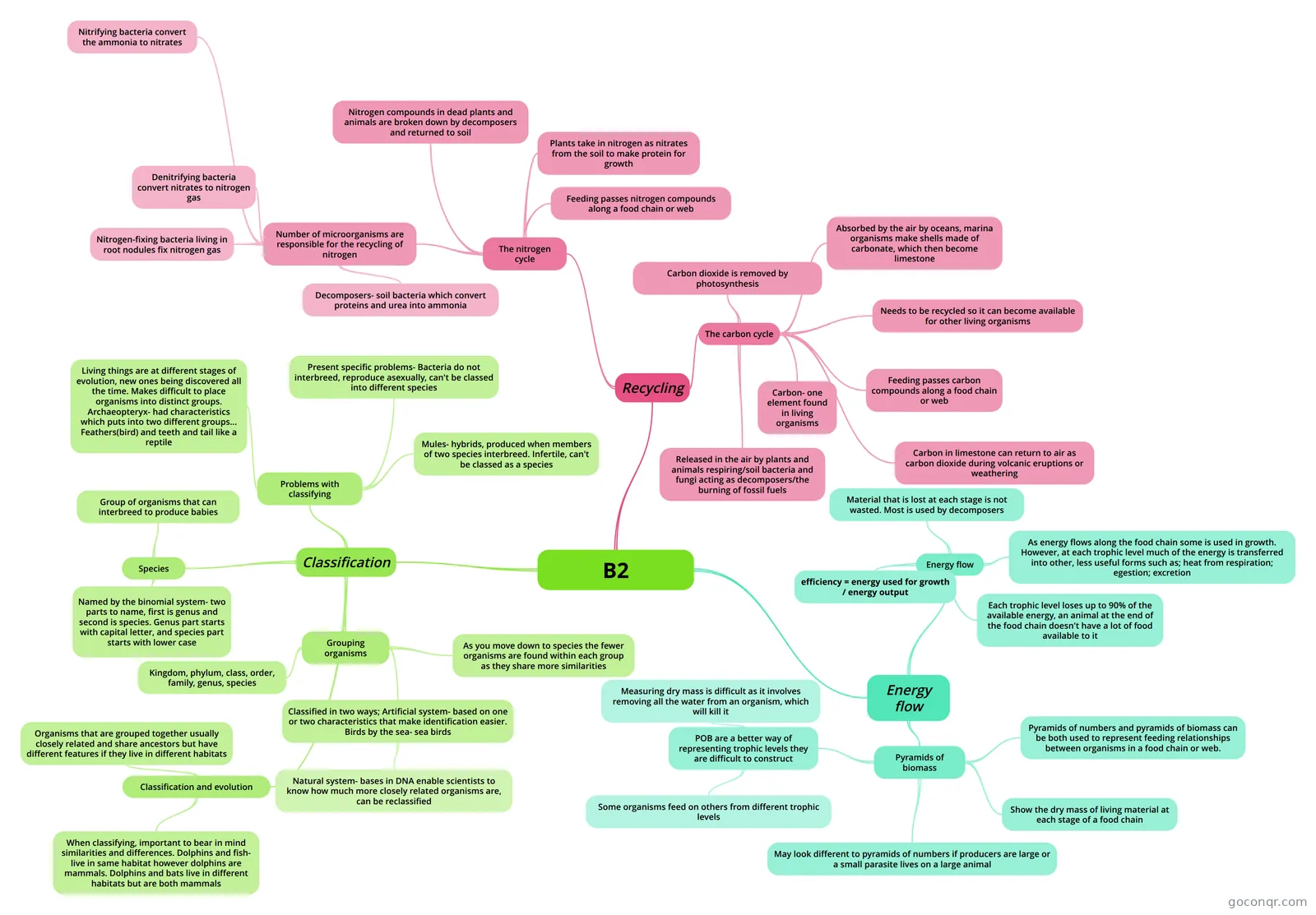 Mind map B2
-
Mind map Edexcel Biology B1 Mindmap Pt 1 A mindmap for edexcel B1.
-
24 questionsFungi and Protists Identify the missing labels (in order from top to bottom) in the diagram.
-
22 questionscharacteristics of the kingdoms which kingdom is prokaryotic?
-
7 questionsVariety of living organisms
Quizzes
See all 28 quizzes-
24 questionsPhylogeny Chapter 20 The legless condition that is observed in several groups of extant reptiles is the result of
-
24 questionsFungi and Protists Identify the missing labels (in order from top to bottom) in the diagram.
-
22 questionscharacteristics of the kingdoms which kingdom is prokaryotic?
-
7 questionsVariety of living organisms
-
9 questionsClassification of Life Quiz What is a binomial nomenclature?
-
10 questionsBiology Classification What's the taxonomic hierachy?
-
50 questionsTest 3 Fungal cells differ from animal cells in that fungal cells
-
65 questionsDiversity of living things
Mind maps
See all 124 mind maps-
The Five Kingdom Classification
-
B2
-
Edexcel Biology B1 Mindmap Pt 1 A mindmap for edexcel B1.
-
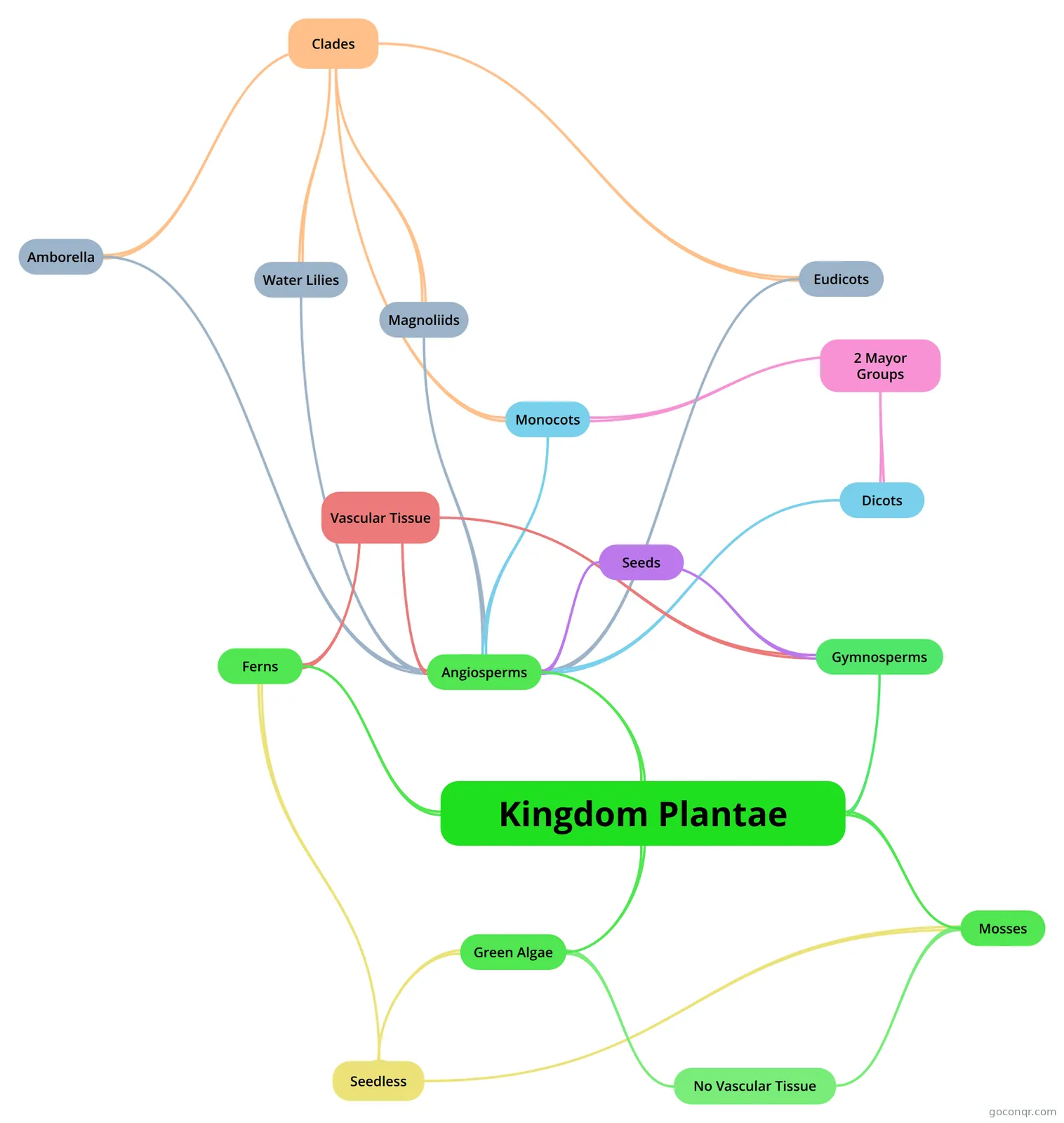 Kingdom Plantae A biology assignment for GI School: make a mind map of kingdom plantae
-
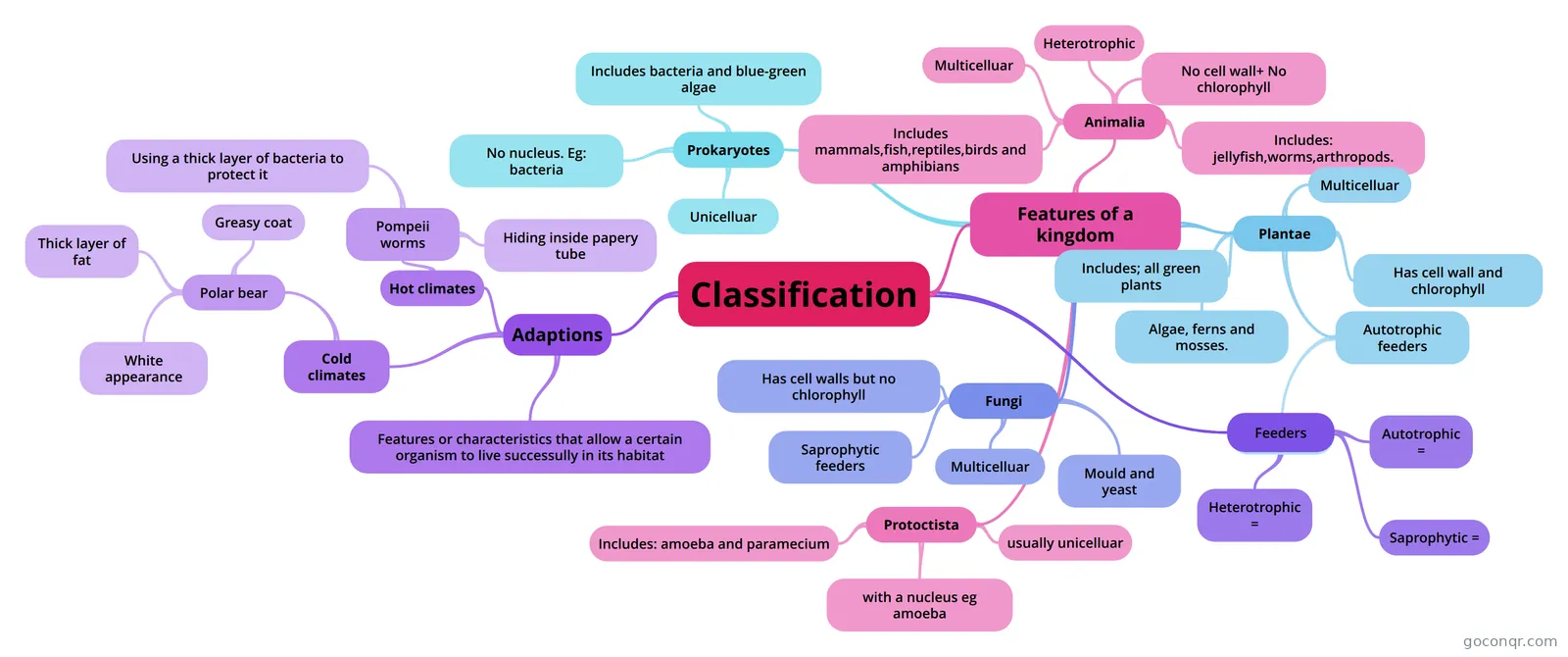 Classification
-
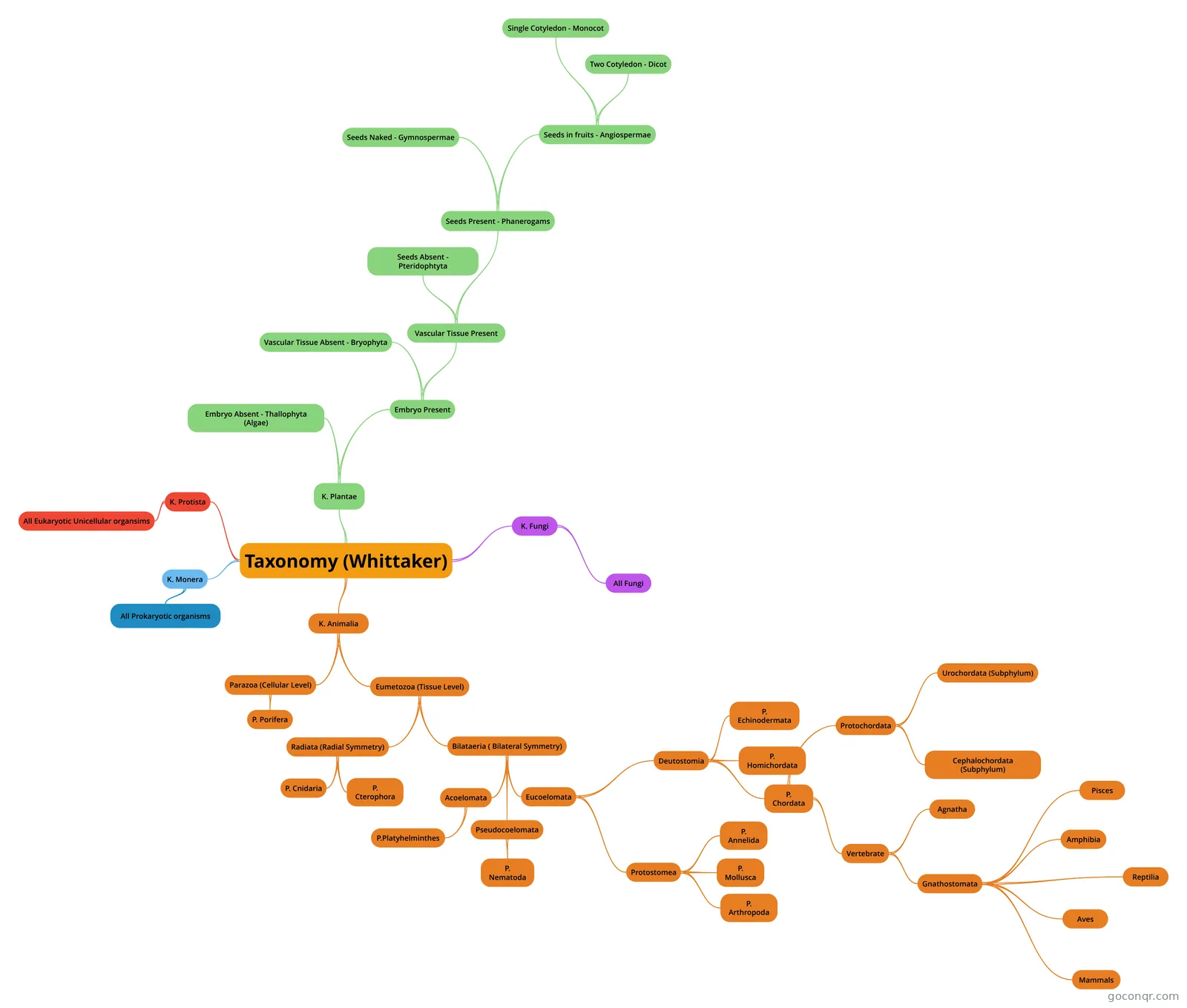 Taxonomy (Whittaker) All the kingdoms and Phylums as proposed by Whittaker (1969)
-
Biology
-
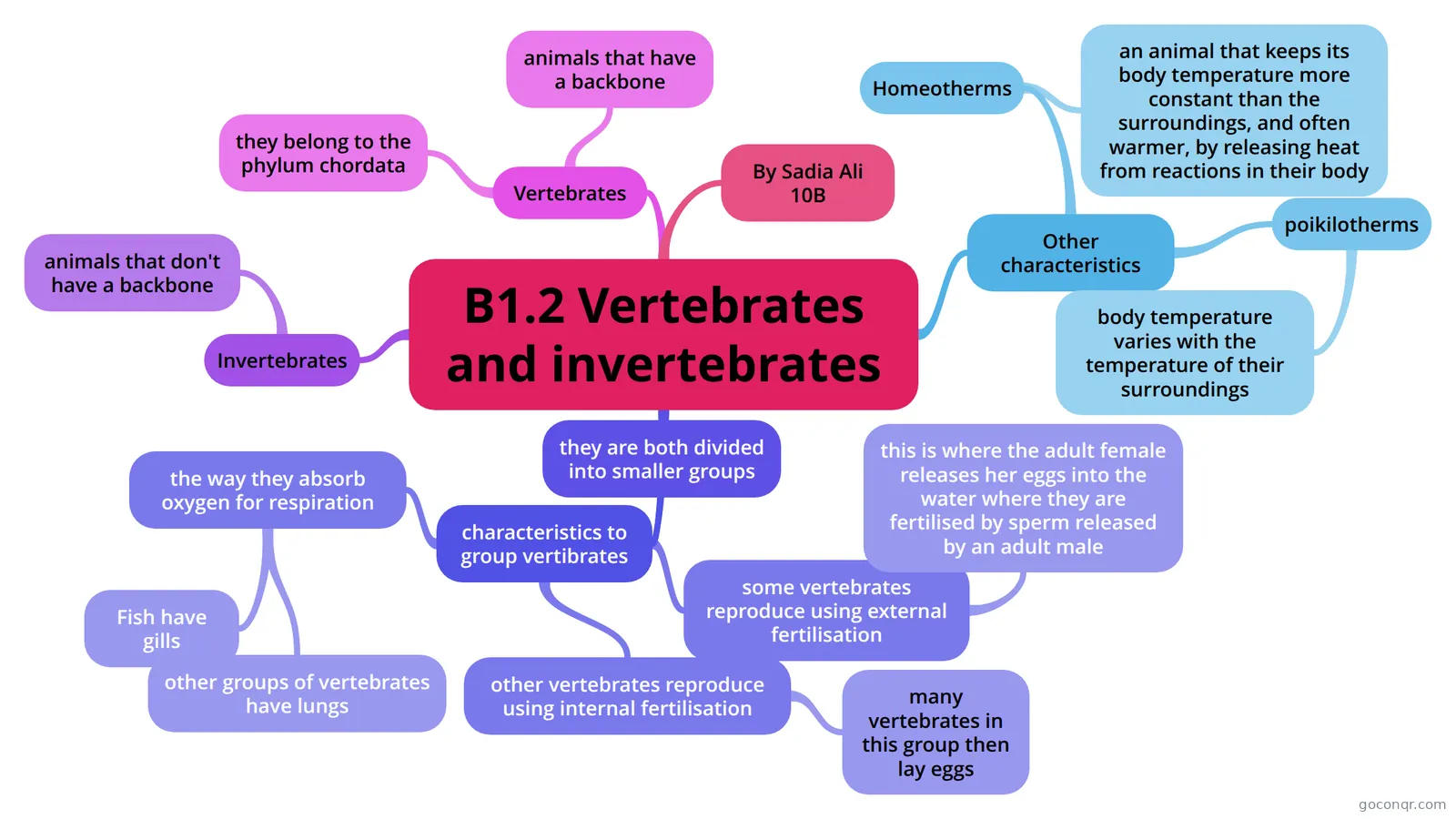 B1.2 Vertebrates and invertebrates
Flashcards
See all 88 flashcards-
48 cardsHonors Biology 1. What are the domains of life?
-
11 cardsBiology 108 Lab: Lab 1 What does para-focal mean?
-
15 cardsAQA biology 14.1 genetic variation define the term species
-
4 cardsIB Biology 5.5 Classification (SL) 5.5.1 Outline the binomial system of nomenclature
-
20 cardsTaxonomic Ranks/Taxa Taxonomic Mnemonic: a popular mnemonic device for domain, kingdom, phylum, class, order, family, genus, spe...
-
7 cardsClassification and Six Kingdoms Brainpop What do archaea and bacteria have in common?
-
14 cardsVocabulary of the five kingdoms
-
11 cardsKingdom Plantae Explain the structure of a Kingdom Plantae.
Flowcharts
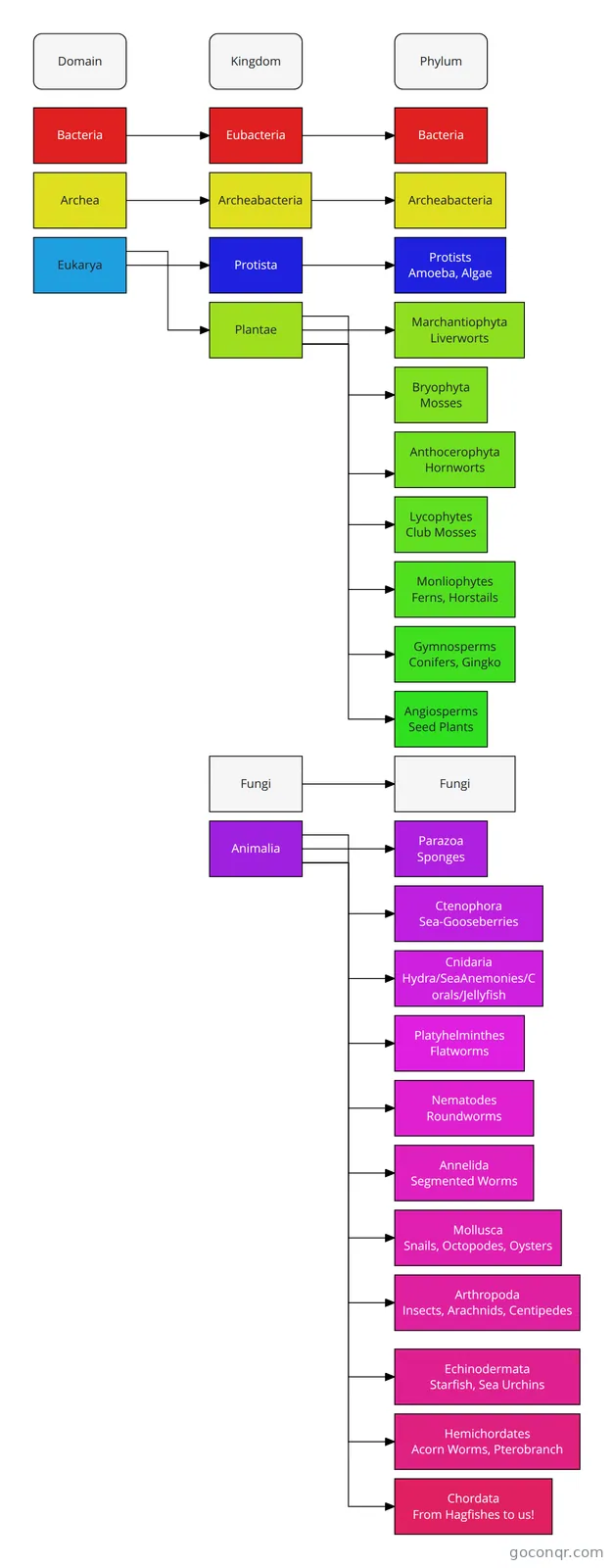
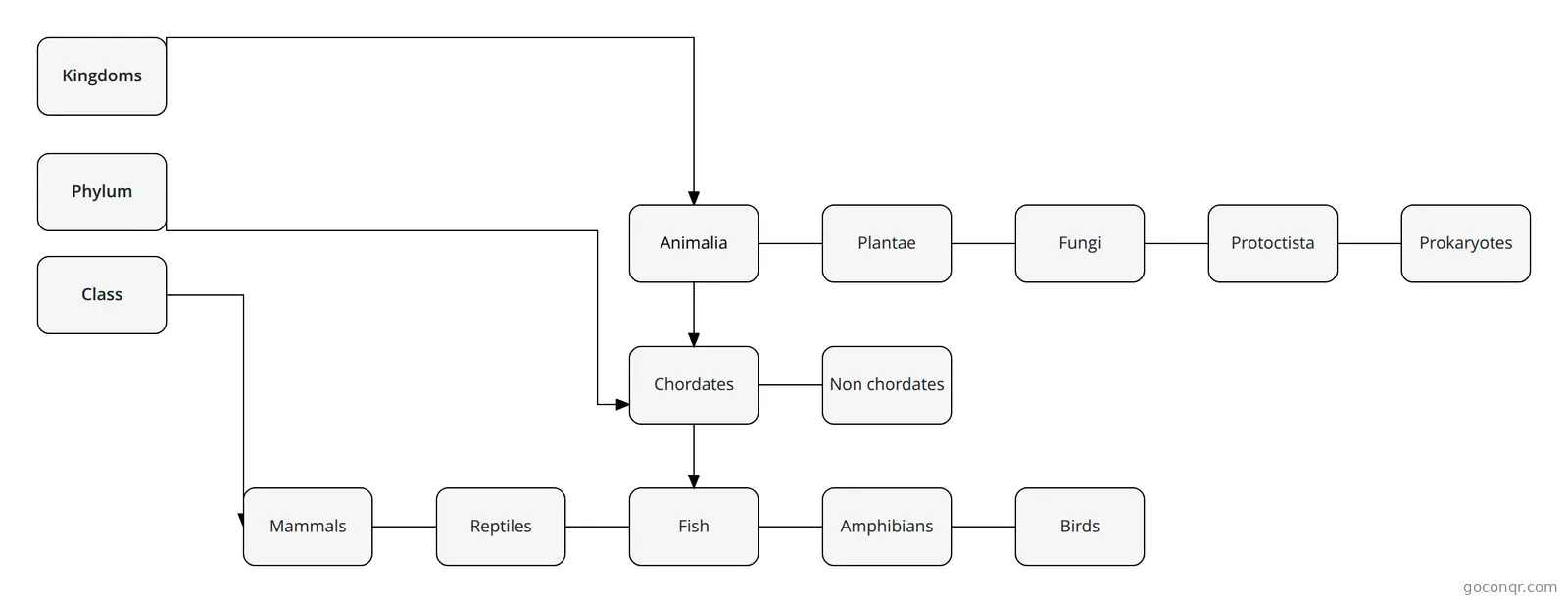
Notes
See all 19 notes-
Primate Classification
-
Taxonomy and naming species - notes In order to classify species we place them in seven discrete (non-overlapping) categories called taxonomic groups (or just taxa).The taxonomic groups are as follows:KingdomPhylumClassOrderFamilyGenusSpeciesWhat this t...
-
OCR Biology B2a-h B2a - Classification There are two ways to classify organisms: Artificial (based on observable characteristics) Natural (based on similarities in DNA) The seven levels of classification: Kingdoms - Animals, Plants, Fu...
-
Taxnonomy Notes General Taxonomy: a system by which we name and classify all organisms, both living and extinct. Carl Linnaeus developed the system we use today. It is known as the system of binomial nomenclature; every organism has ...
-
Diversity In Living Organism Diversity In Living Organisms Different Forms In Which Life Occurs Microscopic Bacteria - Few Micrometres Blue Whale - 30 Metres Red Wood Trees Of California - 100 Metres Some Pine Trees - Lives For 100 Of Years Insec...
-
The Five Kingdoms ProkaryotesOrganisms which belong to the kingdom Prokaryota (used to be called Monera). These organisms include the bacteria and the cyanobacteria (used to be called blue-green algae). Prokaryote means 'before nucleus...
-
7. The five kingdoms of living organisms Kingdom Example Body structure &n...
-
Classification and Taxonomy ClassificationBiological classification is the process of placiing living things into groups. This involves detailed study of the individuals in a species. We can then place the species in a category with other specie...
Slides
More Biology and natural sciences topics
About Classification of Living Things
GoConqr OriginalWhat this unit covers
The resources here follow classification from the broad groups down to the detail. The mind map The Five Kingdom Classification sets out Animalia, Plantae, Fungi, Proctocista and Prokaryota, and notes that archaea and bacteria look similar but differ in their biochemistry. Other maps look at Aristotle's classification, Whittaker's taxonomy, the three domains and the tree of life.
Where to start
Begin with a map to see the whole picture. The Five Kingdom Classification is a good first stop, and Edexcel Biology B1 Mindmap Pt 1 covers classification and naming species, with shared characteristics such as backbones and feathers.
Next, read a few notes. Naming Living Things and Modern Classification are two short ones to try. Flashcard decks such as Honors Biology ask what the domains of life are and what a scientific name consists of.
Using quizzes and maps together
- Read a map and cover up one branch.
- Take a quiz on that branch, for example Variety of living organisms or characteristics of the kingdoms.
- Return to the map for anything you missed.
The Classification of Life Quiz checks binomial nomenclature and which taxonomic groups share the most in common. Fungi and Protists asks you to find the genus in a scientific name. Phylogeny Chapter 20 is a harder one on how organisms are related.
Exam boards and levels
Most resources are pitched at secondary level. Titles refer to GCSE, IGCSE, A-level, IB and OCR A-level Biology, and some also mention UPSC. Teachers can pick slide sets such as The Variety of Life and Classification and biodiversity to use in class.
Where it fits
This unit sits in the Diversity of Life strand of Biology and natural sciences. Choose a resource that matches your course, work through it, then try making a map or flashcard set of your own.
Frequently asked questions
Which resource should I open first?
Start with the mind map The Five Kingdom Classification. It lays out the biggest groups of living things and shows how archaea and bacteria differ. After that, take the quiz characteristics of the kingdoms to check what stuck.
What do the quizzes cover?
They range from basic recall to harder questions. Variety of living organisms asks what plants, animals, fungi, protoctists, bacteria and viruses are. The Classification of Life Quiz covers binomial nomenclature, and Phylogeny Chapter 20 looks at how organisms are related.
Which exams are these resources suited to?
Most are secondary level. Listed resources mention GCSE Biology, IGCSE Biology, A-level Biology, OCR A-level Biology, IB Biology and GCSE Science, and a few mention UPSC. Check the title or description to see whether a resource matches your board.
Are the resources free to use?
Yes. Every resource on this page is free to open, study and take, with no account needed. They were made by GoConqr users rather than by GoConqr itself, so it helps to compare a few against your own course.
Can I save my scores or make my own?
A free account saves your quiz scores and lets you make your own quizzes, mind maps, flashcards and notes. That is handy if you want to rebuild a kingdom map in your own words.
What if I can't find the topic I need?
Try a nearby resource first. Titles such as Taxonomy, PHYLOGENETICS, Invertebrate Subgroups and Kingdom Plantae cover narrower areas. If you still find a gap, you could make your own notes or flashcards on it.