
Speaking and Presentations
1,086 resources created by 839 users
This Speaking and Presentations page on GoConqr gathers community-made mind maps, flashcards, quizzes, flowcharts and notes, from FCE and CAE speaking practice to spoken language theory and how to give a presentation in English. It's built for school students practising talk, discussion and presentation skills, and for teachers after ready-made material. There are over 900 resources here, including more than 600 mind maps, 260 flashcard decks and 20 quizzes, with a few for university students and professional candidates too. Pick a deck, try a quiz, then make your own.
Top Speaking and Presentations resources
-
11 cardsMONOLOGUE PRACTICE - C1 EOI - C1 MONOLOGUE - INSTRUCTIONS
-
10 cardsFamily: Discussion Questions 1.Do you come from a large or small family? How many people are in your family?
-
23 cardsCONVERSATION - EDUCATION Tell me something about your school / university.
-
16 cardsDiscourse - Key Terms for Spontaneous Speech AS/A2 key terms for spontaneous speech, however there are more!
-
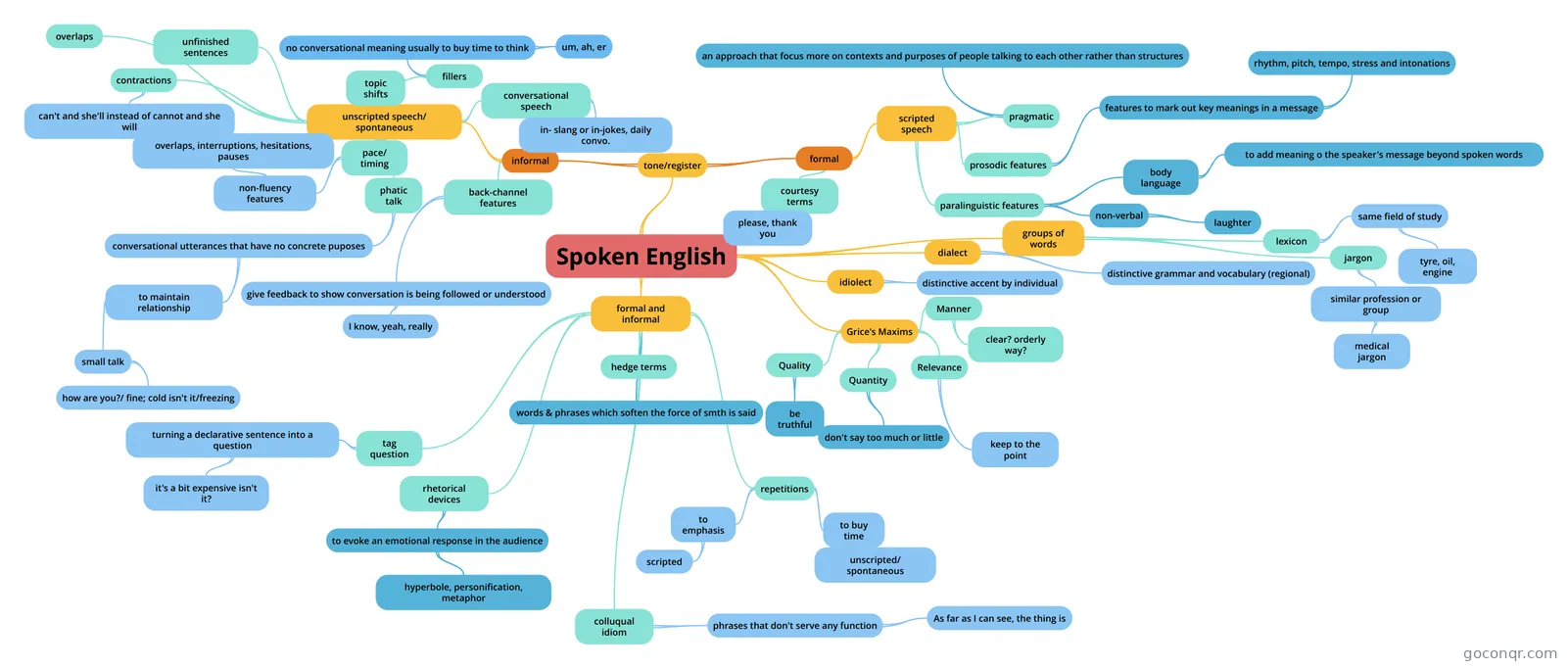 Mind map Spoken English Spoken English Glossary Mind Map
-
6 cardsAGREEING / DISAGREEING / PROS & CONS / ASKING FOR OPINION SPEAKING - USEFUL EXPRESSIONS
-
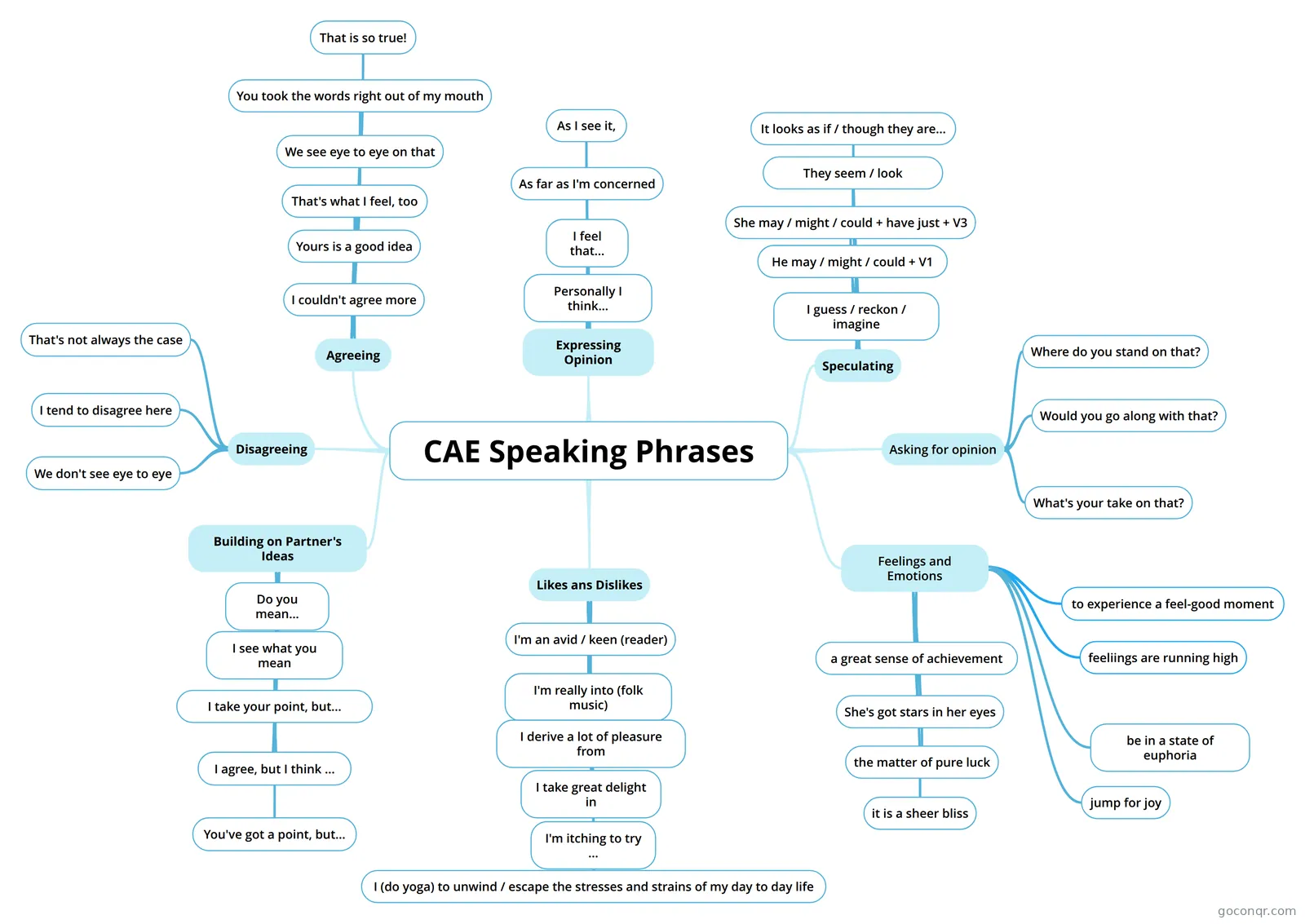 Mind map CAE Speaking Phrases
-
4 cardsPicture Comparison Free time activities
Quizzes
See all 26 quizzes-
6 questionsSpoken language terms Pronunciation of words according to location or social class.
-
6 questionsTaking part in a discussion What is the best way of showing that you can interact with and respond to others?
-
8 questionsListening quiz about "Giving opinions" Scarlett concert.
-
5 questionsSingposting A very useful tool to structure your written presentation is Singposting.
-
3 questionsAgree/Disagree I would like to have a robot in my house.
Mind maps
See all 662 mind maps-
Spoken English Spoken English Glossary Mind Map
-
CAE Speaking Phrases
-
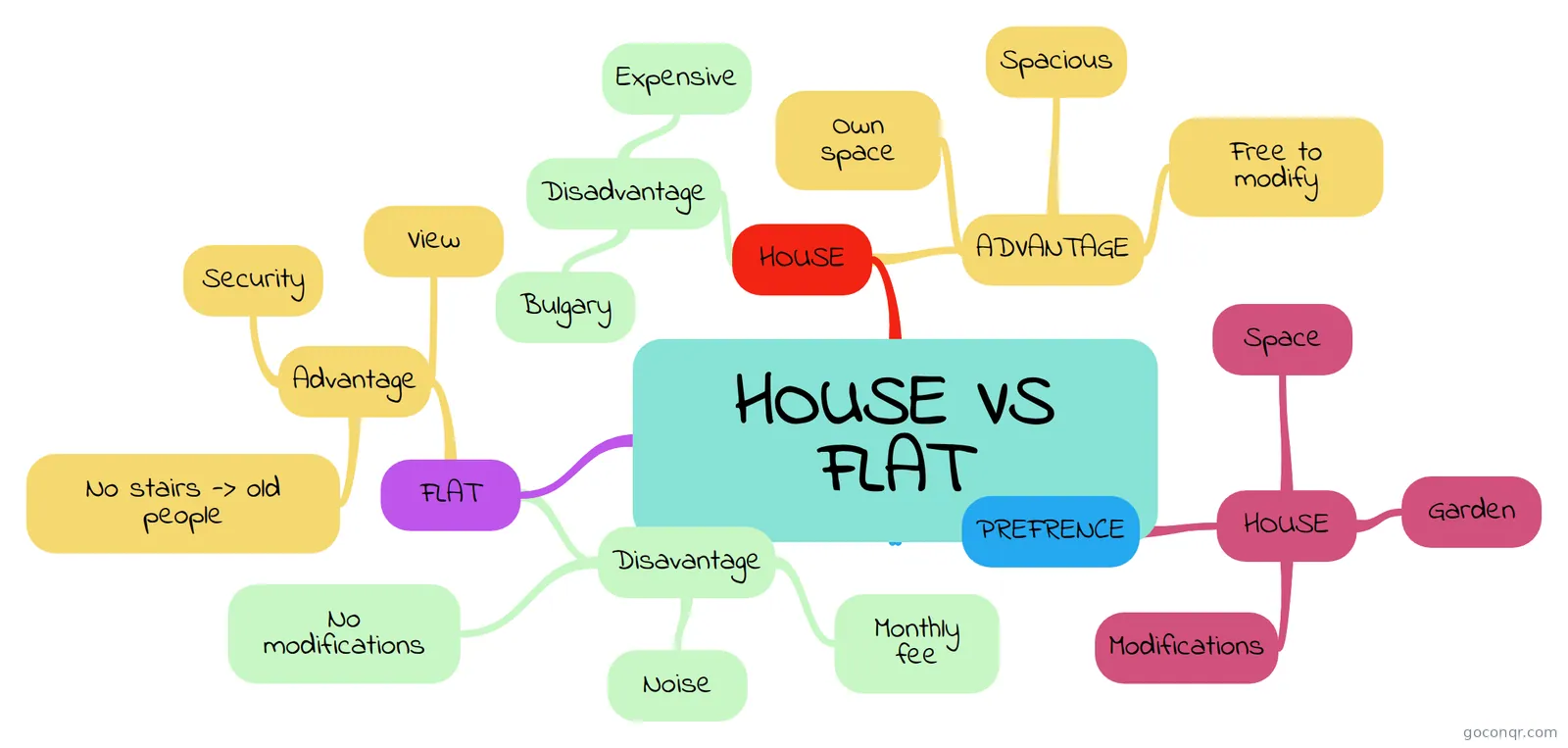 HOUSE VS FLAT Speaking class
-
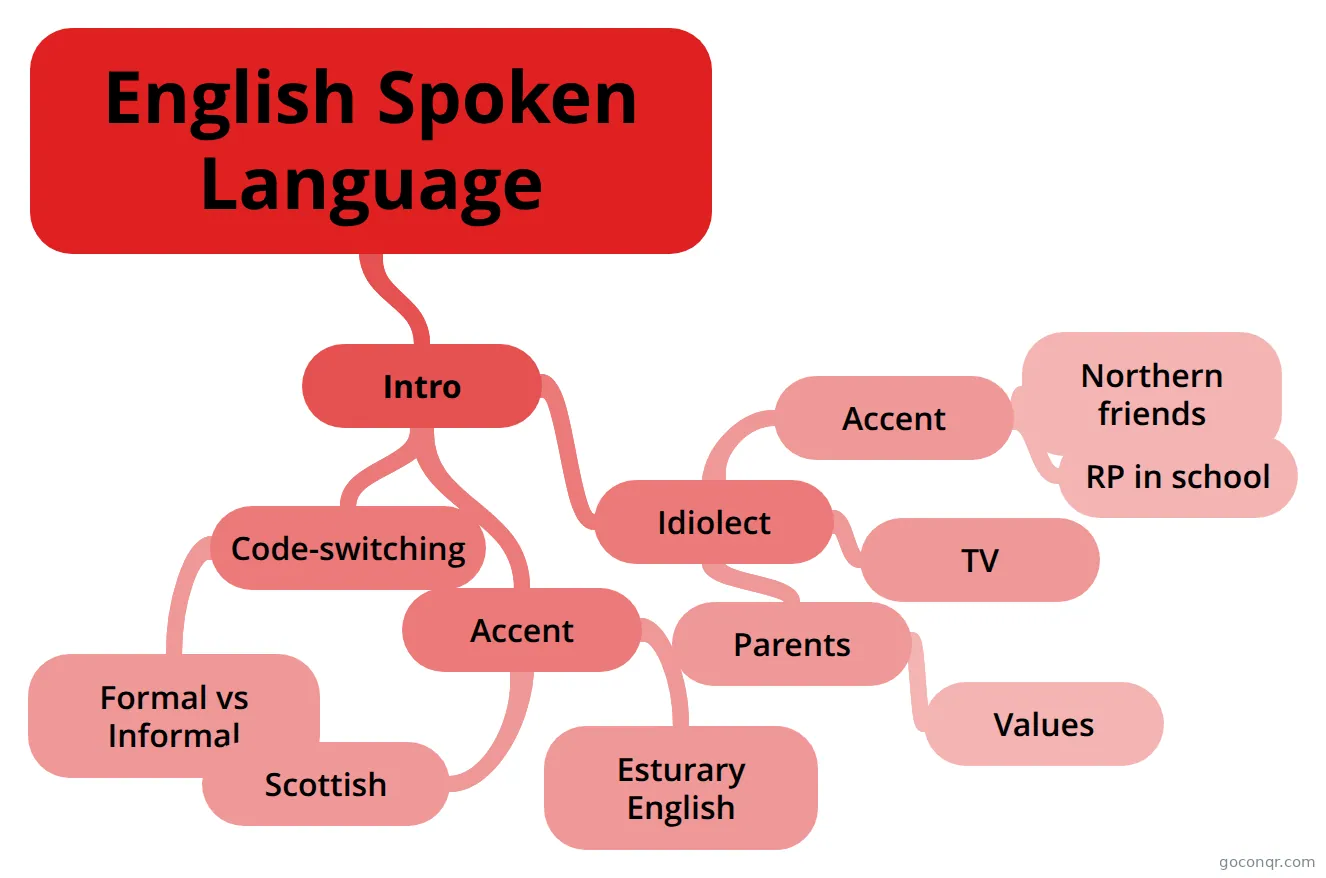 English Spoken Language
-
Language Level 6: Discourse finished
-
USEFUL PHRASES TO START A DISCUSSION IN ENGLISH Review vocabulary
-
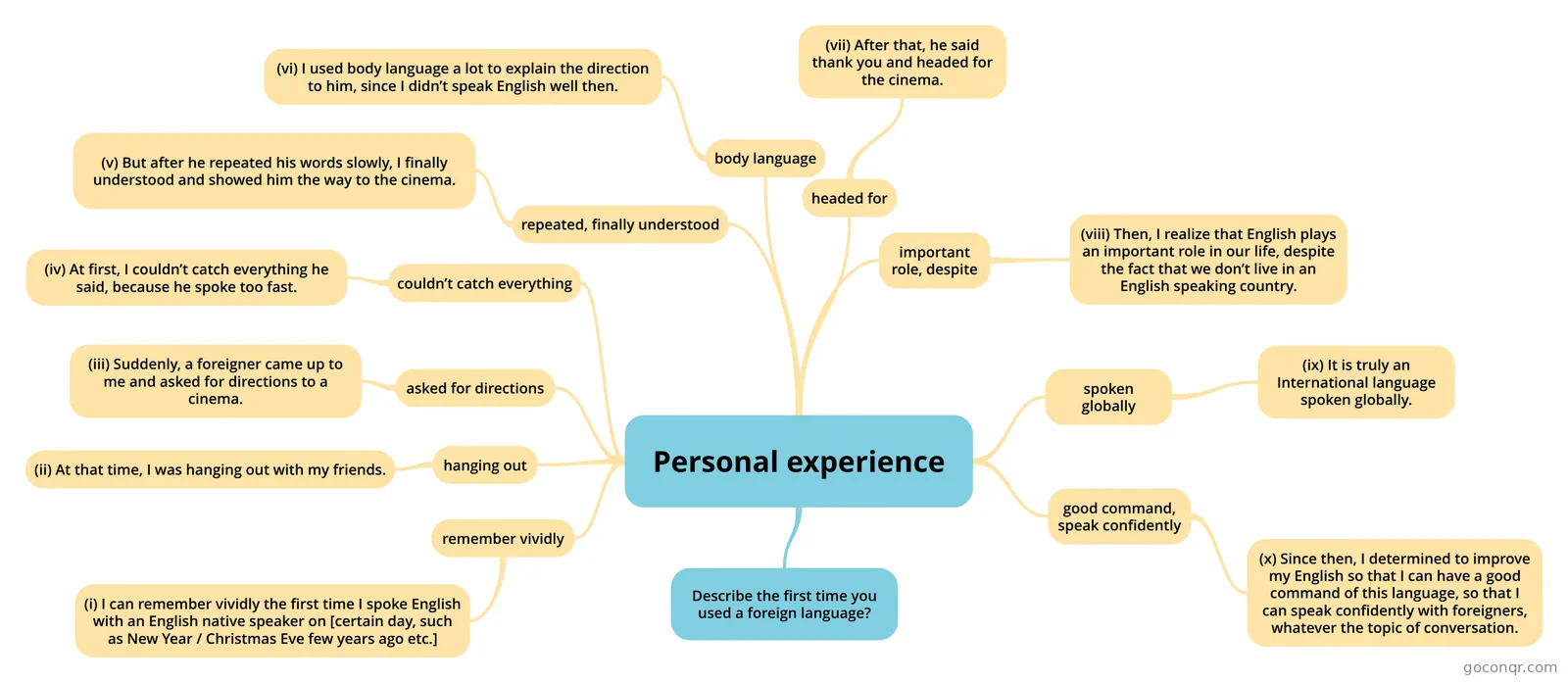 Personal experience IELTS speaking 2 : Personal experience - First time using English to speak to a foreigner
-
Spoken Language
Flashcards
See all 293 flashcards-
11 cardsMONOLOGUE PRACTICE - C1 EOI - C1 MONOLOGUE - INSTRUCTIONS
-
10 cardsFamily: Discussion Questions 1.Do you come from a large or small family? How many people are in your family?
-
23 cardsCONVERSATION - EDUCATION Tell me something about your school / university.
-
16 cardsDiscourse - Key Terms for Spontaneous Speech AS/A2 key terms for spontaneous speech, however there are more!
-
6 cardsAGREEING / DISAGREEING / PROS & CONS / ASKING FOR OPINION SPEAKING - USEFUL EXPRESSIONS
-
4 cardsPicture Comparison Free time activities
-
13 cardsFamily: Discussion questions Do you think society is ready for different types of families?
-
11 cardsSpeaking cards on advantages and disadvantages SPEAKING CARD 1
Flowcharts
See all 52 flowcharts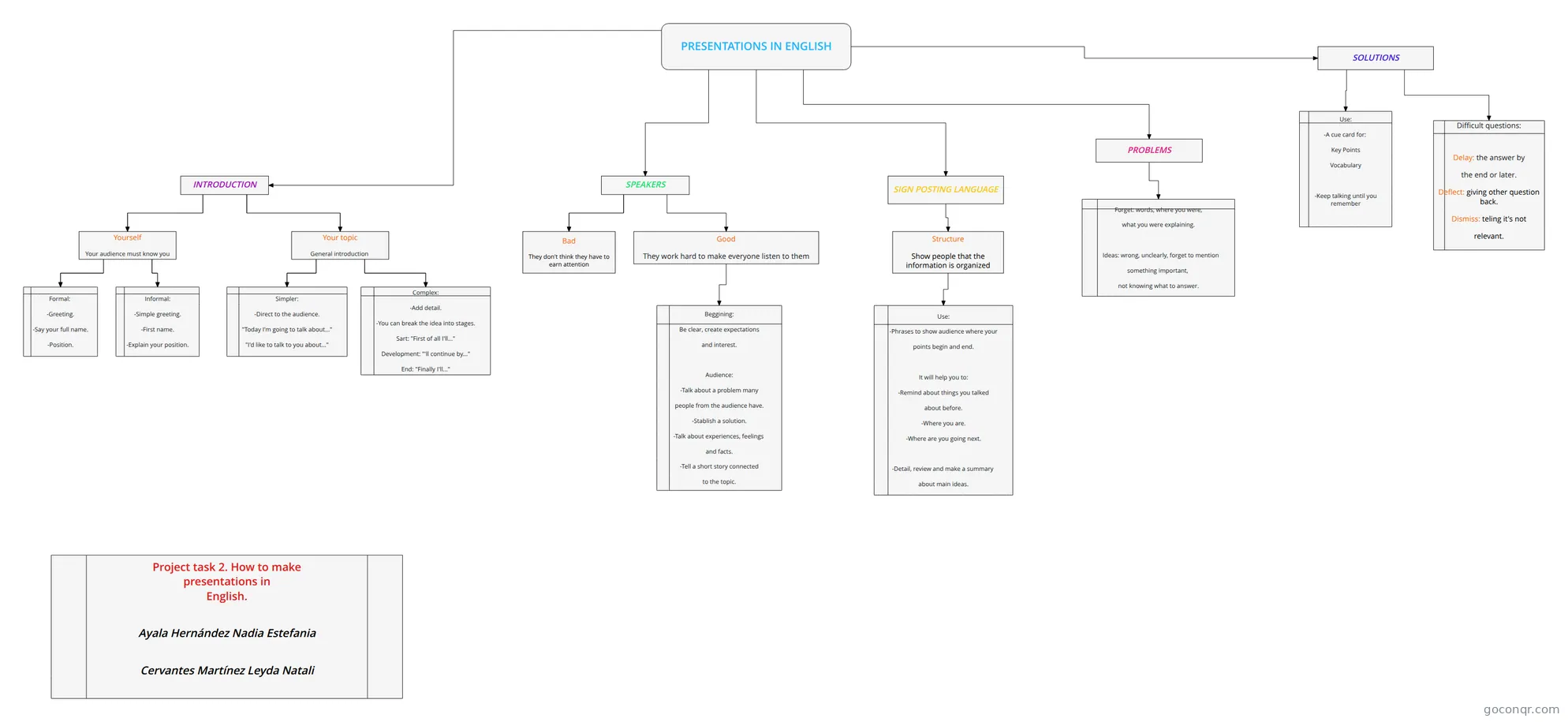
Notes
See all 21 notesSlides
See all 32 slidesMore English language topics
About Speaking and Presentations
GoConqr OriginalWhat you will find
The unit splits into two broad kinds of material. The first is exam speaking practice. There are flashcard decks for picture comparison, such as Picture Comparison - Eating out and Picture Comparison Free time activities, plus conversation prompts like Family: Discussion Questions and CONVERSATION - EDUCATION. Several decks and slides cover FCE speaking Part 1, B2 Speaking Part 2 and KET speaking preparation. The mind map CAE Speaking Phrases groups language for expressing opinion, agreeing, disagreeing, speculating and building on a partner's ideas.
The second is spoken language study. Discourse - Key Terms for Spontaneous Speech lists terms such as adjacency pairs, hedges, fillers, deixis and minimal responses. The Spoken English mind map covers Grice's Maxims, formal and informal register and hedge terms. Many more decks and maps cover talk theory and spoken discourse.
Where to start
- For exam speaking, open the CAE Speaking Phrases map and learn a few phrases for agreeing and speculating.
- Move to a picture comparison deck and say your answer aloud before turning the card.
- Try the MONOLOGUE PRACTICE - C1 deck, which offers ten topics from consumerism to reality shows, for longer turns.
- For presentations, follow one of the flowcharts on how to give a presentation in English, then read the notes on signposting.
Using quizzes and maps together
Read a mind map first to see the whole topic. Then take a quiz to check what stuck. The Spoken language terms quiz suits language students, while the Singposting and Vocal Variety quizzes suit anyone preparing a talk. If a question catches you out, go back to the matching map or deck and try again.
Where it fits
Speaking and Presentations sits in the Communication Skills strand of English language. Most of the material is aimed at school students, so teachers can pick decks and maps for pair work or revision and use the quizzes as quick checks.
Choose one deck or map today and give it a go, then add your own cards for the phrases you want to remember.
Frequently asked questions
Where should I start if I have a speaking exam?
Start with the CAE Speaking Phrases mind map for useful language, then work through the picture comparison decks and the FCE speaking Part 1 decks. The page also lists KET speaking preparation and a B2 Speaking Part 2 slide set, so you can pick the one that matches your exam.
What do the spoken language resources cover?
They cover the features of real talk. Discourse - Key Terms for Spontaneous Speech includes adjacency pairs, hedges, fillers and minimal responses. The Spoken English mind map adds Grice's Maxims and formal and informal register. There are also quizzes, notes and many more decks and maps to revise from.
Are there resources for giving presentations?
Yes. There are flowcharts on how to give a presentation in English, mind maps such as Presentations and Handling Q&A Session, notes on signposting and a Vocal Variety quiz. Together they cover structure, delivery and answering questions, so you can plan a talk and then practise it.
Are the resources free, and who made them?
Every resource on this page is free to open, study and take, with no account needed. They were made by GoConqr users, not by GoConqr itself. A free account is only needed if you want to save quiz scores or create your own quizzes, maps, flashcards and notes.
Which exams are mentioned?
The listed resources mention FCE, CAE, KET, B1 Preliminary (PET), B2 First, IELTS, TOEFL and Trinity ISE II, along with GCSE English Language and A-level English Language. Check each resource's content to see that it matches your exam board and level.
What if I cannot find the topic I need?
Try a nearby search term, such as spoken language, discourse or speaking Part 1, since similar material is often titled differently. If a gap remains, make your own mind map or flashcard deck from what you have learned. Teachers can do the same for a class.