
Attachment mind maps
1,218 mind maps by 621 users · Page 1 of 31
This page gathers over 1,200 community-made attachment mind maps, covering Bowlby’s theory, the Strange Situation and cultural variations. They are for school students revising attachment and teachers looking for material to support lessons, with some maps at university level. Pick a map to start exploring the topic.
Select topic
- Caregiver-infant interactions138
- Roles of mothers and fathers33
- Stages of attachment125
- Animal studies of attachment85
- Learning theory of attachment114
- Bowlby's monotropic theory146
- Strange Situation and attachment types153
- Cultural variations in attachment86
- Maternal deprivation95
- Privation and institutionalisation83
- Early attachment and later relationships53
- Day care and attachment25
Mind maps
-
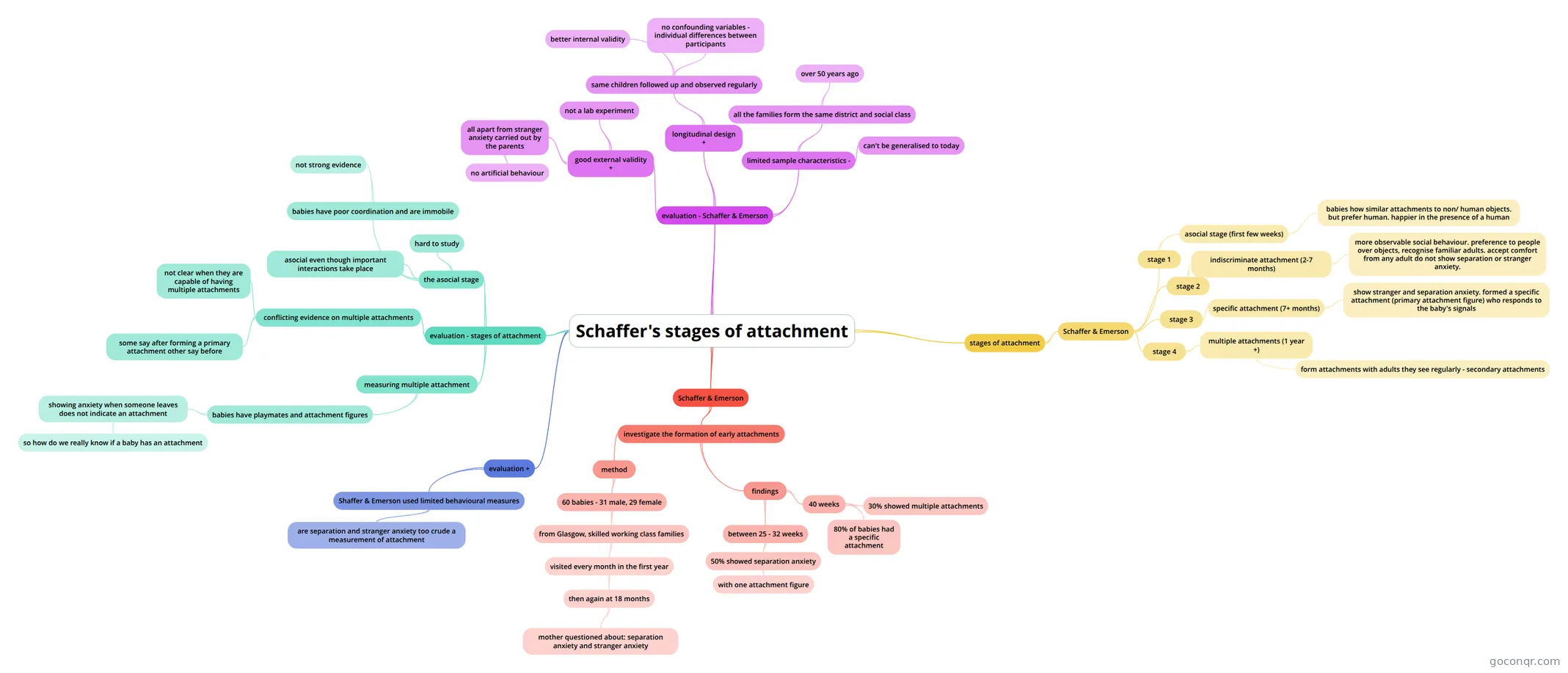 Schaffer's stages of attachment
-
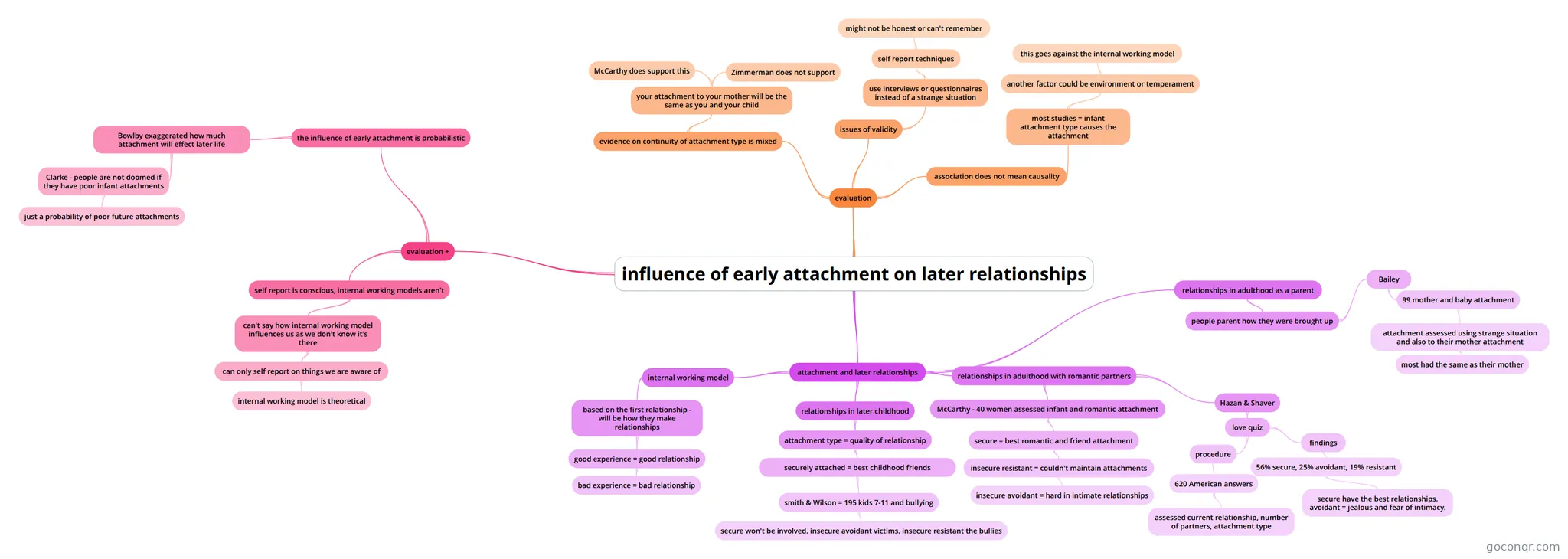 influence of early attachment on later relationships
-
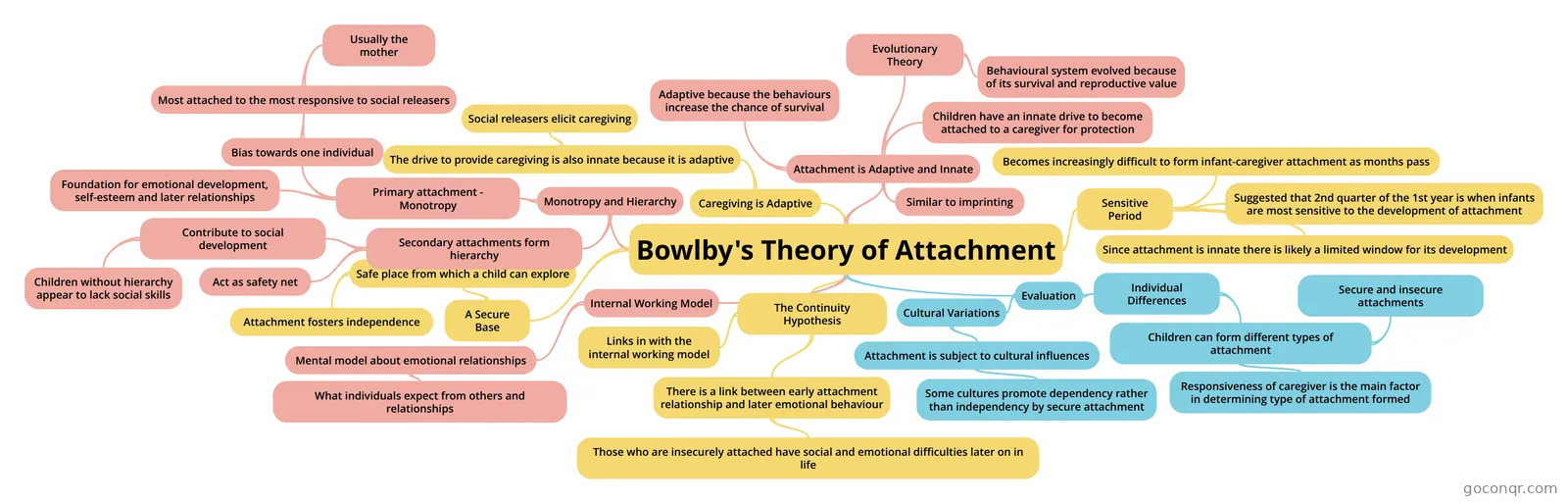 Bowlby's Theory of Attachment
-
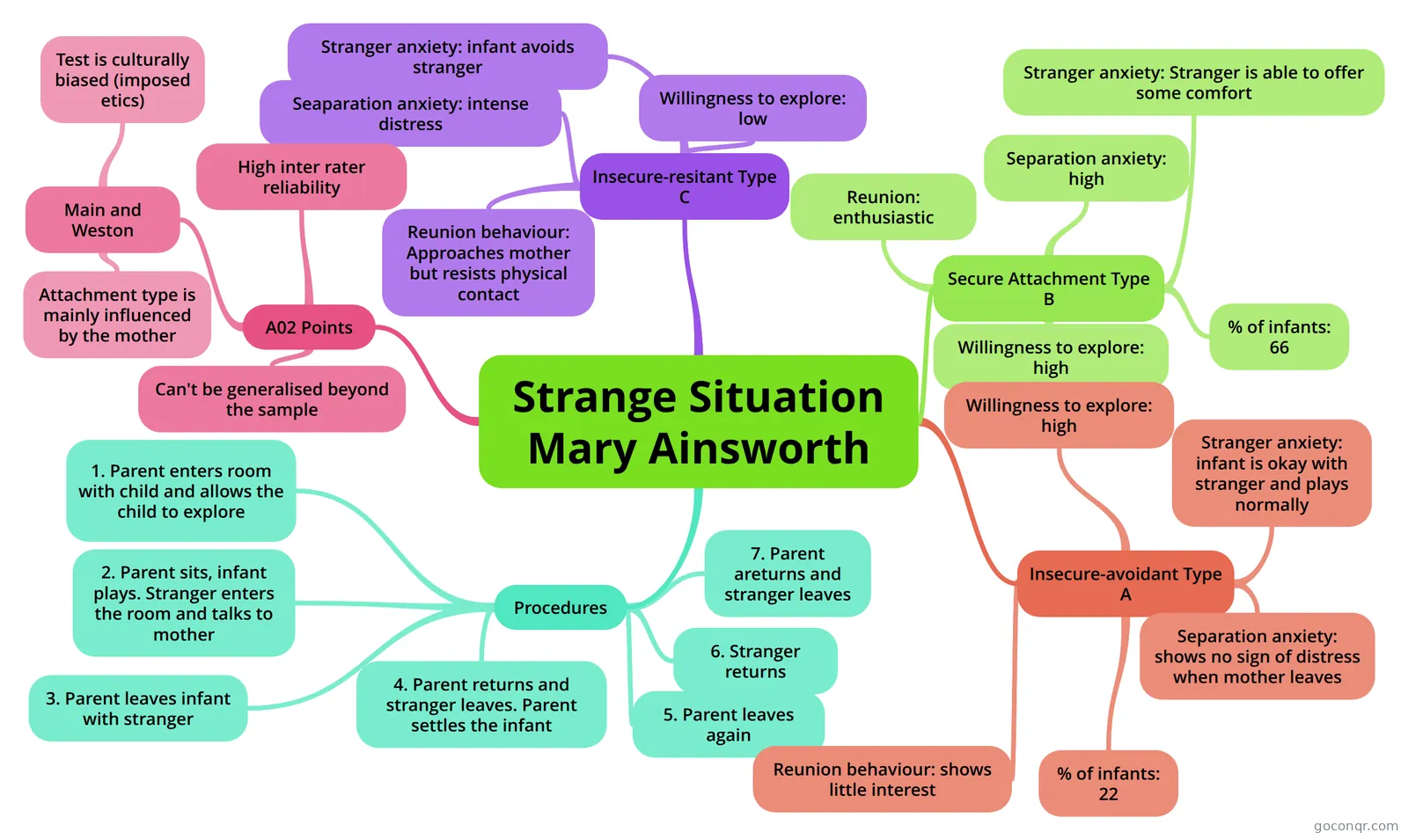 Strange Situation Mary Ainsworth
-
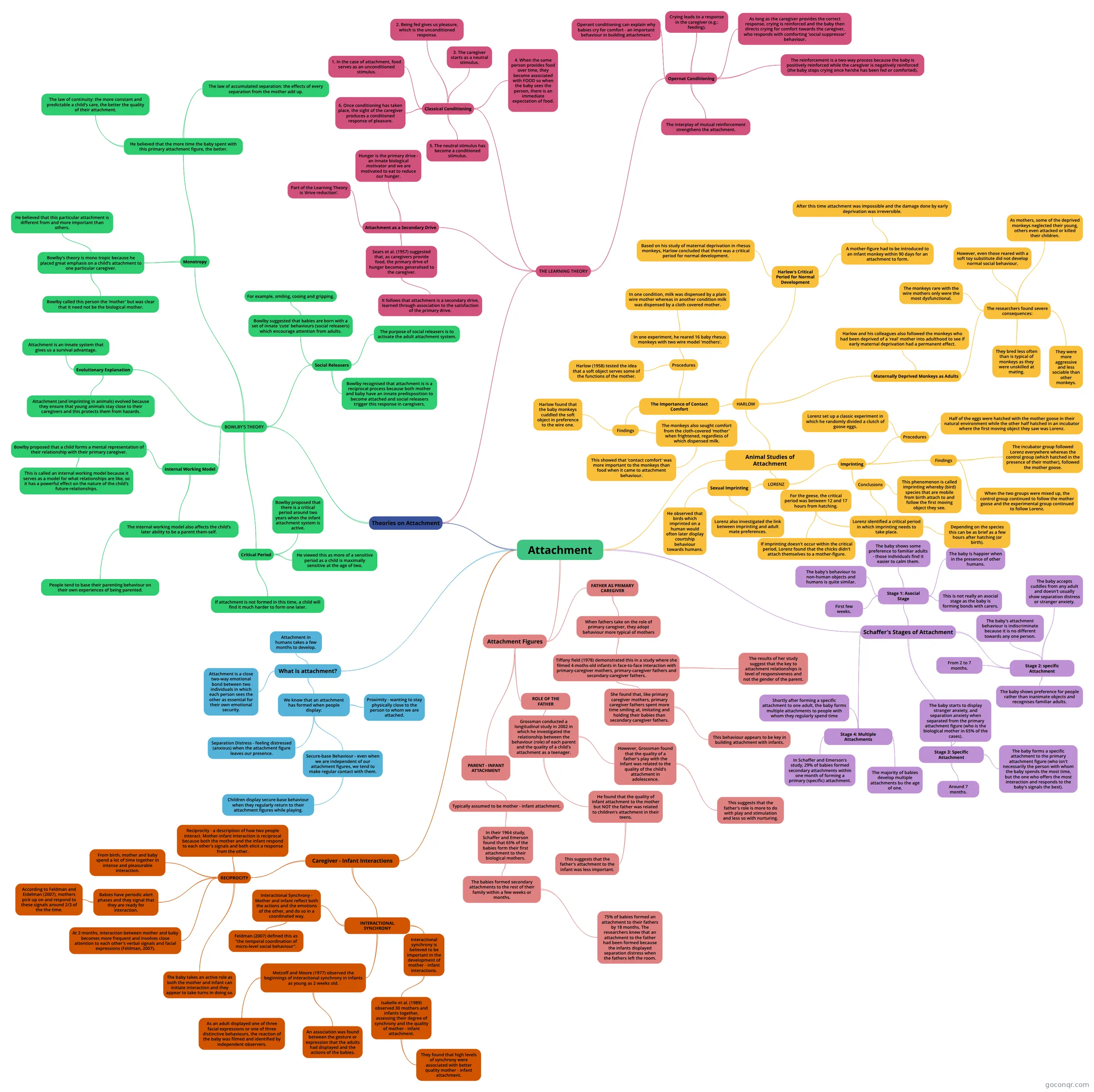 Attachment This is the third topic from the first paper of AS AQA Psychology (new specification).
-
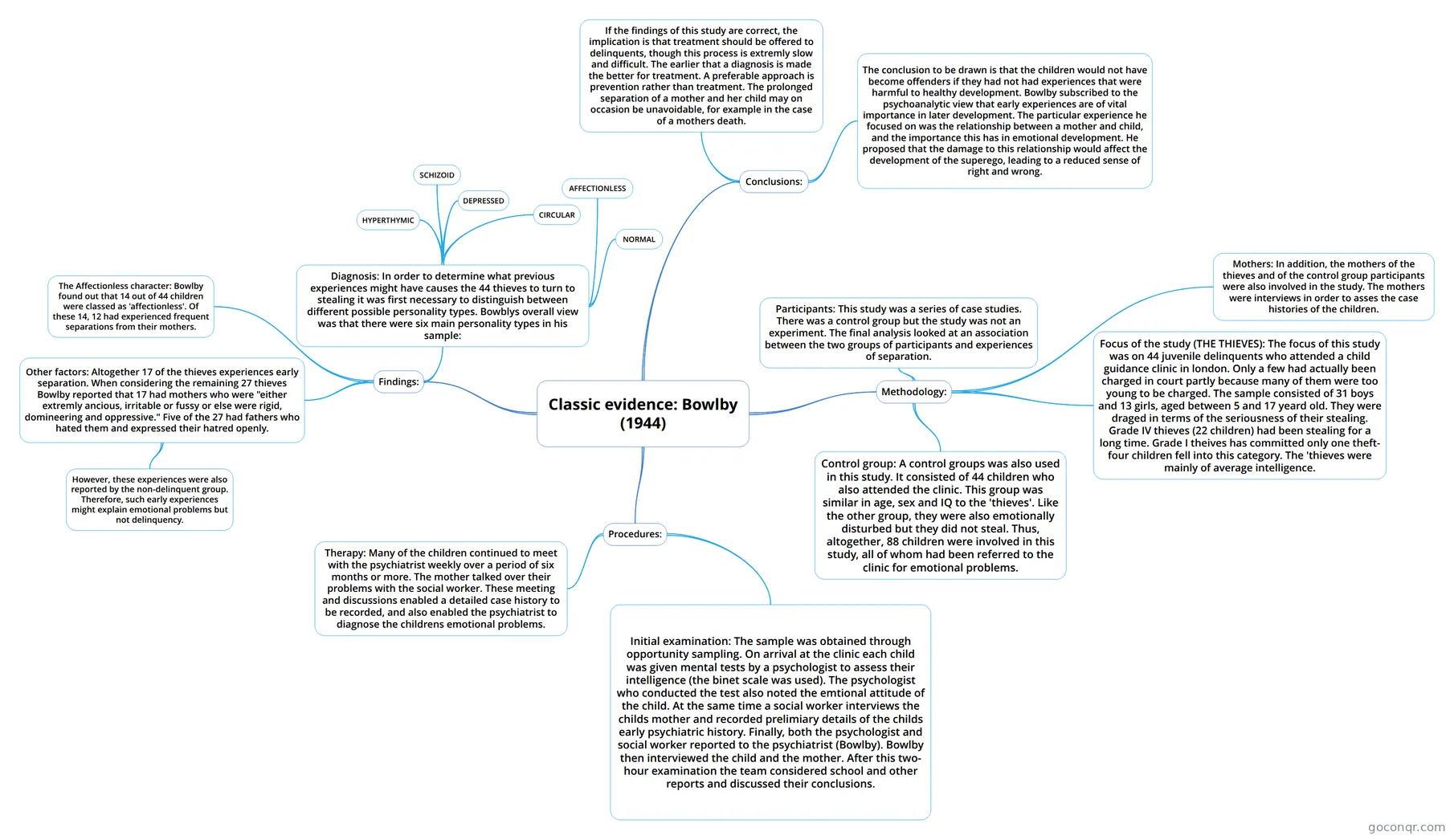 Classic evidence: Bowlby (1944)
-
 Takahashi (1990): Cross-cultural variations
-
van IJzendoorn and Kroonenberg (1988): Cross-cultural variations
-
Attachment
-
Mary Ainsworth et al (1978) Types of attachment
-
Mary Ainsworth(1978)-The Strange Situation
-
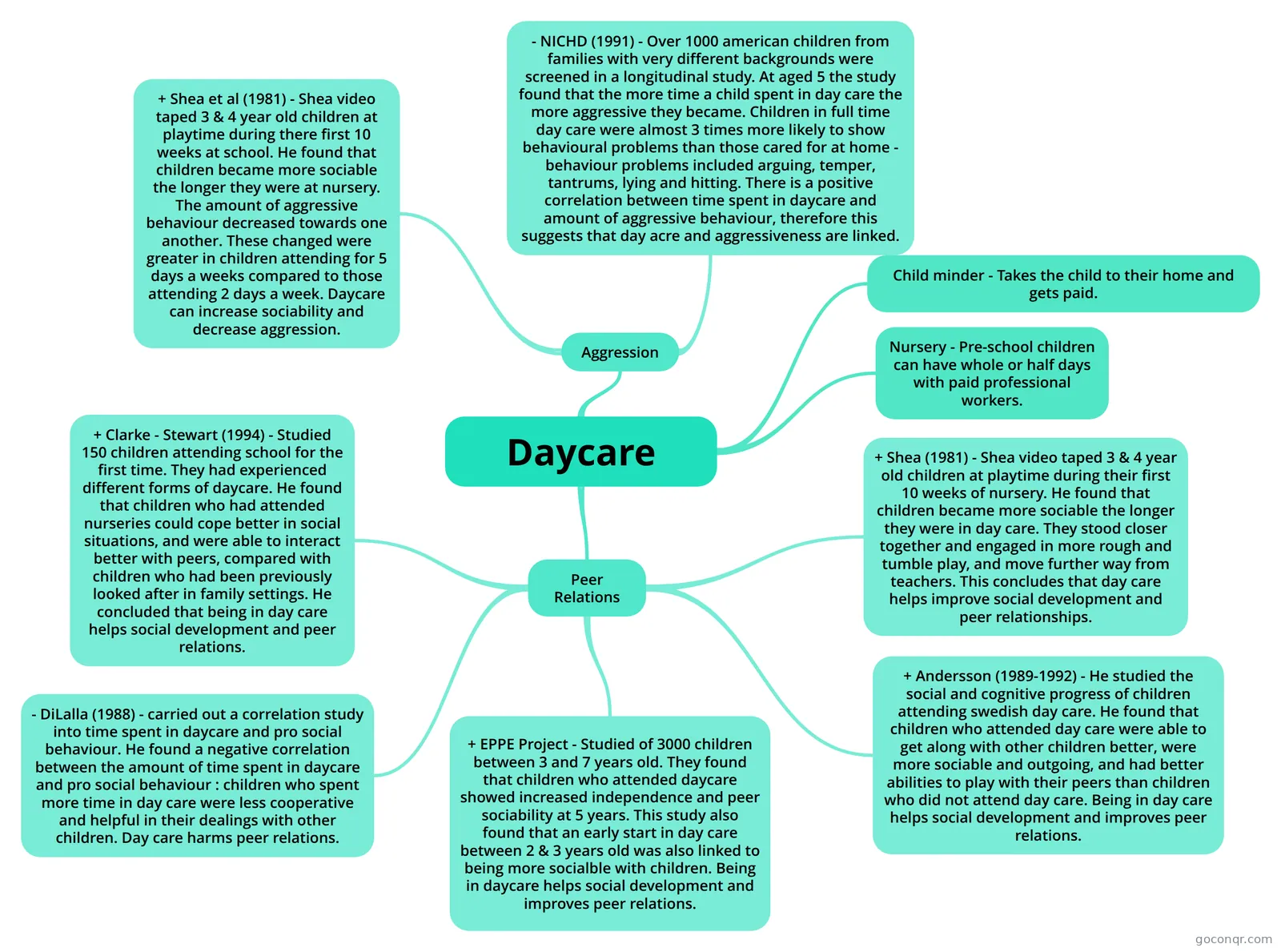 Daycare
-
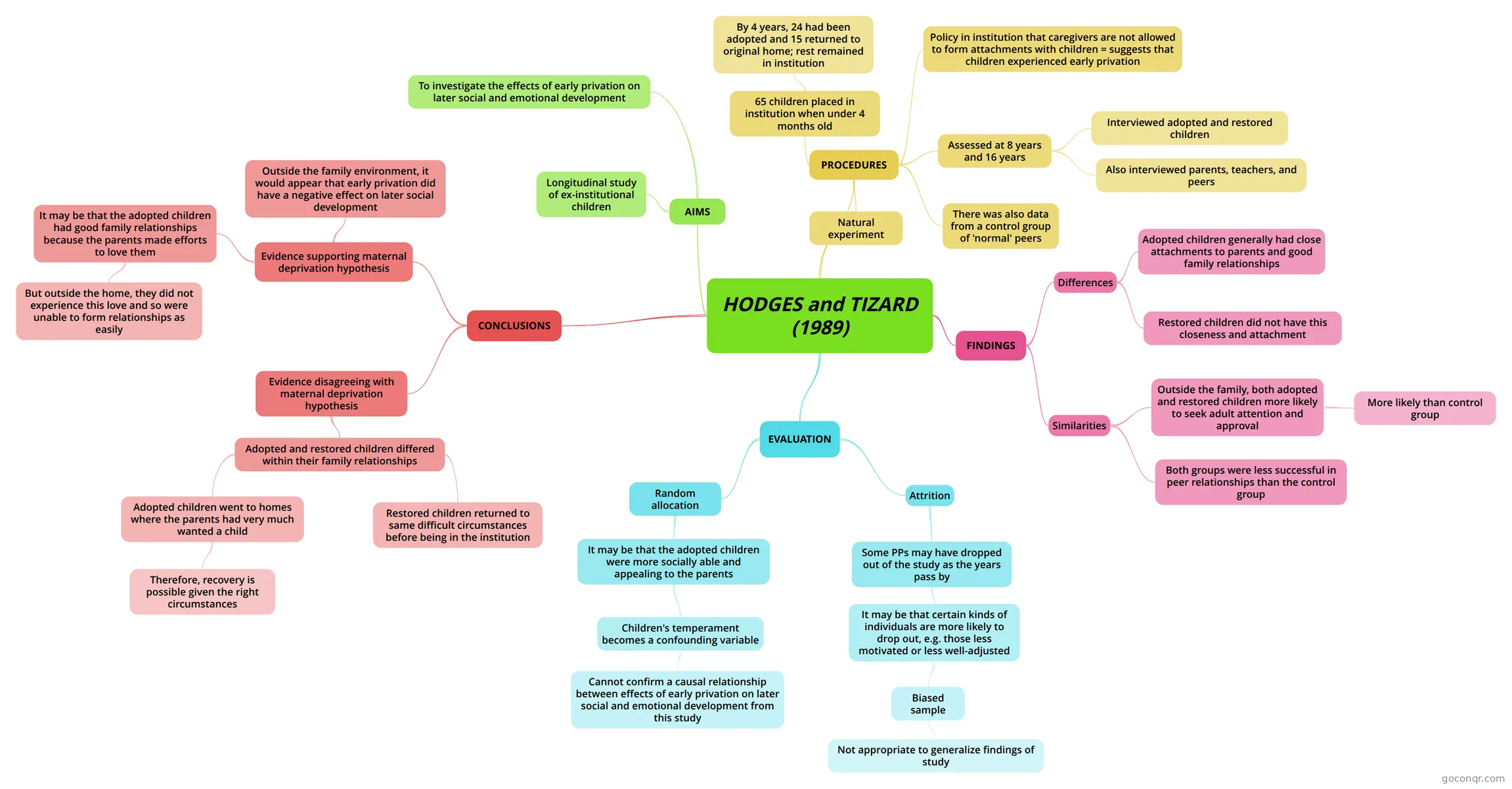 HODGES and TIZARD (1989)
-
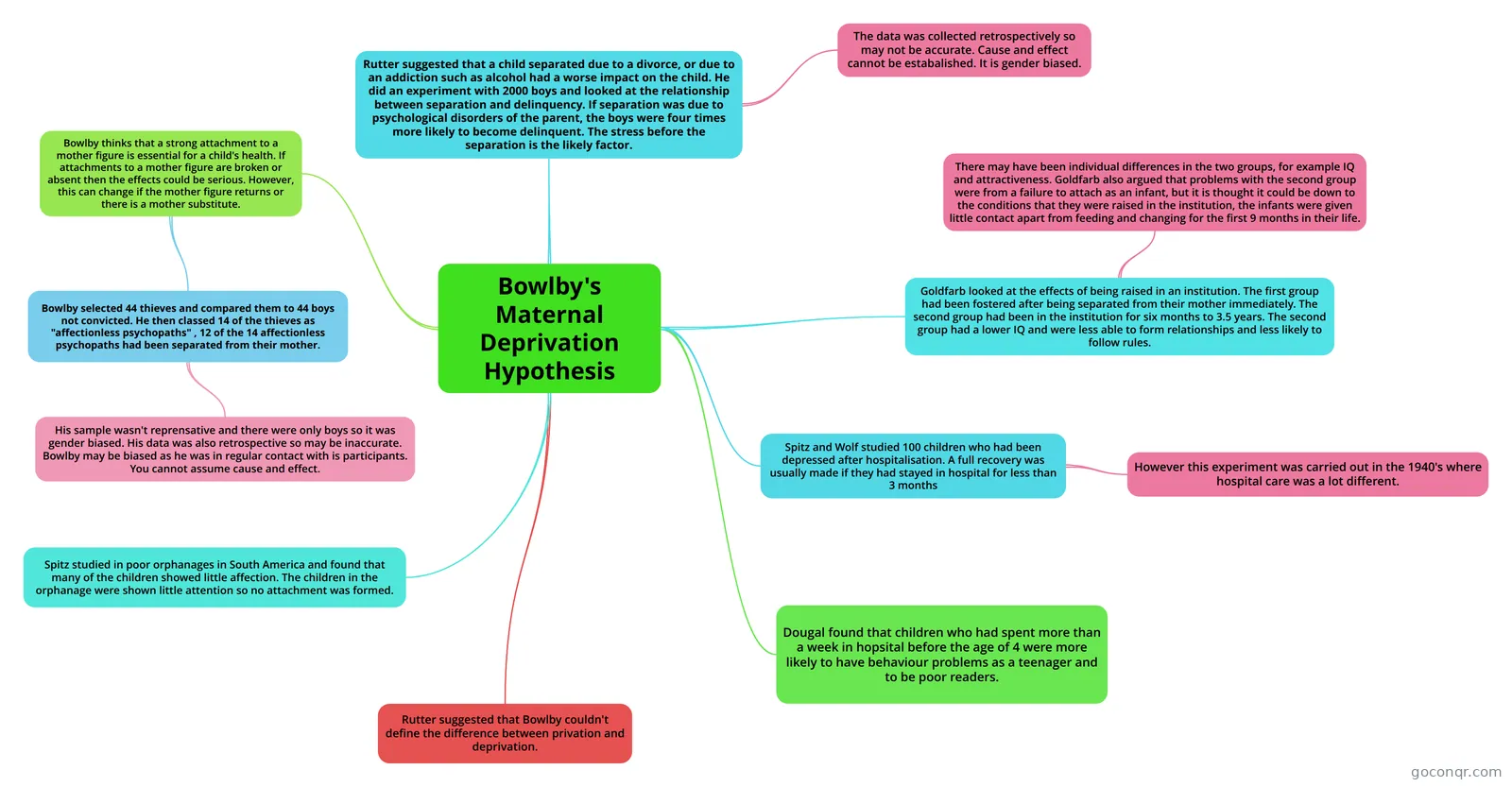 Bowlby's Maternal Deprivation Hypothesis
-
Attachment rkr
-
 Bowlby’s theory of attachment
-
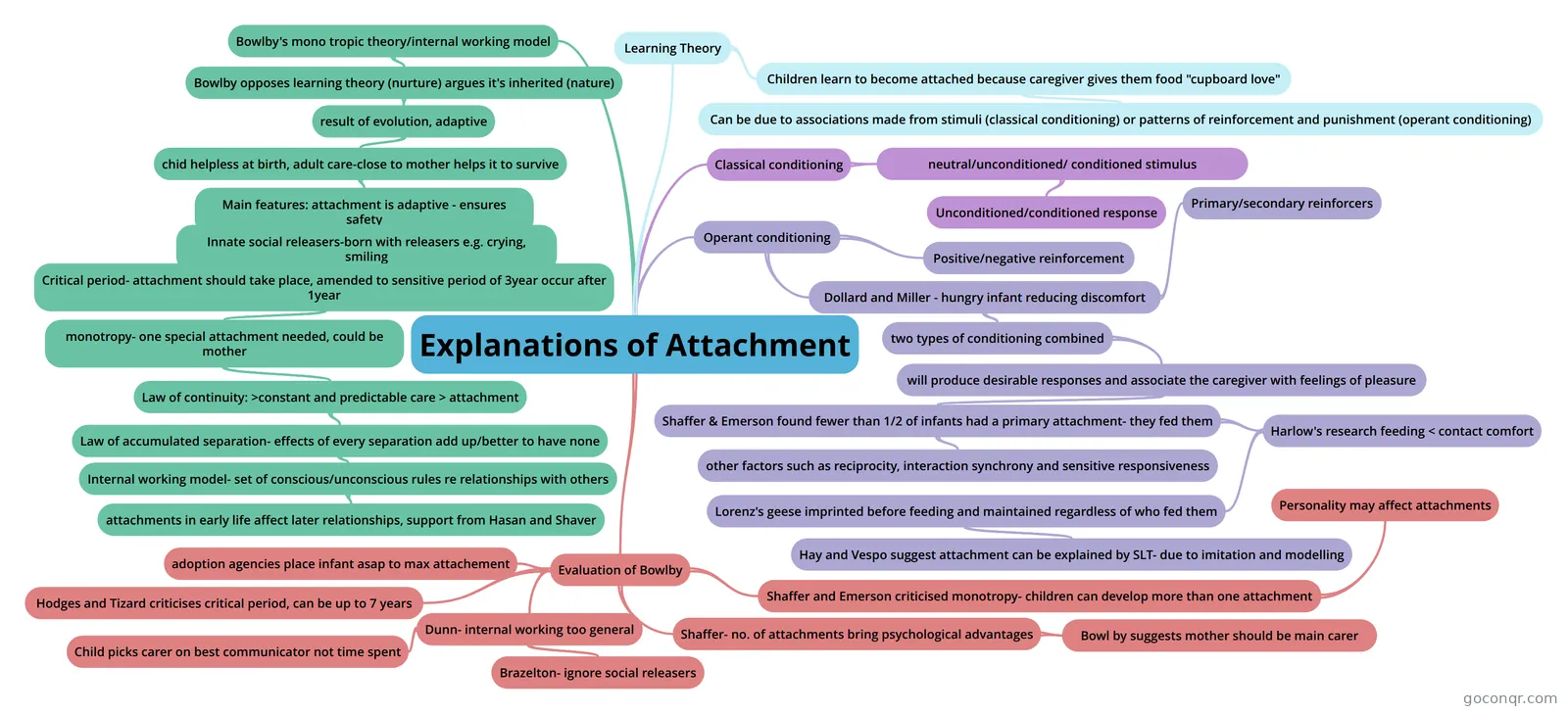 Explanations of Attachment
-
Ainsworth's strange situation
-
3.10 Effects of Institutionalisation
-
animal studies of attachment
-
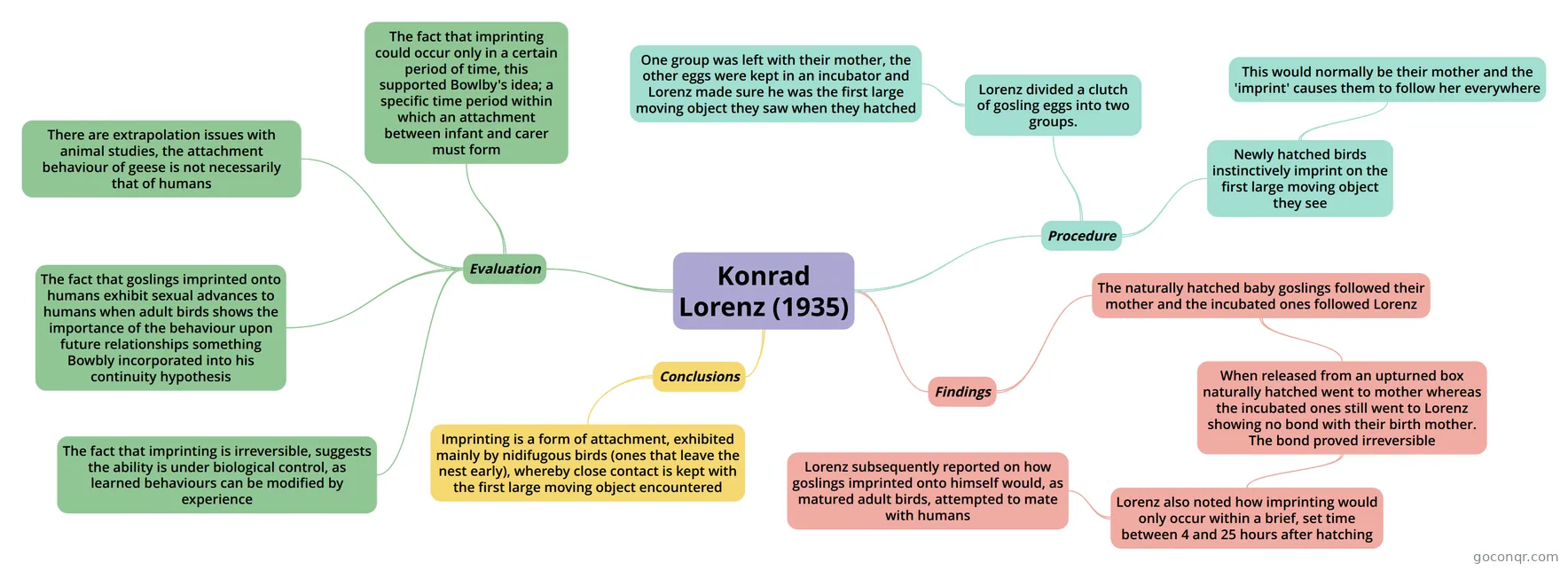 Konrad Lorenz (1935) Animal studies of attachment
-
Attachment Theory John Bowlby
-
3.3 Role of the Father
-
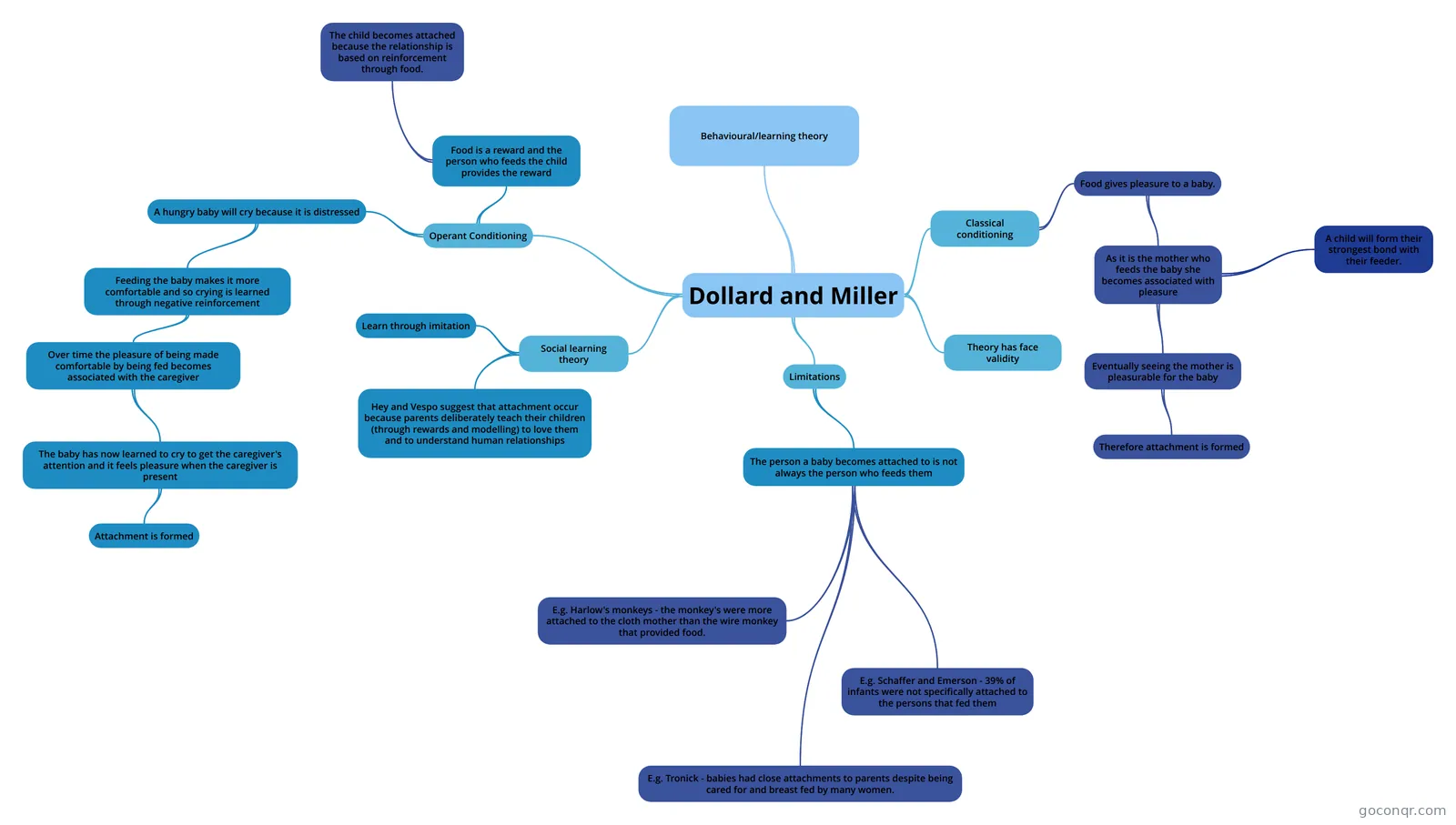 Dollard and Miller Dollard and Miller (behavioural/learning theory) theory of attachment
-
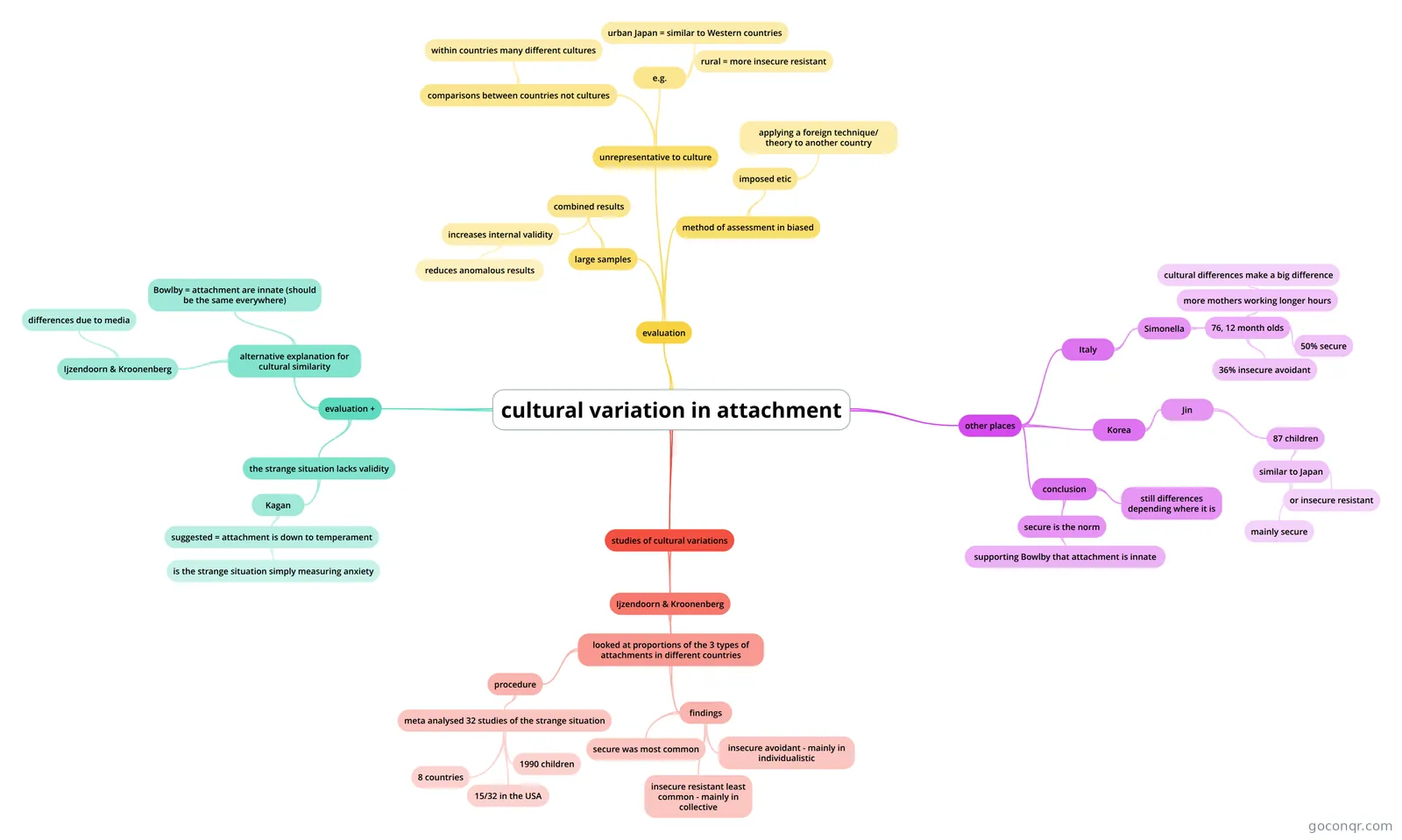 cultural variation in attachment
-
3.5 Learning Theory
-
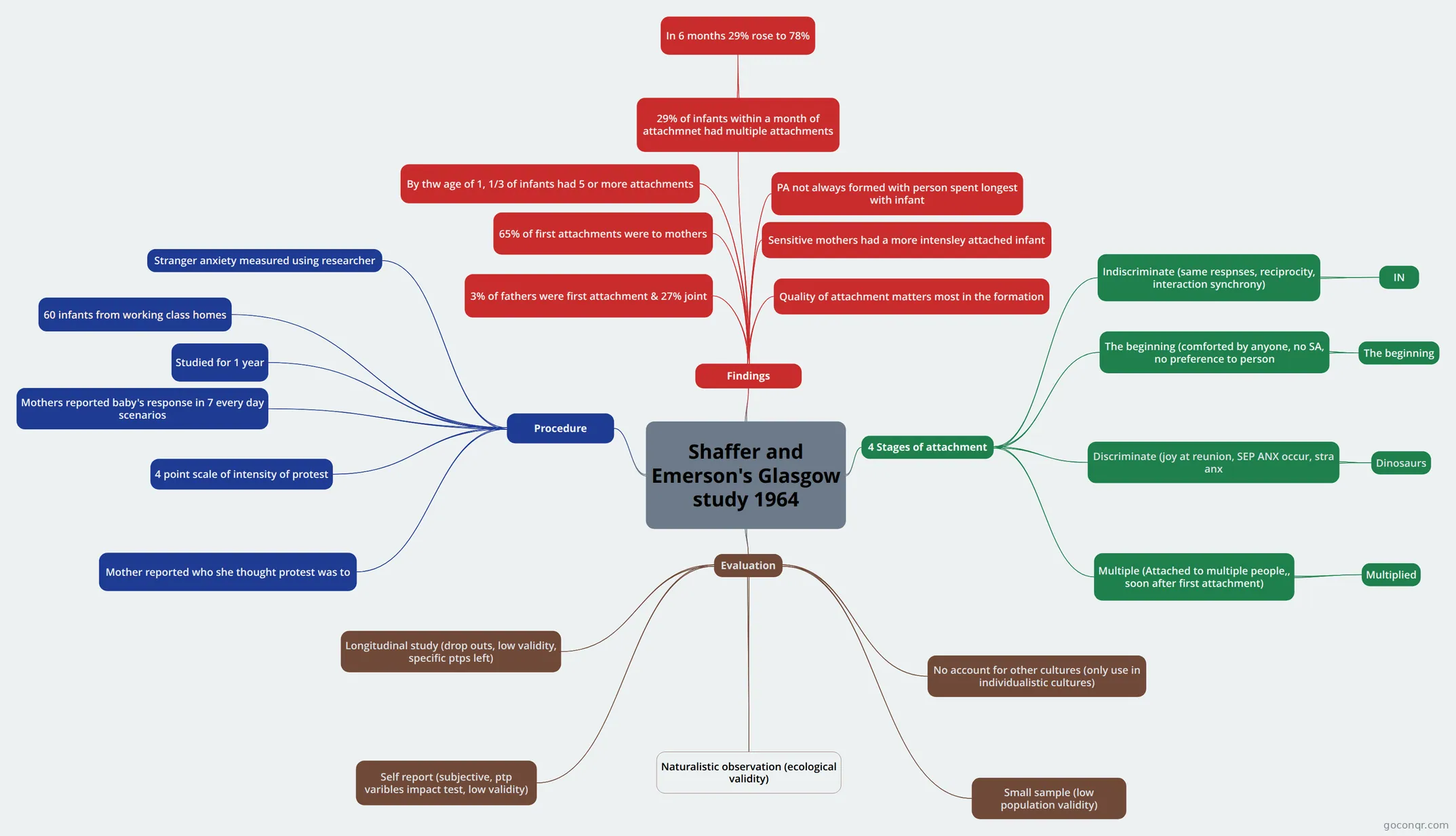 Shaffer and Emerson's Glasgow study 1964 A mind map on the shaffer and Emerson Glasgow study
-
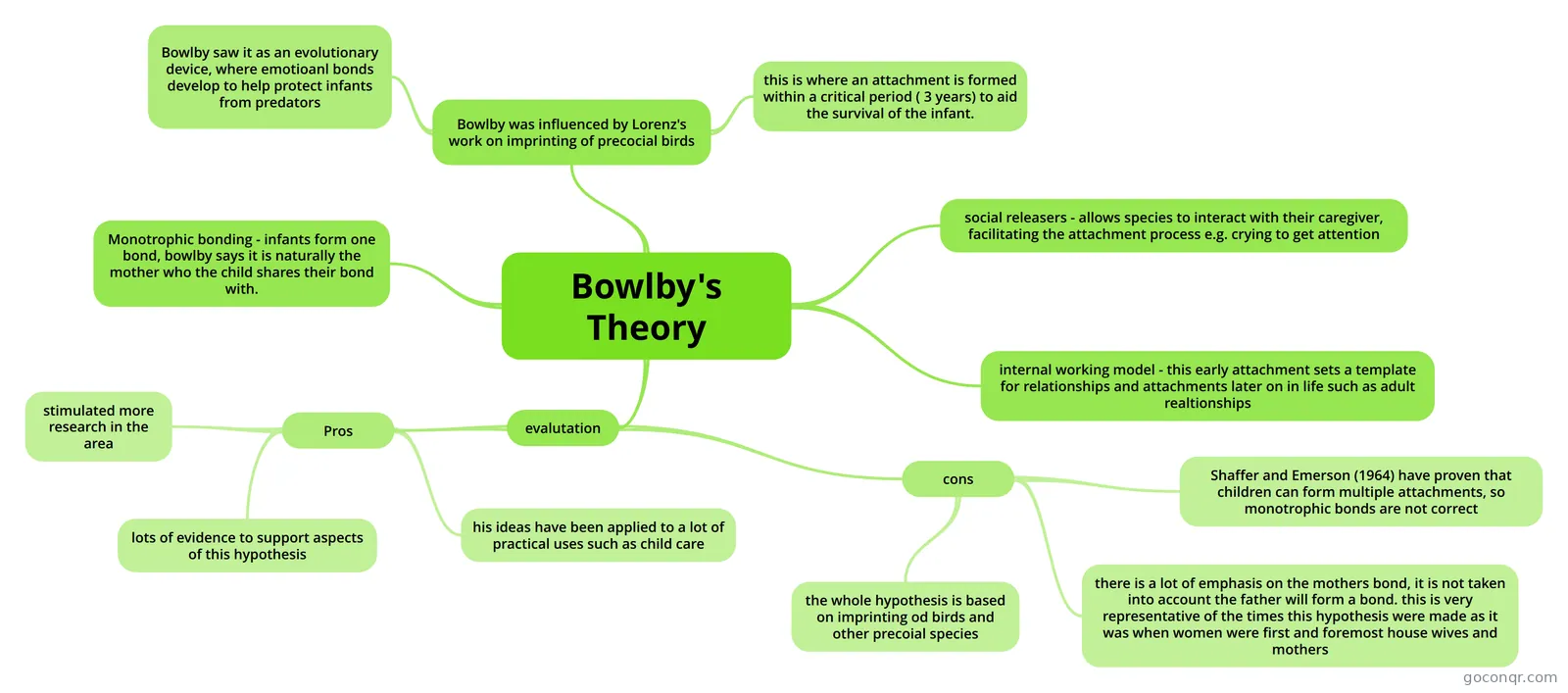 Bowlby's Theory
-
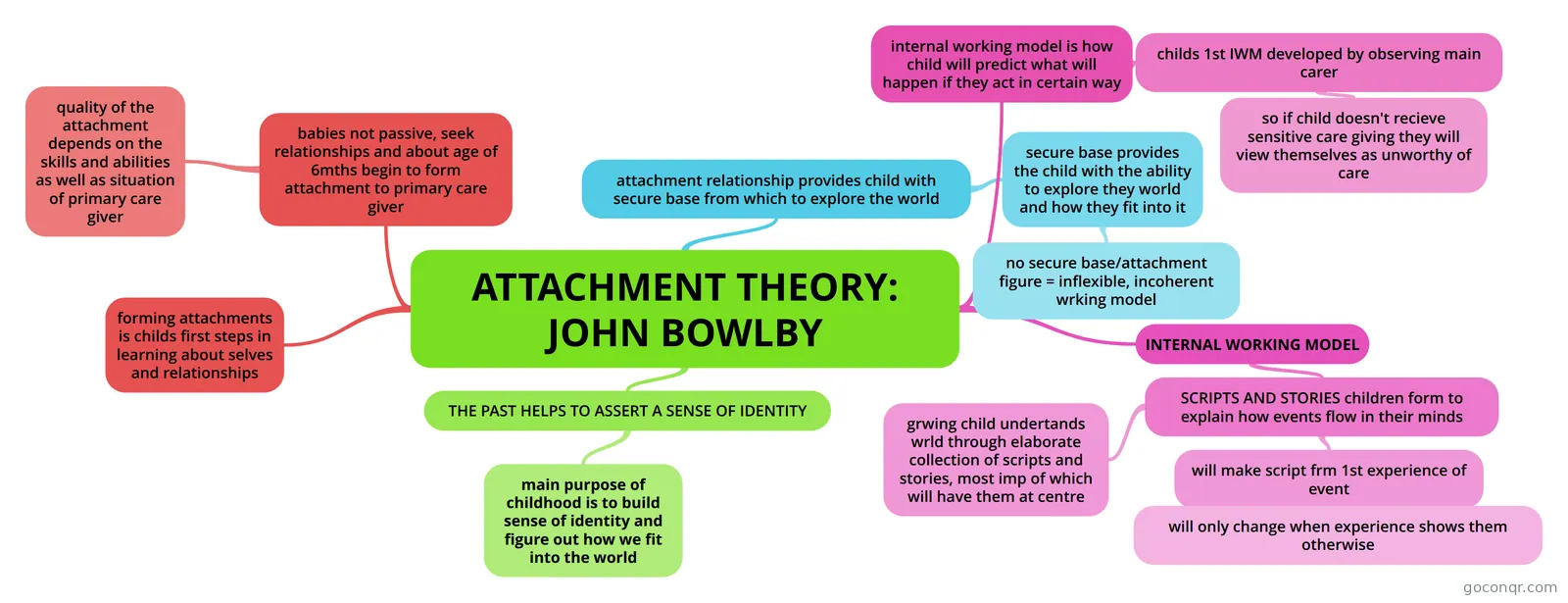 ATTACHMENT THEORY: JOHN BOWLBY
-
 Van Ijzendoorn and Kroonenberg (1988)
-
3.8 Cultural Variations
-
3.1 Caregiver - Infant interactions
-
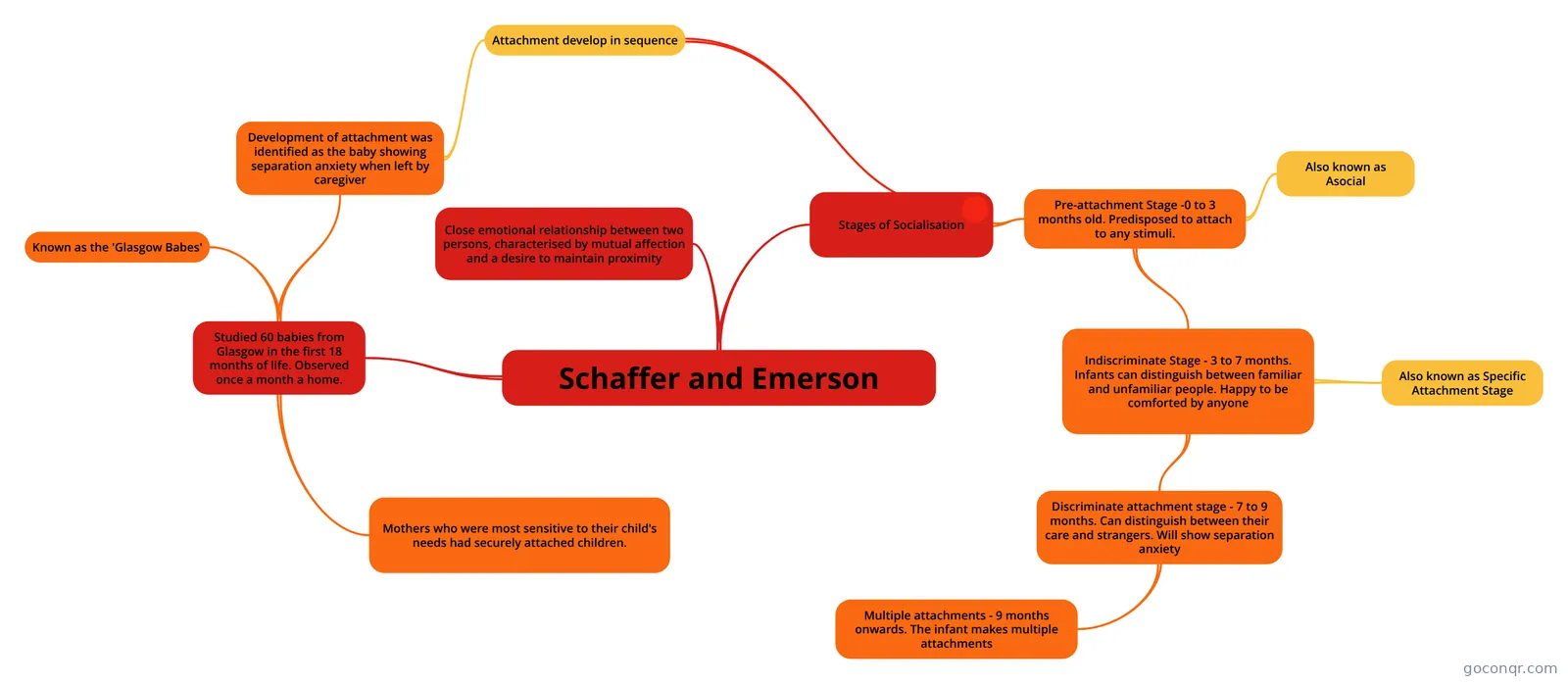 Schaffer and Emerson Shaffer and Emerson, Stages of Sociability
-
Ainsworth
-
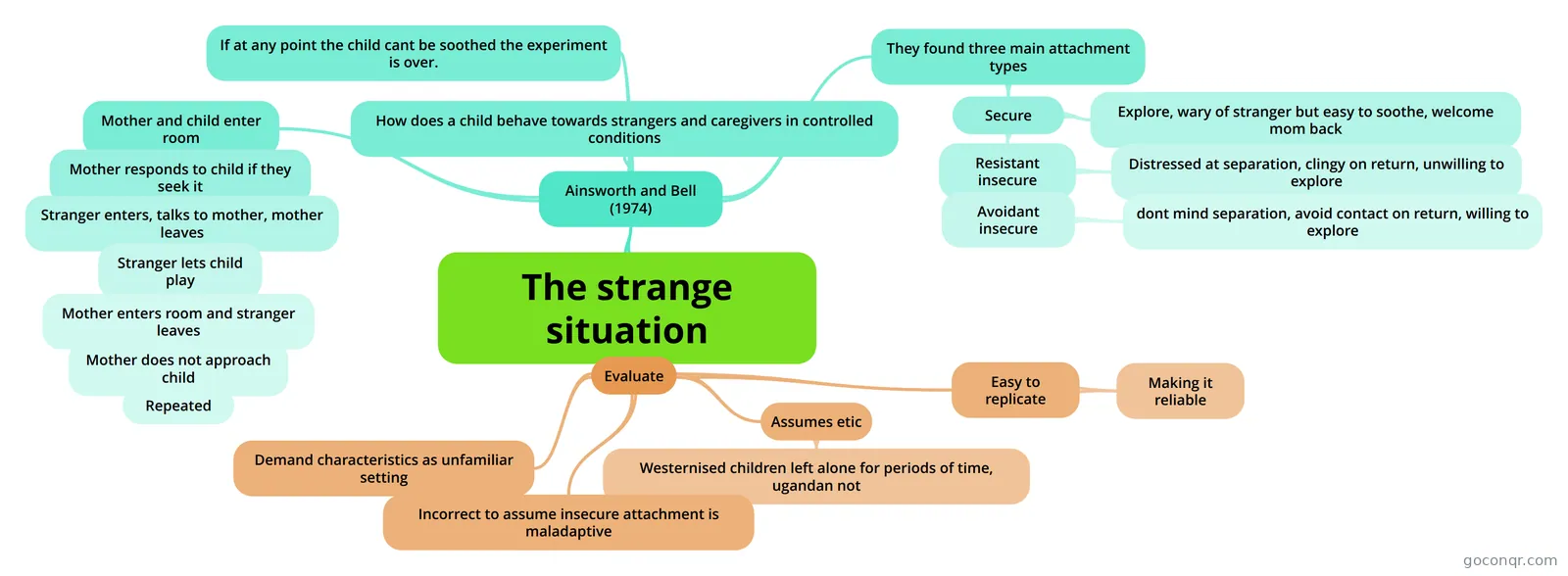 The strange situation
-
Klein vs. Bowlby
-
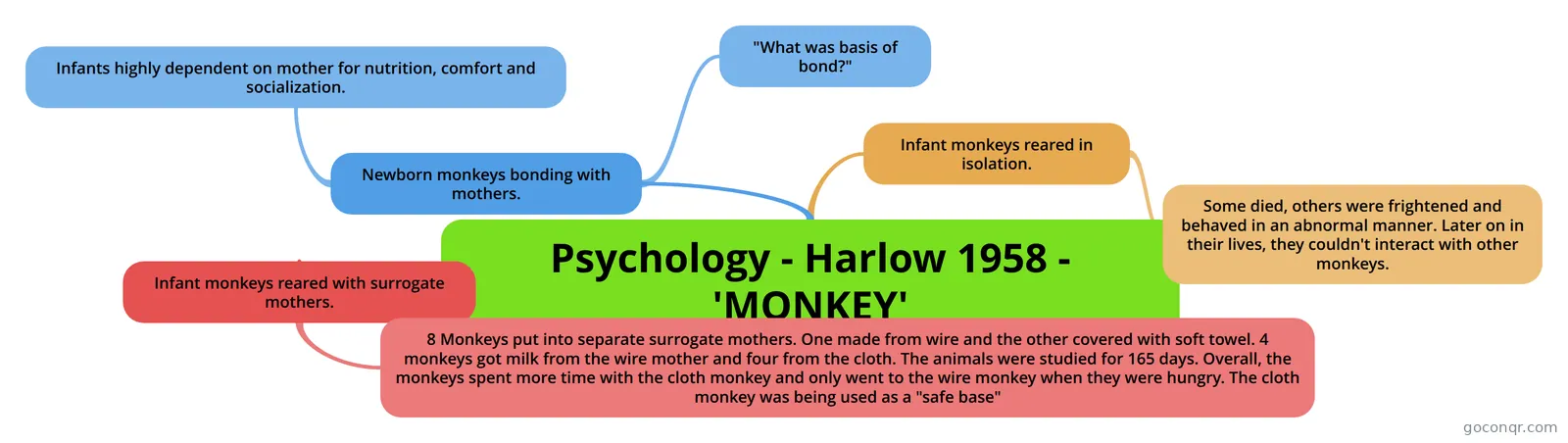 Psychology - Harlow 1958 - 'MONKEY' Psychology AS - Harlow 1958
-
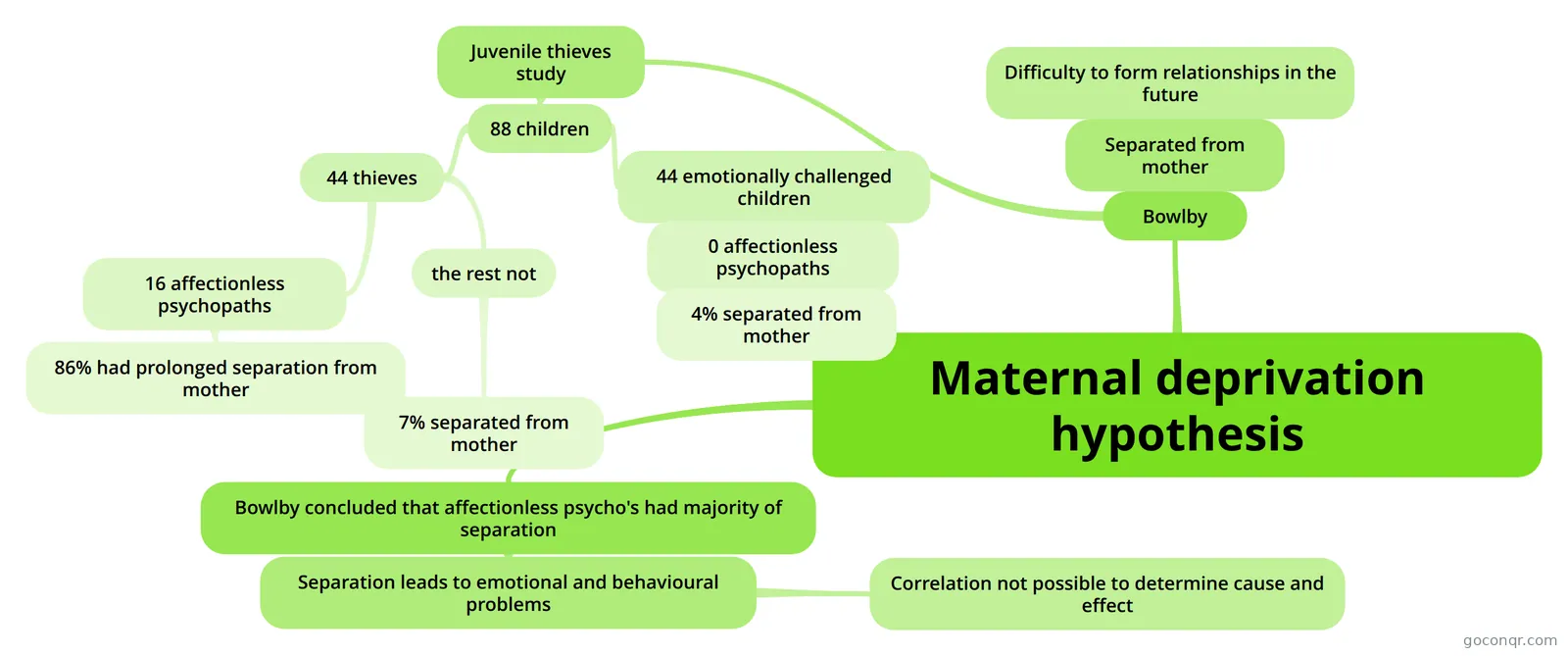 Maternal deprivation hypothesis
-
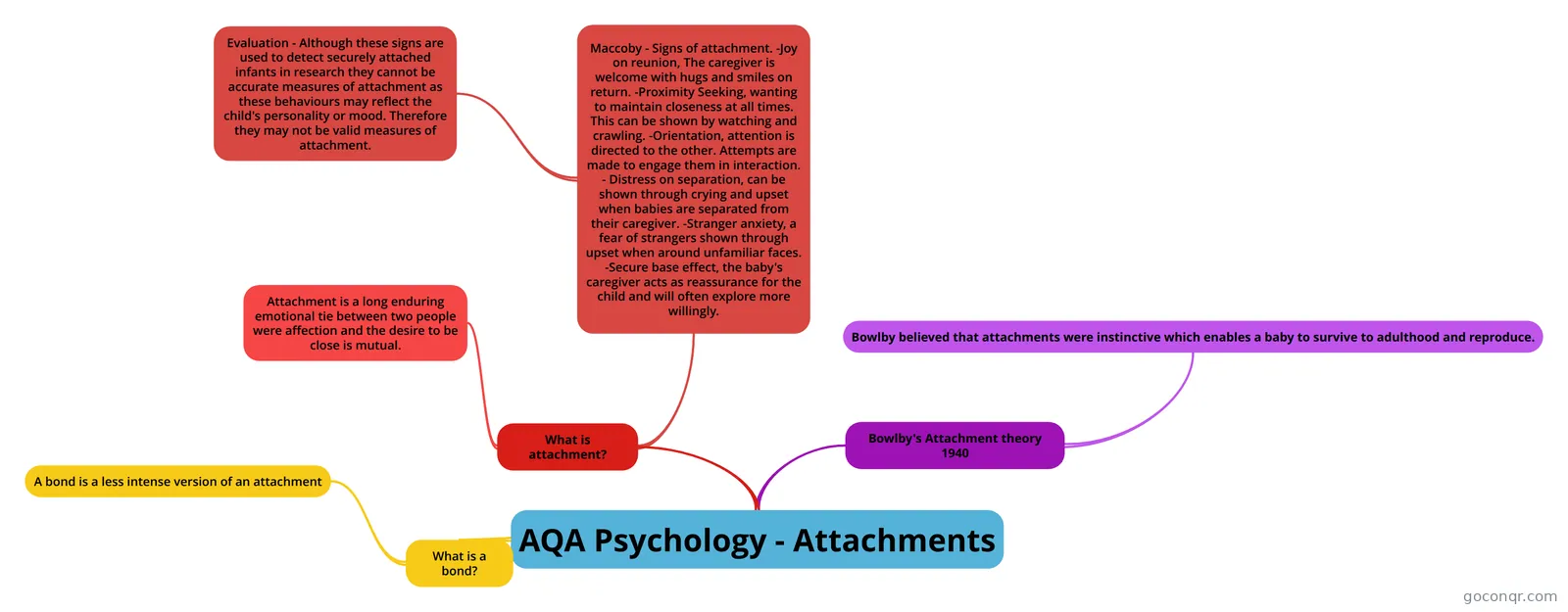 AQA Psychology - Attachments
-
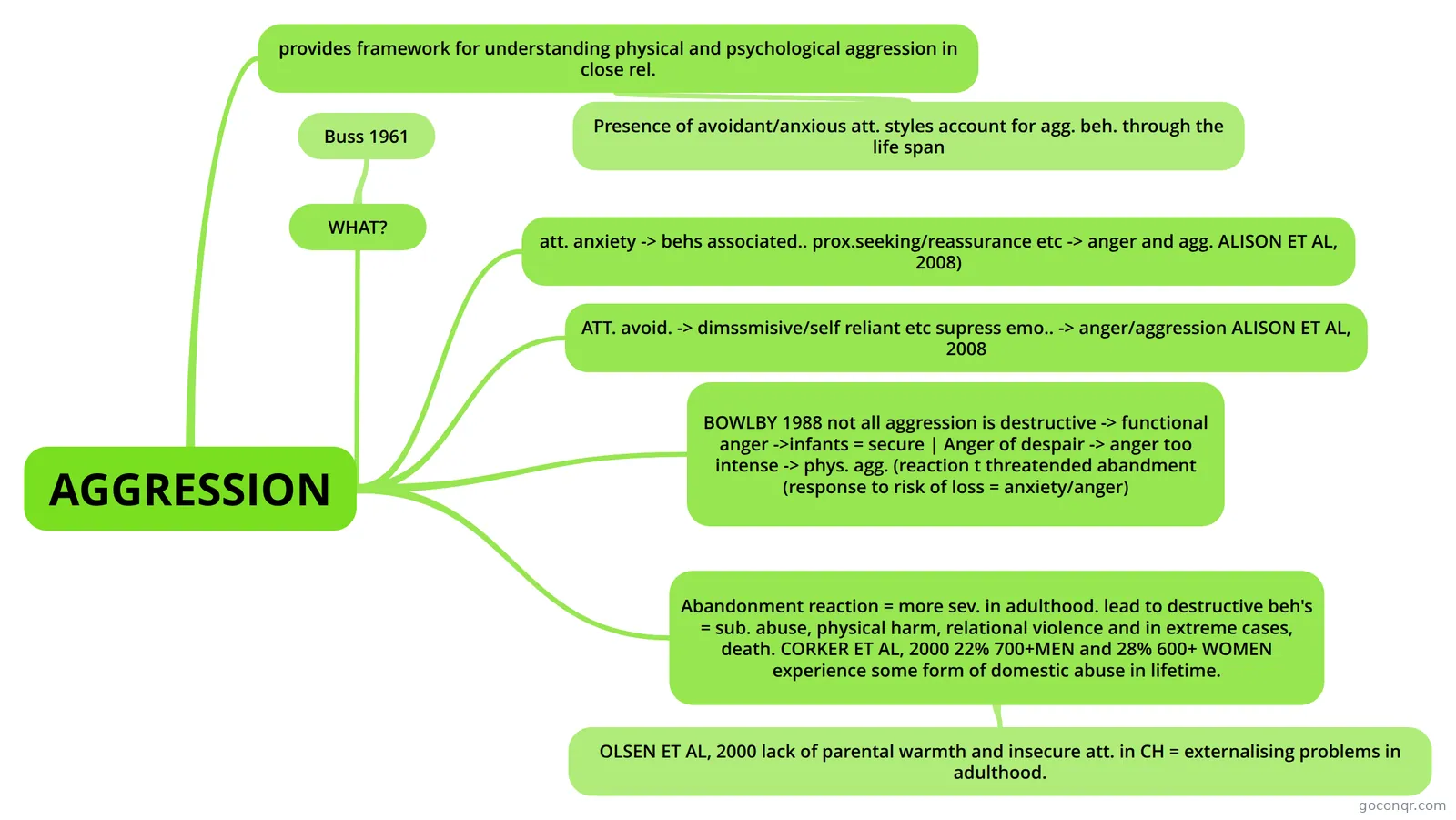 AGGRESSION
More Attachment resources
About attachment mind maps
GoConqr OriginalUsing attachment mind maps
Start with “Strange Situation Mary Ainsworth” if you want to follow a study procedure. Its branches set out what happens as a parent, child and stranger enter the room. For a different starting point, “Bowlby’s Theory of Attachment” maps ideas about attachment as adaptive and innate.
Other maps focus on evidence. “Classic evidence: Bowlby (1944)” includes methodology and participants, while the map on Takahashi’s cross-cultural study covers aims, procedures, findings and evaluation. These give you different ways to organise revision around a study.
Move between formats
Follow the branches of a map, then try recalling its main points without looking. Return to any branch you missed and check the detail. When you want to test recall in a different format, switch to a quiz on the Attachment unit page, then return to the map if you need another look.
Choose a map and follow its branches at your own pace.
Frequently asked questions
Which mind map should I start with?
“Strange Situation Mary Ainsworth” is a useful starting point for revising a procedure: its branches describe the parent, child and stranger in the room. If you would rather begin with an explanation, “Bowlby’s Theory of Attachment” covers ideas about attachment as adaptive and innate.
Are these mind maps free to use?
Yes. Every resource listed on this page is free to open and study without an account. The maps were made by GoConqr users, not by GoConqr. A free account also lets you save quiz scores and make your own quizzes, mind maps, flashcards and notes.
Which levels do the maps suit?
Most maps are at secondary level, with some at university level. School students can use them to revise attachment topics, and teachers can draw on them for lesson material. The list also includes “AQA Psychology - Attachments” for those looking for AQA Psychology material.